Wagashi: The Art of Japanese Traditional Sweets
By Yoshi | Japan Unveiled
There is a sweet in Japan called higashi that is made primarily from sugar and rice flour, pressed into a wooden mold, unmolded onto a lacquered tray, and placed beside a bowl of matcha tea.
It is approximately the size of a large coin. It dissolves on the tongue in about thirty seconds. It contains nothing that could be described as a complex flavor — it is sweet, faintly floral from the mold’s design, and then gone.
And yet the experience of eating it — the specific ceremony of the moment, the shape pressed from a mold carved with a maple leaf or a plum blossom or a representation of snow, the color chosen to correspond with the specific season of the specific day — is an experience I have found myself thinking about for days afterward.
This is wagashi. Japanese traditional sweets. A category of confectionery that is less about the flavors it produces and more about the time it makes visible.
Wagashi (和菓子) — wa meaning Japanese, kashi meaning sweets — is the broad category of traditional Japanese confectionery, developed over centuries in parallel with Japanese tea ceremony culture and shaped by the Japanese aesthetic values of seasonality, restraint, and the representation of natural beauty.
Wagashi is the confectionery served with tea in the tea ceremony. It is the sweets sold at shrines and temples on festival days. It is the seasonal gift purchased at a famous confectionery and presented in a lacquered box to someone you want to honor. It is the small sweet pressed into a mold in the shape of whatever the current month requires — plum blossoms in February, cherry blossoms in April, fireflies in June, maple leaves in November — and sold in confectionery shops that have been making the same seasonal shapes for centuries.
The ingredients of wagashi are predominantly plant-based: rice, glutinous rice (mochiko), sweet azuki beans (an), sugar, agar, and various flours. The restriction of ingredients is not incidental — it emerged partly from the Buddhist vegetarian traditions that shaped Japanese court culture, and it produced a confectionery tradition organized around the transformation of simple, clean ingredients into objects of visual and sensory beauty.
The Major Varieties
Wagashi encompasses a range of distinct confection types, each with its own specific ingredients, technique, and cultural associations.
Mochi (餅) — perhaps the most internationally recognized wagashi, made from glutinous rice (mochigome) that has been soaked, steamed, and pounded until it forms a smooth, elastic, slightly sticky dough. Plain mochi is eaten year-round, particularly at New Year when mochitsuki — the communal pounding of mochi — is a traditional ritual. Mochi filled with sweet bean paste (an) becomes daifuku. Mochi grilled over charcoal and coated with sweet soy sauce glaze becomes mitarashi dango. The specific forms and preparations of mochi vary enormously by region and season.
Nerikiri (練り切り) — the most sculptural and visually sophisticated of wagashi, made from white bean paste (shiro-an) kneaded with gyuhi (a soft mochi made from glutinous rice flour) into a smooth, moldable dough that can be colored, shaped, and sculpted to represent seasonal motifs with extraordinary precision. The nerikiri of a skilled confectioner — a perfect miniature chrysanthemum, a tiny mountain with snow at its peak, an iris rendered in three colors of paste — is as much sculpture as food. The skill required to shape nerikiri by hand, using only spatulas and fingers, takes years to develop and produces objects that seem too beautiful to eat.
They should be eaten anyway. They are delicious.
Yokan (羊羹) — a firm, smooth jelly made from red bean paste, agar, and sugar. Yokan has a density and concentration of flavor that makes it one of the most intensely satisfying wagashi — a small slice delivers considerable sweetness and the deep, earthy flavor of well-made azuki. Yokan is one of Japan’s oldest wagashi, with roots in Chinese cuisine, and comes in a range of varieties from the classic neri yokan (firm, dense) to mizu yokan (water yokan, softer and lighter, associated with summer).
Dorayaki (どら焼き) — two small pancakes made from a castella-like batter, sandwiched around a generous filling of sweet azuki bean paste. The most accessible and most universally beloved wagashi in Japan — beloved across all ages, widely available, the favorite food of Doraemon and therefore one of the most emotionally loaded foods in Japanese popular culture. A good dorayaki — with properly made tsubu-an (chunky bean paste that retains the texture of the individual beans) between pancakes that are slightly caramelized on the outside and soft inside — is one of the most satisfying things available at a Japanese confectionery or convenience store.
Daifuku (大福) — mochi filled with sweet bean paste, typically round, dusted with rice flour to prevent sticking. The ichigo daifuku — strawberry daifuku, containing a whole fresh strawberry inside the bean paste inside the mochi — is one of the great achievements of modern wagashi: the tartness of the strawberry counterbalancing the sweetness of the bean paste counterbalancing the mild chewiness of the mochi, three textures and three flavor profiles in a single soft sphere.
Monaka (最中) — two thin, crispy wafers made from rice flour, sandwiched around a filling of sweet bean paste, chestnut paste, or other flavors. The wafers are often pressed into shapes — flowers, leaves, crests — and the contrast between the crispy exterior and the soft filling is the defining pleasure. Monaka must be eaten fresh, before the wafers absorb moisture from the filling and lose their crispness. This is the most time-sensitive wagashi.
Higashi (干菓子) — dry sweets, the most minimal and most ceremonially significant wagashi category. Made primarily from sugar and rice flour, pressed into molds and dried. Almost no moisture. Long shelf life. Designed specifically for the tea ceremony, where their sweetness balances the bitterness of the matcha. The molds used for higashi are some of the most beautiful objects in Japanese craft — carved from cherry wood in shapes that are changed with the seasons, each mold a small work of art that leaves its impression in every sweet pressed from it.
Wagashi and the Tea Ceremony
The relationship between wagashi and the Japanese tea ceremony — chado or sado — is inseparable and defines much of what wagashi is.
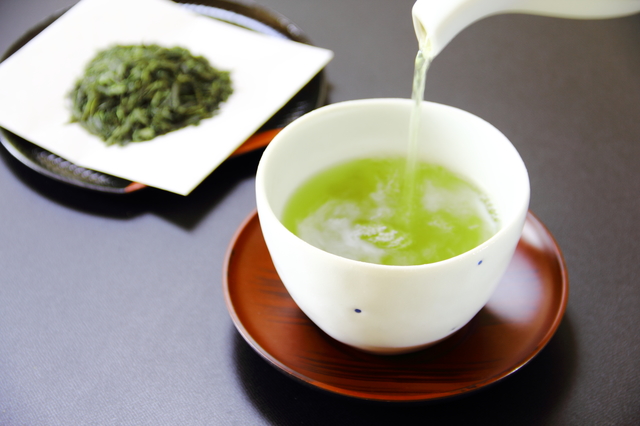
The tea ceremony serves bitter matcha. The wagashi served before the tea serves to prepare the palate — its sweetness makes the bitterness of the matcha more pleasurable by contrast, the same way salt makes sweet flavors taste sweeter. The specific sweetness of the wagashi is calibrated for this function: sweet enough to prepare the palate, not so sweet as to overwhelm it.
But beyond the functional relationship, wagashi in the tea ceremony serves an aesthetic role that is central to chado‘s philosophy. The wagashi is chosen by the host for the specific occasion — for the specific season, the specific day, the specific gathering of guests. The choice of wagashi is a communication: it tells the guests what season the host is acknowledging, what aspects of the natural world the host finds beautiful on this particular day.
A tea ceremony in early spring might serve a nerikiri shaped as a partially opened plum blossom — the first flower of the year, a symbol of hope and the end of winter. A ceremony in mid-autumn might serve a piece of yokan with the character for “moon” pressed into its surface, acknowledging the harvest moon. Each choice is intentional. Each choice says something about the host’s perception of the moment.
This attentiveness to seasonal beauty — the practice of choosing something that is right for today rather than something that is always appropriate — is one of the core practices of chado and is embodied in the wagashi as fully as in any other element of the ceremony.
Seasonality: The Wagashi Calendar
Wagashi is the most seasonally organized category of Japanese food, and the seasonal calendar of wagashi production is one of the most beautiful things in Japanese food culture.
January–February: Hanabira mochi for New Year, shaped like a flower petal, containing miso bean paste and a piece of burdock root — a traditional New Year confection with roots in Heian-period court culture. Uguisu mochi — warbler mochi — shaped like the bush warbler that heralds spring’s approach, covered in green soybean powder.
March–April: Cherry blossom season produces an abundance of sakura-themed wagashi — pale pink nerikiri shaped as open blossoms, sakura mochi wrapped in pickled cherry leaves, hanami dango in three colors (pink, white, green) on a skewer representing the cherry blossom’s cycle from bud to flower to leaf.
May: Kashiwa mochi for Children’s Day — mochi filled with bean paste and wrapped in an oak leaf, the oak’s resistance to losing its leaves in autumn making it a symbol of family continuity.
June–July: Minazuki — a triangular piece of white agar topped with azuki beans, eaten on June 30th in a purification ritual. Wagashi shift toward lighter, cooler forms: clear agar jellies containing suspended flowers or goldfish, mizu yokan, items that suggest coolness in the summer heat.
August: Wagashi representing summer — fireflies trapped in clear agar, water patterns, morning glories.
September–October: Moon-viewing season. Round mochi representing the harvest moon. Chestnut wagashi — kuri kinton, kuri yokan — using the newly harvested chestnuts. Sweet potato confections.
November: Maple leaf season. Nerikiri and mochi in the colors of autumn foliage — deep red, orange, gold.
December: Yuzu citrus wagashi for winter solstice. Preparations for New Year begin.
This calendar is not enforced by any authority. It is maintained by the wagashi makers and their customers, by the shared understanding that certain sweets belong to certain times and that eating them at the wrong time would miss the point. The wagashi is not merely the taste. It is the taste at the right moment, making the moment visible.
Where to Buy Wagashi
Major department store basement food halls (depachika) — every large Japanese department store has a food hall in the basement, and the wagashi section of a good depachika is one of the most beautiful food retail environments in Japan. The established wagashi houses — Toraya, Tsuruya Yoshinobu, Surugaya — have counters where their seasonal offerings are displayed with the care of a museum exhibition.
Specialist wagashi shops — in Kyoto particularly, the concentration of traditional wagashi makers is extraordinary. Kyoto’s wagashi culture is the most refined in Japan, shaped by centuries of proximity to the imperial court and the tea ceremony tradition. Walking through Kyoto’s Nishiki Market or exploring the neighborhoods around the major temples will bring you past shops that have been making the same seasonal sweets, using the same techniques, for two hundred years or more.
Shrine and temple stalls — the sweets sold at major shrines and temples on festival days are often specific to that location, made by confectioners who have held the relationship with the shrine or temple for generations. These are among the most specifically local and least replicable wagashi experiences.
Why Wagashi Matters
I want to end by saying something directly about why wagashi matters — why it is worth seeking out, spending money on, and paying attention to.
Wagashi is slow food in the most fundamental sense: it requires attention. A piece of nerikiri eaten while looking at a phone is not the full experience. The full experience is: looking at the object before eating it, noticing the specific form and color chosen for this season, placing it on the tongue and letting it dissolve slowly, tasting the quality of the bean paste and the texture of the mochi or agar, and registering — briefly, simply — the care that was taken.
Thirty seconds of attention. In exchange for something beautiful, made by someone skilled, designed to make the current season visible on your tongue.
In Japan, this exchange is considered worth making. I agree.
— Yoshi 🌸 Central Japan, 2026
Enjoyed this? You might also like: “Hanami: Why Cherry Blossom Viewing Is About More Than Just Flowers” and “The Art of Gift-Giving in Japan” — both available on Japan Unveiled.