Japanese Breakfast: The Meal That Changes How You Think About Mornings
By Yoshi | Japan Unveiled
The first time I explained a traditional Japanese breakfast to a foreign colleague — someone visiting from Europe for work — he was quiet for a moment and then said: “So your breakfast is… a full meal?”
Yes. That is exactly what it is.
The traditional Japanese breakfast — asa gohan, morning rice — is a complete, balanced meal served in the morning. Not a bowl of cereal. Not toast with something spread on it. Not a quick coffee consumed while walking. A meal with multiple components, each doing a specific job, eaten with full attention before the day begins.
I understand why this surprises people from cultures where breakfast is either minimal (black coffee, a pastry) or a weekend indulgence (the full English, the American brunch). The Japanese breakfast requires preparation. It requires time to eat. It requires, in some sense, the willingness to treat the morning as worth this level of attention.
I want to tell you what a Japanese breakfast actually contains, why it is structured the way it is, and why — once you have eaten one — the way you think about mornings may not be entirely the same.
The Structure: Ichiju Sansai
The traditional Japanese breakfast follows the same structural principle as the Japanese dinner: ichiju sansai — one soup, three sides.
The components:
Steamed white rice — the center of the meal, cooked fresh, served hot in a bowl. The quality matters (see my article on Japanese rice). This is not background carbohydrate. It is the foundation around which everything else is arranged.
Miso soup — the soup component. Made fresh each morning, typically containing tofu, wakame seaweed, and green onion. The miso used varies by region and household preference — Kyoto households tend toward lighter white miso, central Japan toward darker, earthier varieties. The miso soup at breakfast is the warmth that starts the day.
Grilled fish — the protein anchor. Most commonly shio-yaki — salt-grilled — salmon, mackerel (saba), or horse mackerel (aji). The fish is grilled simply, allowing its natural flavor to be fully expressed. A piece of grilled mackerel in the morning, eaten with rice and miso soup, is one of the most satisfying combinations in Japanese food.
Pickled vegetables (tsukemono) — a small dish of pickled vegetables, providing acidity and crunch that refreshes the palate between bites of rice and fish. The variety changes by season and household — takuan (pickled daikon), umeboshi (pickled plum), cucumber pickles, nuka-zuke (bran-pickled vegetables with their specific sour complexity).
Tamagoyaki — sweet rolled omelette, made with dashi and sometimes mirin, rolled into a rectangular form in a specialized tamagoyaki pan. The sweetness of the egg contrasts with the saltiness of the fish and the acidity of the pickles. Tamagoyaki at breakfast is one of Japan’s small domestic rituals.
Natto — fermented soybeans, sticky, pungent, served with mustard and soy sauce over rice. Japan’s most polarizing food, eaten enthusiastically by roughly half the country and avoided with equal enthusiasm by the other half. More popular in eastern Japan (Tokyo and north) than western Japan. The first encounter with natto is an experience I recommend to every foreign visitor — understanding what the polarization is about requires direct personal research.
The Japanese Breakfast at a Ryokan
The most complete and most beautiful version of the Japanese breakfast available to foreign visitors is the ryokan breakfast — the morning meal served at a traditional Japanese inn.
The ryokan breakfast is the traditional Japanese breakfast elevated to its fullest expression: multiple small dishes, each perfect, arranged on a lacquered tray with aesthetic care. The fish is exactly right. The miso soup is made with the specific local miso. The pickles are house-made. The rice is premium local variety, cooked in the ryokan’s kitchen that morning.
Foreign visitors who stay at ryokan and encounter this breakfast for the first time frequently describe it as the best breakfast of their lives. I find this response both touching and completely understandable.
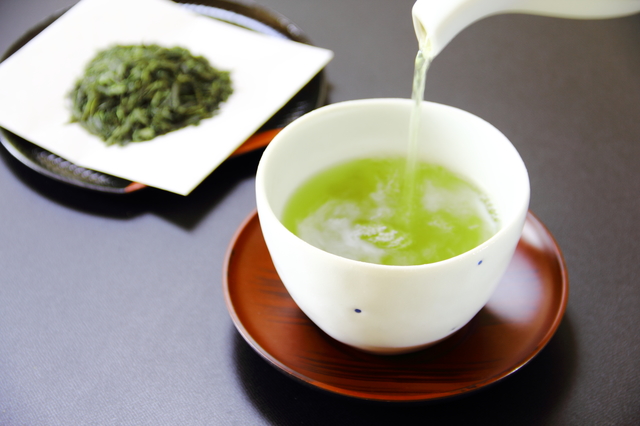
The ryokan breakfast is also typically served with chawan mushi — a savory egg custard cooked in a covered cup, silky and delicate, containing small pieces of chicken, shrimp, and ginkgo nuts suspended in the egg. And hot green tea, served throughout the meal.
Eating this breakfast, in a room overlooking a garden, in a yukata, with no particular urgency about the day — this is one of the experiences that people come back to Japan to repeat.
The Japanese Breakfast at Home: Modern Realities
The full ichiju sansai breakfast I described is the traditional form. The reality of modern Japanese domestic breakfast is more varied.
Many Japanese people, particularly working adults in cities, eat considerably simpler breakfasts on weekday mornings — toast with butter or jam, a quick bowl of rice with natto and a miso soup made from instant miso packets, or increasingly nothing substantial until they stop at a convenience store on the way to work.
The full Japanese breakfast is primarily a weekend practice for most contemporary Japanese households — a deliberate slowing down that the weekday schedule cannot accommodate.
The generational shift is real: surveys consistently show that Japanese people under forty eat Westernized breakfasts (toast, coffee, cereal) more often than traditional ones. The traditional breakfast is associated increasingly with older generations, with special occasions, and with ryokan stays.
This is, I think, a loss. Not because Western breakfasts are bad — toast with good butter is a genuine pleasure — but because the ichiju sansai breakfast does something that a quick piece of toast does not: it establishes, at the beginning of the day, that the day is worth taking seriously. That you are worth feeding well. That twenty minutes of attention to the first meal is a reasonable investment.
I eat a proper Japanese breakfast on weekends. On weekdays, I am, like most of my generation, imperfect.
Why the Japanese Breakfast Matters
The Japanese breakfast is a nutritionally excellent meal — high protein from fish and soy, complex carbohydrates from rice, fiber and probiotics from fermented foods and pickles, umami and electrolytes from miso soup. Nutritionists who study Japanese dietary patterns consistently identify the traditional Japanese breakfast as a major contributor to the longevity and low rates of metabolic disease characteristic of traditional Japanese dietary patterns.
But beyond the nutrition: the Japanese breakfast is an act of care. The care of preparing it — the rice started the night before, the fish grilled in the morning, the miso soup made fresh, the pickles set out in small dishes — is visible in the finished meal. It is the care of someone who takes the morning seriously enough to do this.
Eating a Japanese breakfast prepared by someone who loves you is, in my experience, one of the most quietly sustaining experiences available. The meal says: I thought about you before the day began. I prepared something that would make the day start well.
This is breakfast. This is what breakfast can be.
— Yoshi 🍳 Central Japan, 2026
Enjoyed this? You might also like: “My Top 5 Comfort Foods After a Long Day of Work” and “Why Japanese Rice Is Different — and Why It Matters” — both available on Japan Unveiled.