Fermented Japan: Miso, Natto, and the Foods That Foreigners Fear
By Yosi | WASHOKU (Japanese food)
There is a moment that happens to almost every foreign visitor to Japan.
They are sitting at a breakfast table — maybe in a ryokan, maybe in a friend’s home — and a small dish is placed in front of them. It is brown and stringy. It smells like something between old socks and a cheese that has been left out too long. When they pick it up with chopsticks, it stretches into long, sticky threads that seem to go on forever.
Their host smiles and says, “Please try. It is natto.”
What happens next tells you a lot about the person.
Some try it bravely. Some politely push it to the side. Some — and I have seen this — actually leave the room.
I grew up eating natto for breakfast. To me, it smells like morning.
- Japan and Fermentation: A Very Long Relationship
- Miso: The Fermented Paste That Runs Through Everything
- Natto: The One That Tests Everyone
- Tsukemono: The Pickles That Complete Every Meal
- Amazake and Koji: The Sweet Side of Fermentation
- Why Foreigners Fear It — And Why That Fear Is Worth Overcoming
- A Final Thought
Japan and Fermentation: A Very Long Relationship
Before we get to natto, let me explain something important.
Japan has been fermenting food for over a thousand years. This is not a trend or a health fad. It is survival. Before refrigeration existed, fermentation was one of the only reliable ways to preserve food through long winters. Generations of Japanese cooks learned — through trial, error, and extraordinary patience — how to turn simple ingredients into something that would last, and more importantly, something that would taste deeply good.
The result is a fermented food culture unlike almost anywhere else on earth.
Miso. Natto. Soy sauce. Sake. Mirin. Rice vinegar. Tsukemono pickles. Katsuobushi. Amazake. These are not exotic curiosities. They are the foundation of Japanese cooking, present in almost every meal in some form.
When foreigners fear Japanese fermented food, they are — without knowing it — fearing the very heart of washoku.
Miso: The Fermented Paste That Runs Through Everything
Let’s start with the one that most people accept without realizing what it is.
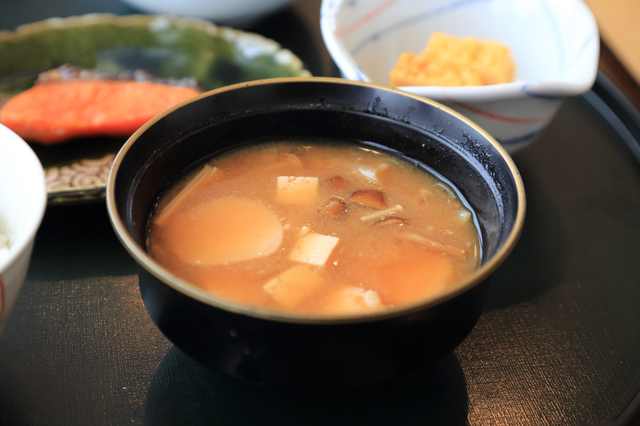
Miso is a paste made by fermenting soybeans with salt and a mold called koji (Aspergillus oryzae). The fermentation can take anywhere from a few weeks to several years. The longer it ferments, the darker and more intense the flavor becomes.
There are hundreds of regional varieties across Japan. Shiro miso (white miso) from Kyoto is sweet and mild, almost gentle. Aka miso (red miso) from Nagoya is bold and deeply savory. Mugi miso (barley miso) from Kyushu has an earthy, rustic quality. Hatcho miso, aged for up to three years in large cedar barrels under stone weights, is so concentrated it almost tastes like chocolate.
Most Westerners encounter miso in one form: miso soup. And they like it. They drink it at sushi restaurants and think it is pleasant and warming and slightly mysterious.
They do not always realize that pleasant, warming, slightly mysterious liquid contains billions of live microorganisms, the product of a biological transformation that took months to complete.
Miso is alive. That is why it tastes the way it does.
In Japanese home cooking, miso is used for far more than soup. It marinates fish. It glazes grilled vegetables. It thickens sauces. It seasons salad dressings. There is a Kyoto dish called dengaku — grilled tofu or konnyaku coated in sweetened miso paste — that is one of the most quietly delicious things I have ever eaten.
My mother kept a ceramic crock of miso in the kitchen. It was always there. I did not think of it as anything special. Now I understand it was one of the most complex, carefully made foods in the world.
Natto: The One That Tests Everyone
Now. Natto.
Natto is made from whole soybeans that have been fermented with a bacterium called Bacillus subtilis natto. The fermentation takes about 24 hours at warm temperatures. What you end up with is a mass of soybeans covered in a sticky, mucilaginous coating — the threads — with a sharp, ammonia-edged aroma that is, to put it gently, assertive.
It is eaten mostly at breakfast in Japan, mixed with soy sauce and Japanese mustard, stirred vigorously until the threads multiply, then spooned over hot white rice.
In eastern Japan — Tokyo, Tohoku, Hokkaido — natto is consumed enthusiastically and daily. In western Japan — Osaka, Kyoto, Hiroshima — the reaction is more complicated. Many people in western Japan also dislike natto. This is not just a foreign visitor problem. Japan itself is divided.
But here is what I want foreigners to understand about natto.
The smell is confrontational. Yes. The texture is genuinely strange — sticky in a way that feels almost alive, because it is. The flavor, once you get past those two things, is nutty and rich and savory in a very particular way that grows on you.
And the nutrition is remarkable. Natto contains high levels of protein, vitamin K2, nattokinase (an enzyme studied for cardiovascular benefits), probiotics, and iron. For centuries it was an affordable, storable protein source for ordinary Japanese people who could not always afford fish or meat.
My recommendation to visitors: try it once, properly. Stir it forty times — this is not a joke, stirring develops the flavor. Add the soy sauce and mustard. Put it on hot rice. Eat it immediately.
You may not like it. That is completely fine.
But you will understand something about Japan that a temple visit cannot teach you.
Tsukemono: The Pickles That Complete Every Meal
Less frightening than natto, but equally important, are tsukemono — Japanese pickles.
Every Japanese meal, from the simplest home breakfast to an elaborate kaiseki dinner, includes some form of tsukemono. They provide crunch, acidity, and color. They cleanse the palate between bites. They have been part of Japanese food culture since at least the Nara period, over 1,300 years ago.
The variety is extraordinary.
Umeboshi — pickled Japanese plums — are intensely sour and salty, almost shockingly so on first encounter. They are placed in the center of a bowl of rice like a red sun. In Japan, this image is called hinomaru bento, after the Japanese flag. A single umeboshi contains enough flavor to season an entire bowl of rice.
Takuan — yellow pickled daikon radish — gets its color from turmeric or from the natural yellowing that occurs during long fermentation in rice bran. It is crunchy, slightly sweet, and mildly pungent. You find it in bento boxes, in sushi rolls, alongside ramen.
Nukazuke are vegetables — cucumber, eggplant, carrot — fermented in a bed of seasoned rice bran called nukadoko. The nukadoko must be stirred by hand every day to maintain the right bacterial balance. In traditional Japanese homes, the nukadoko was tended like a living thing — because it is one. Some families have kept the same nukadoko alive for generations, adding to it, adjusting it, passing it down.
The idea that a pickle bed could be a family heirloom tells you something important about how seriously Japan takes fermentation.
Amazake and Koji: The Sweet Side of Fermentation
Not all Japanese fermented food is scary.
Amazake is a sweet, thick drink made from fermented rice. It is low in alcohol (sometimes completely alcohol-free) and naturally sweet from the sugars produced during fermentation. It is warm and comforting, sold at shrines during New Year celebrations, and given to children. It tastes like a gentle, rice-flavored pudding that you can drink.
And then there is koji itself — the mold (Aspergillus oryzae) that makes miso, soy sauce, sake, mirin, and amazake possible. Koji breaks down starches into sugars and proteins into amino acids. It is, in a sense, the invisible engine of Japanese flavor.
In recent years, chefs around the world — in Copenhagen, New York, London — have started using koji in their kitchens, applying it to meats, vegetables, and grains to create depth of flavor that takes months to develop through conventional methods. What they discovered through experimentation, Japanese cooks have known for a thousand years.
Why Foreigners Fear It — And Why That Fear Is Worth Overcoming
I think the fear of fermented food comes from a reasonable place.
We are taught from childhood that food that smells strong might be dangerous. That sticky, unusual textures mean something has gone wrong. That mold is the enemy.
Japanese fermentation turns all of that upside down. The smell means depth. The texture means life. The mold is the point.
It takes time to rewire those instincts. But it is worth trying — not because you will necessarily love everything, but because the attempt itself opens a door.
Behind that door is a food culture that has spent over a millennium learning how to transform the simplest ingredients — soybeans, rice, salt, water — into something that nourishes, preserves, and deeply satisfies.
A Final Thought
I want to end with something personal.
When I was a child, I did not think about miso or natto or umeboshi as “fermented food.” I did not think about them as anything. They were just breakfast. Just dinner. Just the taste of home.
It was only when I started writing about Japanese food for people outside Japan that I realized how much knowledge, patience, and biological complexity goes into what I had always taken for granted.
The foods that foreigners fear are the foods that shaped me. They are not strange to me. They are simply Japanese.
And if you give them a chance — really give them a chance, with an open mind and maybe a strong cup of tea nearby — they might become something to you too.
Not home, perhaps. But a window into one.
Hi, I’m Yosi — a Japanese food lover based in central Japan. I write about washoku to help the world understand what makes Japanese food so special, one bowl at a time.