Izakaya: Japan’s Greatest Social Institution (That Nobody Talks About)
By Yoshi | Japan Unveiled
There is a place in Japan that does not appear on most “must visit” lists.
It is not a temple. It is not a shrine. It is not a Michelin-starred restaurant or a historic castle or a bamboo forest or any of the places that appear in the first twenty results when you search “what to do in Japan.”
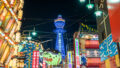
It is a small room. Usually underground, or up a narrow staircase, or behind a curtain (noren) hanging in a doorway on a side street that you would walk past without a second glance if you did not know what it was. Inside: wooden counters worn smooth by decades of elbows. Small tables close enough together that you will inevitably hear your neighbors’ conversation. The smell of charcoal and grilled things and cold beer just opened. The sound of people talking — really talking, the way people talk when they have had one drink and stopped performing and started being themselves.
This is an izakaya. And I would argue — without apology, without qualification — that it is the most important social institution in Japan.
Not the temple. Not the tea ceremony. Not the company or the school or the neighborhood association.
The izakaya.
Let me explain why.
- What Is an Izakaya?
- A History Built on Sake and Practicality
- The Physical Space: Everything Is Intentional
- The Ritual of Arrival: Otōshi and the First Drink
- The Drinks: A Complete Guide
- The Food: Small, Shared, Excellent
- The Izakaya Experience: How an Evening Actually Unfolds
- The Nikai Culture: What Happens After
- The Izakaya and Japanese Social Life: Why It Matters
What Is an Izakaya?
The word izakaya (居酒屋) is made of three characters: i (居) meaning “to stay” or “to be present,” sake (酒) meaning alcohol, and ya (屋) meaning shop or establishment. A place where you stay and drink.
That is the literal meaning. The actual meaning is considerably richer.
An izakaya is a Japanese gastropub — an informal eating and drinking establishment where food and alcohol are served together, where the atmosphere is relaxed and convivial, where the primary purpose is not merely to eat or merely to drink but to be with other people in a way that daily Japanese life does not always easily permit.
It is not a restaurant in the Western sense. At a restaurant, you go to eat. At an izakaya, you go to stay. The meal unfolds over hours. Dishes arrive in small portions, shared among the group. Drinks are ordered, finished, ordered again. Conversation accumulates. The evening deepens.
The izakaya is where Japanese people, constrained by the politeness and restraint that structure daily social interaction, come to be a little less constrained. Where colleagues become friends, where acquaintances become closer, where things are said that could not quite be said in the office or the home or the formal restaurant.
Japan, as I have written before, has a concept called honne and tatemae — the true feeling and the public face. In most contexts, tatemae is required. The izakaya is one of the few spaces where honne is permitted. Expected, even.
This is why it is the most important social institution in Japan. Not because of the food — though the food is often excellent. Because of what it makes possible.
A History Built on Sake and Practicality
The izakaya did not begin as a social institution. It began as a practical solution to a commercial problem.
In the Edo period (1603–1868), sake shops — sakaya — sold rice wine by the cup or bottle for customers to take home. As the merchant class of Edo grew wealthier and more numerous, some sakaya began providing chairs or benches where customers could drink on the premises. This was not an idealistic decision about the value of communal space. It was a business decision: customers who sat down drank more than customers who bought to go.
The i in izakaya — “to stay” — reflects this origin. The izakaya began as a sake shop where staying was permitted. It evolved, over generations, into something that staying made necessary: food to accompany the drinking, atmosphere to encourage the staying, a culture built around the particular pleasures of sitting in a warm room with people you know, drinking and eating and talking as long as you want.
By the Meiji period (1868–1912), the izakaya had become a distinct institution with its own conventions — the noren curtain in the doorway, the communal seating, the menu of small shared dishes, the expectation of a long evening rather than a quick meal. These conventions have remained essentially unchanged for a century and a half.
The izakaya survived the modernization of Japan, the economic miracle of the postwar period, the bubble economy of the 1980s, the long stagnation that followed. It survived the arrival of fast food chains and family restaurants and international bar culture. It survived, in a reduced but still vital form, the pandemic years.
It survives because it provides something that modernization and convenience cannot replace. Which is, very simply, a place to be human in a society that spends a great deal of energy asking you to be professional.
The Physical Space: Everything Is Intentional
Walking into an izakaya for the first time, a foreign visitor might notice chaos. Tables close together. Noise. Smoke, in older establishments that still permit it. The absence of the quiet, orchestrated elegance associated with formal Japanese dining.
This is not chaos. It is a different kind of order — an order built around the specific requirements of social eating and drinking rather than the requirements of formal service.
The Noren
The cloth curtain hanging in the doorway — the noren — is the first signal. When the noren is hanging, the izakaya is open. When it is rolled up or absent, it is closed. Ducking through a noren is a small physical act that carries meaning — you are leaving the outside world and entering a different space. The transition is deliberate.
The Counter
Most izakaya have a counter — often L-shaped, running along one or two walls — with seats directly facing the kitchen or the bartender’s station. Counter seating is the heart of izakaya culture. At the counter, the physical distance between customer and server is eliminated. You can watch the food being prepared. You can have a conversation with the person making your drinks. The formality that separates diner from kitchen in a restaurant largely disappears.
For people eating alone — and solo izakaya eating is completely normal in Japan — the counter is the natural home. You sit, you order, you eat and drink at your own pace, you are neither lonely nor intruding. The counter provides company without obligation. This is one of the reasons I love izakaya.
The Seats and Tables
Beyond the counter are small tables — often lower than Western dining tables, sometimes with cushions on the floor rather than chairs (zashiki seating). Groups settle in. The close proximity of tables to each other is not a design flaw. It is a feature. The slight overlap of neighboring conversations, the awareness that other people are also eating and drinking and having a good time — this ambient sociability contributes to the atmosphere in a way that a spacious, separated layout cannot.
The Lighting
Izakaya lighting is almost always warm and dim — amber or incandescent, low enough to flatter rather than expose. This is not accidental. Dim, warm light encourages people to relax, to stay, to speak more freely. Bright overhead lighting does the opposite. The izakaya understands that the right light is part of what it is selling.
The Noise
A good izakaya is loud. Not unpleasantly loud — not the aggressive noise of a crowded sports bar — but loud with the particular warmth of many simultaneous conversations and the sounds of food being prepared and glasses touching and people laughing. This ambient noise provides cover for private conversation. You can say things at an izakaya that you could not say in a quiet restaurant, because the noise absorbs them. This is partly why honne is possible here.
The Ritual of Arrival: Otōshi and the First Drink
Every izakaya experience begins with the same ritual, and understanding it prevents a moment of confusion that catches many foreign visitors off guard.
You sit down. Within moments — before you have ordered anything — a small dish arrives at your table. It might be a few pieces of pickled vegetable. A small serving of tofu. A handful of edamame. Some sliced cucumber with miso.
This is the otōshi (お通し) — sometimes called tsukidashi in western Japan. It is a small appetizer that arrives automatically, for every customer, without being ordered.
Here is the part that surprises some foreign visitors: it is not free. The otōshi will appear on your bill, typically at around 300 to 500 yen per person.
The otōshi functions as several things simultaneously. It is a cover charge, in effect — a minimal payment for the table and the service. It is an immediate indication of the kitchen’s standards — a well-made otōshi from quality ingredients signals a good izakaya. It is also a practical bridge between sitting down and the arrival of the first ordered dish — something to eat with the first drink while the kitchen prepares.
Do not refuse the otōshi. Do not ask for it not to be served. It is part of the izakaya contract. Eat it, appreciate it, judge the establishment by it.
The first drink order is placed almost immediately after sitting — in Japan, the convention of sitting down before ordering does not really apply at izakaya. The server will ask, often before you have fully settled: Otsumami wa? — what would you like to drink? The correct answer is: whatever you want, ordered without excessive deliberation. At an izakaya, decisive drink ordering is considered polite. Lengthy hesitation is not.
The classic first drink is beer — nama biru, draft beer, usually served in a tall, frosted glass or a proper pint-sized mug. Cold, slightly bitter, immediately refreshing. There is no more appropriate first drink at an izakaya than a cold beer. There may also be no more appropriate first drink anywhere in Japan after a long day.
The Drinks: A Complete Guide
Izakaya are drinking establishments first, eating establishments second — which is why I want to spend real time on the drinks before we discuss the food.
Beer (ビール)
The dominant izakaya drink. Japanese beer — primarily Sapporo, Asahi, Kirin, and Suntory — is lager-style, crisp, relatively light, and designed to be drunk cold and quickly in the context of eating savory food. Nama (draft) is preferred over bottled for its fresher flavor and colder temperature. The first beer of the evening at an izakaya is one of the reliable small pleasures of life in Japan. I say this as someone who has had approximately ten thousand of them.
Sake (日本酒)
Rice wine — nihonshu — served either cold (reishu), room temperature (jōon), or warm (kanzake). The temperature affects the flavor significantly: cold sake tends to be crisp and dry; warm sake rounder and more aromatic. Izakaya sake ranges from inexpensive futsu-shu (table sake) to premium junmai daiginjo (pure rice sake with highly polished grains and delicate, fruity complexity).
For the uninitiated: sake is not strong by global spirits standards — typically 15 to 16% alcohol — but it drinks easily and pairs extraordinarily well with Japanese food in a way that beer, good as it is, does not quite match. If you are at an izakaya and want to drink something that feels completely native to the experience, sake is the answer.
Shōchū (焼酎)
A distilled spirit made from sweet potato (imo-jōchū), barley (mugi-jōchū), rice (kome-jōchū), or other bases. Typically 25% alcohol. Usually drunk mixed with hot water (oyuwari) or cold water (mizuwari) or on the rocks. Sweet potato shōchū has a distinctive, earthy, slightly sweet flavor that is an acquired taste — acquire it. Barley shōchū is milder and more accessible. Rice shōchū is the lightest.
Shōchū is the drink of choice for serious izakaya regulars who want something with more character than beer but less ceremony than sake. It is particularly associated with Kyushu — the southern island where much of Japan’s best shōchū is produced — but is available throughout Japan.
Highball (ハイボール)
Whisky and soda — uisukī no sōda wari — in a tall, iced glass. The Japanese highball is made with Japanese whisky, which has its own distinctive character — lighter and more delicate than Scotch, with a cleanness that makes it particularly compatible with the highball format. Cold, fizzy, not too sweet, endlessly drinkable. The highball became enormously popular at izakaya in the 2000s and has not lost its position since. For people who want something lighter than straight spirits but more interesting than beer, the highball is the answer.
Umeshu (梅酒)
Plum wine — ume plums steeped in alcohol with sugar, producing a sweet, slightly sour, deeply aromatic drink. Served over ice, with soda as a umeshu soda, or straight. The flavor is distinctive and completely Japanese. I recommend it specifically to people who do not normally enjoy drinking, because it tastes more like fruit juice with ambitions than like alcohol, and because its sweetness is genuinely pleasant rather than cloying.
The Nomihodai Option
Many izakaya offer nomihodai — all-you-can-drink, typically for a set time period (90 minutes or two hours) at a fixed price. The selection is usually limited to beer, basic sake, shōchū, highball, and soft drinks. The price is reasonable. The concept is exactly as it sounds. I leave the decision about whether to order nomihodai to your own judgment and your knowledge of your own capacity.
The Food: Small, Shared, Excellent
Izakaya food is designed specifically for drinking — salty, savory, often fatty, in portions small enough to share and order repeatedly throughout a long evening. It is not refined cuisine. It is not trying to be. It is trying to make you want another drink and another hour at the table. It succeeds.
Edamame (枝豆)
The universal izakaya opener. Boiled soybeans in their pods, salted generously, eaten by pulling the beans out with your teeth. Simple, satisfying, slightly addictive, and specifically calibrated to make beer taste better. Every izakaya in Japan serves edamame. Most izakaya in Japan sell more edamame than any other single item. There is a reason for this.
Karaage (唐揚げ)
Japanese fried chicken — marinated in soy sauce, sake, ginger, and garlic before being coated in potato starch and fried until crackling crisp. Cold beer and karaage is one of the fundamental flavor pairings of Japanese izakaya culture, as natural and inevitable as wine and cheese in France or fish and chips and vinegar in Britain. If you eat nothing else at an izakaya, eat karaage.
Yakitori (焼き鳥)
Grilled chicken skewers over charcoal — all the cuts and styles I described in my yakitori article, applied here in the izakaya context. The connection between yakitori and izakaya is so fundamental that the two are often interchangeable in casual conversation. Many izakaya specialize specifically in yakitori and build their entire menu around it.
Agedashi Tofu (揚げ出し豆腐)
Silken tofu, dusted in potato starch and deep-fried until the exterior is light and crispy while the interior remains soft and warm, served in a light dashi broth with grated daikon and green onion. The contrast of textures — crispy outside, silken inside — and the delicate flavor of the broth make this one of the great izakaya dishes. It is also one of the most technically unforgiving — agedashi tofu that has been made carelessly or allowed to sit too long is a disappointment. Made correctly and eaten immediately, it is extraordinary.
Gyoza (餃子)
Pan-fried dumplings — thin wrappers filled with minced pork, cabbage, garlic, and ginger, crispy on the bottom, steamed on top, eaten with a dipping sauce of soy sauce, rice vinegar, and chili oil. Japanese gyoza are smaller and crispier than their Chinese counterparts, with a thinner skin and a higher garlic-to-everything-else ratio. At an izakaya, a plate of six gyoza is the food equivalent of a cold beer: immediate, satisfying, universally right.
Sashimi (刺身)
A plate of fresh raw fish — tuna, salmon, yellowtail, squid — sliced and arranged with wasabi and shiso leaf, eaten with soy sauce. The quality of izakaya sashimi varies significantly — a good izakaya near a fish market will serve sashimi that rivals a sushi restaurant. A mediocre izakaya in a landlocked city will serve adequate sashimi. The point at an izakaya is to order it alongside other dishes as part of a varied meal rather than as the centerpiece.
Tamagoyaki (卵焼き)
The sweet rolled omelette, appearing here again — because it appears everywhere in Japanese food culture and at an izakaya it serves a specific purpose. Among the salt and fat and intensity of izakaya food, a few slices of sweet tamagoyaki provide a gentle, mild, slightly sweet note that resets the palate and reminds you that not everything needs to be assertive.
Potato Salad (ポテトサラダ)
Japanese potato salad is meaningfully different from its Western counterparts — creamier, slightly sweet from a proportion of Japanese mayonnaise, often containing cucumber, carrot, and sometimes corn, with the potatoes roughly mashed rather than cut into chunks. It is comfort food of an unpretentious and completely satisfying kind. At an izakaya, ordering potato salad is an act of unpretentious self-knowledge. You know what you like. You order it without embarrassment.
Niku Jaga (肉じゃが)
Meat and potato stew — niku (meat) + jaga (potato, from jagaimo) — simmered in a sweet soy sauce broth with onions and sometimes carrots, served in a small earthenware dish. The beef or pork is tender, the potato is soft, the broth is deeply savory and slightly sweet. Niku jaga is home cooking at its most fundamental — the dish that many Japanese people associate with their mother’s kitchen — and its presence on an izakaya menu is a deliberate invocation of that comfort. Eating niku jaga at an izakaya is like being reminded, briefly, of being taken care of.
Ochazuke (お茶漬け)
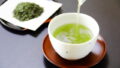
At the end of a long izakaya evening — when the drinking is winding down, when you need something gentle to settle the stomach and prepare for the journey home — some izakaya serve ochazuke: hot green tea or dashi poured over a bowl of rice, with simple toppings of pickled plum, salmon, or seaweed. It is the simplest thing on the menu and often the most necessary. It absorbs. It soothes. It says: the evening is ending, and that is all right.
The Izakaya Experience: How an Evening Actually Unfolds
A foreign visitor who understands the format of an izakaya will have a fundamentally different — and better — experience than one who approaches it like a regular restaurant. Let me walk you through how a typical evening works.
Arrival. You duck through the noren. You are greeted — often loudly, by the entire staff simultaneously — with irasshaimase! (welcome!). This call-and-response greeting, delivered with genuine energy, is one of the auditory signatures of Japanese hospitality. It is not performative. It is a genuine announcement that you have arrived and that your presence matters.
Seating. You are seated at a counter, a low table, or a booth. If your group is large, you may be seated in a zashiki — a private tatami room with low tables, where you remove your shoes at the entrance. Zashiki seating is warmer, more intimate, and slightly more formal than counter or table seating.
The otōshi arrives. You eat it. You judge it.
Drinks are ordered. Usually beer for everyone, at first. A toast — kanpai! — is performed when the drinks arrive. At Japanese drinking occasions, you do not begin drinking before the toast. This is not strict etiquette so much as social rhythm — the kanpai marks the official beginning of the evening, the moment when everyone is present and the night can properly start.
Food is ordered in waves. You do not order everything at once. You order a few dishes to start — edamame, karaage, perhaps sashimi — and then order more as the evening progresses, based on what sounds good and how hungry you remain. This gradual ordering is part of what makes an izakaya evening feel different from a restaurant meal — the food is woven into the conversation rather than structuring it.
Dishes arrive shared. Everything is placed in the center of the table for everyone. Individual portions are unusual. The sharing of food — taking a piece of karaage from the shared plate, pouring beer for your neighbor before yourself — is part of the social texture of the evening. Pouring your own drink before your neighbor’s is considered slightly impolite. Keeping an eye on others’ glasses and refilling them before they empty is considered attentive.
The evening deepens. Hours pass. The dishes come and go. The drinks are replaced. The conversation shifts — from professional to personal, from guarded to open, from formal to something more honest. This is the process that izakaya enables and that daily Japanese life does not always permit.
The bill is split or one person pays. The Japanese convention at izakaya is often for one person — typically the senior member of the group, or the person who organized the gathering — to pay the entire bill (ogori), which the others will reciprocate at future occasions. Splitting equally (warikan) is also common, particularly among peers. Individual bills — one person paying exactly their own portion — is less typical in traditional izakaya culture, though it happens.
Departure. You are sent off with arigatō gozaimashita! from the staff — sometimes the same call-and-response energy as the arrival greeting. You duck back through the noren into the street. The cold air is a shock after the warmth inside. You feel, in some way that is difficult to precisely locate, like you have been somewhere real.
The Nikai Culture: What Happens After
In Japan, a work drinking event — nomikai — does not always end at the izakaya. The first establishment is ichikai — first venue. After the izakaya, the group may move to a second venue — nikai — typically a karaoke bar, a cocktail bar, or a smaller, more intimate izakaya. Sometimes a third venue follows — sankai.
This progression has its own logic. The first venue is the main event — the food, the substantial drinking, the official social occasion. The second venue is for the people who want to continue — smaller in number, more select, more relaxed. By the third venue, only the most committed remain, and the conversation there is often the most honest and the most memorable.
The nikai culture is where a great deal of real relationship-building in Japanese professional life occurs. The things said at the third venue, in a small bar at one in the morning, are things that could not be said in the office or at the formal dinner. They are remembered. They matter.
I have had some of the most important conversations of my working life at a nikai or sankai. Not because alcohol removes judgment — I am careful to note that it also sometimes does exactly that — but because the accumulated hours of shared eating and drinking and gradually dropping of social performance creates a space where honest things become possible.
The Izakaya and Japanese Social Life: Why It Matters
I want to say something final about why izakaya matters in Japan in a way that is not simply about food or drink.
Japan is a society built on wa — harmony. The suppression of individual desire in favor of group cohesion. The management of personal feeling through restraint and indirection. These are genuine cultural values and they produce genuine social goods: the orderliness, the civility, the care for others that foreign visitors notice and admire.
But they also produce pressure. The constant performance of the appropriate self — polite, controlled, harmonious — is exhausting. It requires, somewhere, a release valve.
The izakaya is that valve.
It is the place where the salaryman who has spent eight hours in a meeting performing professional competence can sit at a counter, eat karaage with his colleagues, drink beer, and say what he actually thinks. Where the student who has spent a semester performing academic seriousness can laugh too loudly with her friends over gyoza and highballs. Where the exhausted mother can sit with a neighbor and drink plum wine and say, finally, that this week was hard.
Not every izakaya conversation is profound. Most of them are not. They are gossip and sports and complaints about the weather and memories of better meals eaten elsewhere. They are ordinary conversations between ordinary people having an ordinary evening.
But they are real in a way that much of daily Japanese social life is not quite permitted to be real. And that reality — that permission to simply be yourself, imperfectly and comfortably, in the company of others — is what I mean when I say the izakaya is Japan’s greatest social institution.
The temple teaches. The tea ceremony cultivates. The company provides.
The izakaya allows.
And sometimes, allowing is the most important thing of all.
— Yoshi 🍣 Central Japan, 2026
Enjoyed this? You might also like: “Yakitori: The Art of the Skewer — Japan’s Greatest Street Food” and “Why Japanese People Apologize So Much — And What It Really Means” — both available on Japan Unveiled.