Satoyama: Japan’s Forgotten Countryside and Why It Matters
By Yosi Written at the kitchen table at 11pm after a full day of coppicing, with cold tea and a deadline I did not agree to.
- Introduction: Nobody Asked Me, But Here We Are
- What Is Satoyama? (It’s Where I Live. Keep Up.)
- A Brief History of How We Built This Thing
- Why Any of This Matters (The Biodiversity Section, For the People Who Need Convincing)
- The Revival Efforts, or, What I Have Been Doing Every Weekend for Fifteen Years
- Why This Matters to You, Personally, Even If You Have Never Been to Rural Japan
Introduction: Nobody Asked Me, But Here We Are
My name is Yosi. I am 58 years old. I manage a satoyama landscape in rural Japan. I have been doing this for thirty-seven years. I have calluses on my calluses. My back makes a sound in the morning that my doctor describes as “concerning” and I describe as “the sound of someone who actually does physical work.”
Last month, a university student arrived at my farm with a clipboard and asked if I would be willing to share my “lived experience of traditional ecological land management practices” for her thesis.
I said: “You mean farming?”
She said: “Well, it’s more nuanced than—”
I said: “It’s farming.”
Anyway. She suggested I write something about satoyama for a wider audience. Something accessible. Something with “a personal voice.” I told her I have been talking about satoyama for thirty years and nobody has listened. She said this time would be different. I have my doubts. But here we are.
What Is Satoyama? (It’s Where I Live. Keep Up.)
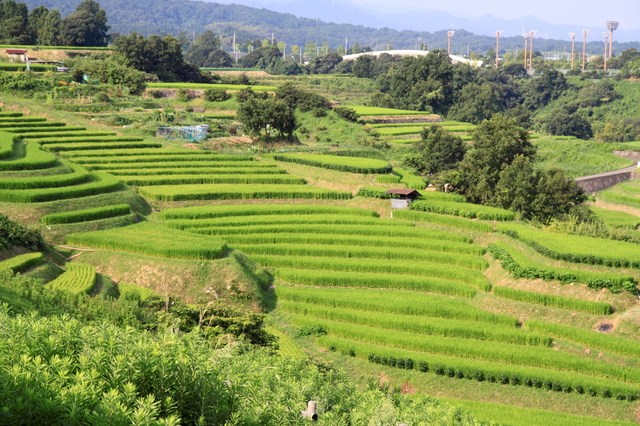
Satoyama is the landscape between the village and the mountain. The in-between zone. Sato (里) means village. Yama (山) means mountain. You put them together and you get the rice paddies, the coppiced woodlands, the irrigation ponds, the grasslands, and the farms that Japanese rural communities have been carefully managing for over a thousand years.
It looks, to the untrained eye, like “just countryside.”
It is not just countryside. It is a precisely calibrated ecological system maintained by centuries of accumulated knowledge, seasonal labor, and community cooperation. It is one of the most biodiverse landscapes in Japan. It is the reason fireflies exist in numbers large enough to be worth writing haiku about.
It is also, I will be honest with you, a tremendous amount of work.
My neighbor Kenji — who sold his fields to a developer in 2019 and now golfs on Tuesdays — says I am “very dedicated.” I have opinions about Kenji that I will keep to myself for legal reasons.
A Brief History of How We Built This Thing
The Edo Period (1603–1868): The Golden Age, Apparently
Everyone who writes about satoyama gets very misty-eyed about the Edo period. And fine, yes, it worked beautifully. Villages managed the surrounding landscape through a system called iriaichi — communal land governance with strict rules about what you could harvest, when, and how much. Burn the grassland in spring. Coppice the woodland on rotation. Drain and dredge the pond every few years. Don’t take more than your share or the village council will have a very long meeting about you.
My ancestor Yosi the First followed these rules. His son followed them. His son’s son followed them. All the way down to me, Yosi the Presumably Last, standing alone in a woodland that hasn’t had enough volunteers since 2014.
What people forget when they romanticize the Edo period is that the reason everyone managed satoyama so carefully was extremely practical: if you destroyed your woodland, you froze to death in winter. This focused the mind wonderfully. Modern environmentalism asks people to act for the benefit of future generations. Edo-period satoyama management asked people to act for the benefit of themselves, next February. One of these is a more reliable motivator than the other.
The Meiji Period (1868–1912): Progress Arrives, Looks Around Suspiciously
Japan opened to the outside world and decided that modernization was the priority. Satoyama continued in most rural areas, but “traditional” was beginning to acquire a faintly embarrassing connotation. “Efficient” was the new virtue. Machines were coming. Things were about to get complicated.
I mention this period mainly because it explains the expression on my face whenever someone from Tokyo calls what I do “charming.”
The Postwar Boom (1950s–1970s): The Part Where Everything Goes Wrong
Ah. Here we are. The part of the story where I start sighing heavily.
Japan’s postwar economic miracle was, by most measures, extraordinary. Incomes rose. Cities grew. Life expectancy improved dramatically. The country rebuilt itself from rubble into the third-largest economy on earth in roughly twenty years.
Satoyama had a somewhat different experience of this period.
First, petroleum arrived. Before the 1950s, charcoal and firewood were how Japan heated homes and cooked food. This meant that coppicing woodlands — cutting trees on regular rotation so they regrow as dense, useful poles — was economically essential. The moment kerosene heaters became affordable, the economic rationale for coppicing evaporated overnight.
Nobody decided to stop managing the woodlands. They just… stopped. One by one, across thousands of villages. The trees grew back tall and dense and dark. The wildflowers that needed sunlight disappeared. The butterflies that needed wildflowers disappeared. The birds that needed the insects that needed the wildflowers disappeared. A perfectly functional ecological cascade, running smoothly in reverse.
I was not born yet. I would like to state, for the record, that this was not my fault.
Then, chemical fertilizers arrived. For centuries, farmers collected fallen leaves from the woodland floor every autumn and composted them as fertilizer. This was laborious and kept the woodland floor open and ecologically productive. Then someone invented nitrogen in a bag and suddenly leaf-raking seemed like a lot of effort for no reason. The raking stopped. The woodland floors changed. More species departed.
Then, concrete arrived, and I want to be clear about what happened to Japan’s irrigation infrastructure, because it is genuinely one of the most ecologically consequential things that occurred in this country and it gets approximately one-tenth of the attention it deserves. Every slow, silty, ecologically productive earthen irrigation channel — home to dragonfly larvae, frog eggs, medaka fish, aquatic plants — was replaced with a smooth concrete channel. Efficient. Easy to maintain. Completely, aggressively, comprehensively hostile to aquatic life.
The frogs noticed immediately. Nobody else did for about fifteen years.
Finally, young people left. And I understand. I do. Tokyo is exciting and rural satoyama management is, I will be honest, not glamorous. But the people who knew how to manage these landscapes — which trees to coppice, when to flood the paddies, how to read the hydrology of a hillside, what the pond looked like before it was healthy and what it looked like before it died — those people aged. They retired. They passed away. And the knowledge went with them, quietly, unrecorded, because nobody thought to write it down because everyone assumed someone else would be doing this work forever.
The average age of Japanese farmers today is above 67. I am 58. I am, in statistical terms, one of the young ones. This should alarm you more than it probably does.
Why Any of This Matters (The Biodiversity Section, For the People Who Need Convincing)
Here is the thing about satoyama that takes most people by surprise: this human-made, constantly interfered-with, aggressively managed landscape is more biodiverse than untouched forest.
I know. It seems backwards. Shouldn’t nature be better off without humans stomping around in it?
In this case: no. And here is why.
Many of Japan’s most interesting species evolved not in pristine old-growth forest, but in exactly the kind of messy, light-filled, structurally complicated environments that humans create when they periodically chop things down, flood fields, and burn meadows. Take away the human disturbance, and the ecology doesn’t return to some primeval paradise. It advances, steadily and boringly, toward dense secondary forest — dark, species-poor, and ecologically about as interesting as a car park.
Some examples of satoyama species currently having a difficult time:
🪲 Fireflies (Hotaru) — Their larvae live in clean, slow-moving water and eat specific freshwater snails. Concrete irrigation channels provide neither clean slow water nor snails. Firefly populations have collapsed across most of lowland Japan. Firefly-viewing (hotaru-gari) is now something urban tourists drive ninety minutes into the mountains to experience, competing for parking, taking photographs on their phones, and then leaving. I watch them arrive every June from my window. I have feelings about this that I am working through with my doctor.
🦋 The Great Purple Emperor (Ōmurasaki) — Japan’s national butterfly. Requires coppiced forests with hackberry trees. As coppicing stopped, Ōmurasaki populations declined. It is, I think, somewhat ironic to be the national butterfly of a country that stopped maintaining your habitat, but the butterfly has not commented publicly on this.
🐸 Frogs — There used to be so many frogs in the rice paddies that in spring you could not sleep for the noise. I am not exaggerating. My father complained about it constantly. I would give a great deal to hear that noise again. The concrete channels got the frogs. The concrete channels got everything.
🐟 Medaka (Oryzias latipes) — A small rice paddy fish that co-evolved with wet rice agriculture over thousands of years. Now endangered in the wild. More commonly found in elementary school fish tanks than in actual rice paddies. The medaka has been sent to space for scientific research. It has been to space and back more recently than it has been in a functioning satoyama paddy. I find this difficult to sit with.
Estimates suggest that satoyama-associated habitats support over half of Japan’s threatened species. More than half. In a landscape that covers a small fraction of the country. The math is not subtle.
The Revival Efforts, or, What I Have Been Doing Every Weekend for Fifteen Years
The Volunteers
People come to help. I am grateful. I am genuinely, sincerely grateful. I want to be clear about that before I say the following things.
The volunteers arrive from the city in clean hiking boots that have never seen mud. They are enthusiastic. They use words like “regenerative” and “ecosystem services.” One of them once asked me if I had considered “gamifying the coppicing process.” I did not know what this meant. I have since looked it up. I remain unclear on how it would apply to hitting a tree with an axe.
They work hard for one Saturday and then most of them do not come back. Some do. Those ones I like very much. One young man named Takeshi has been coming every month for three years now. He is learning. He has begun to develop an instinct for which trees to cut. His boots are no longer clean. I have some hope for Takeshi.
The Government
The government has programs. There are grants. There are designations. There are committees that produce reports recommending the establishment of further committees. Some of the programs are genuinely useful. Others involve so much paperwork that by the time you have completed the application, the woodland you were trying to protect has been colonized by bamboo.
Bamboo, I should explain, is not native to most of the areas it now occupies. It was planted for various agricultural purposes and, now that nobody harvests it, is advancing across Japan’s rural landscapes with the quiet, unstoppable confidence of something that has read the demographic projections and likes what it sees. I spend approximately one month per year fighting bamboo. The bamboo does not appear discouraged.
The Technology
Young researchers come with drones and environmental DNA samplers and digital platforms that will “connect urban volunteers with rural landowners.” I am a rural landowner. I have been connected to urban volunteers. See previous section about clean hiking boots.
The drones are actually useful. I will admit this. Last autumn a researcher used a drone to map the woodland and identified three areas where the canopy had closed over more than I realized. I would not have found those areas until next spring. The drone found them in forty minutes. I am not too proud to acknowledge when technology is helpful. I am, however, too proud to gamify the coppicing.
Why This Matters to You, Personally, Even If You Have Never Been to Rural Japan
I have been managing this satoyama for thirty-seven years. I will, if my back cooperates, manage it for perhaps twenty more. After that, I do not know what happens to it.
My children live in Nagoya. My son works in logistics. My daughter works in finance. They come home for New Year and help with the woodland for two days and return to their lives, which are comfortable and urban and do not involve hitting trees with axes.
I do not blame them. I chose this life. They chose different ones. This is how it works.
But here is what I want you to understand, you, reading this on your phone in a city somewhere:
Satoyama is not just a landscape. It is a record of a relationship — a thousand-year conversation between a community and its land, conducted in the language of seasonal labor, accumulated knowledge, and careful restraint. The fireflies, the frogs, the butterflies, the medaka fish: these are not just biodiversity statistics. They are evidence that the conversation was working.
When the conversation stops — when the last person who knows which trees to cut and when to flood the paddies and how to read the water in the pond retires to a nursing home in the city — the evidence disappears. Not dramatically. Not all at once. Quietly, season by season, species by species, like a library where nobody is borrowing the books and one by one the pages are going blank.
I am trying to keep the conversation going. Takeshi is learning. A few hundred other Takeshis, scattered across rural Japan, are learning from a few hundred other people like me.
It may be enough. I genuinely do not know.
What I do know is that this woodland, this morning, had fireflies in it. Not many. But some.
That will have to be enough for today.
Yosi is a satoyama farmer and reluctant writer based in rural Japan. He does not have social media. He does not want social media. He would like you to come and help coppice the woodland sometime, if you are serious about it. Clean hiking boots are acceptable. Just be prepared for them not to stay that way.