Sushi vs. Sashimi — What’s the Actual Difference?
By Yosi | Japan Unveiled
Let me tell you something embarrassing.
A few years ago, a colleague from overseas visited Japan for the first time. We went to a sushi restaurant together — a small, local place near my home in central Japan, nothing fancy, just the kind of place I’ve been going to since I was a child.
He looked at the menu, pointed at a beautiful plate of tuna sashimi, and said: “Oh great, sushi!”
I didn’t correct him immediately. I just smiled and said, “Try it.”
He loved it. Of course he did. But afterward, I explained the difference — and the look on his face was priceless. Not embarrassment. Genuine fascination. Like a door had opened that he didn’t even know existed.
That moment is why I’m writing this article.
Because sushi and sashimi are not the same thing. They are related, yes. They often appear on the same menu, yes. But they are fundamentally different foods — with different histories, different philosophies, and different ways of being enjoyed.
Let me explain.
The Simple Answer First
If you want the quick version:
Sushi = vinegared rice + a topping (usually seafood, but not always raw)
Sashimi = raw seafood (or meat), served alone, without rice
That’s it. That’s the core difference.
But if you stop there, you’re missing almost everything that makes these two foods interesting. So let’s go deeper.
What Is Sushi, Really?
Most people outside Japan think sushi means “raw fish.” But that’s not quite right.
The word sushi actually refers to the rice, not the topping. Specifically, it refers to rice that has been seasoned with rice vinegar, sugar, and salt. This rice — called shari or sumeshi — is the heart of sushi. Without it, there is no sushi.
The toppings can be:
- Raw fish (the most famous version)
- Cooked seafood — shrimp, eel, crab, octopus
- Egg (tamago)
- Vegetables
- Even meat, in some modern versions
So technically, a piece of sushi with cooked shrimp is still sushi. A vegetable roll is still sushi. Because what defines sushi is always the rice.
A Brief History of Sushi
Here’s something that surprises most people: sushi did not originally involve fresh fish at all.
The earliest form of sushi — called narezushi — was a preservation method. Fish was packed in salted rice and left to ferment for months, sometimes years. The rice was not eaten; it was just used to create the acidic environment that preserved the fish. People threw the rice away and ate only the fermented fish.
This style of sushi is still made in some parts of Japan today, including near Lake Biwa in the Kansai region. It smells extremely strong. It is an acquired taste, to put it gently.
Over centuries, sushi evolved. The fermentation time got shorter. Eventually, people started eating the rice too. By the Edo period (roughly 1600–1868), a faster style called hayazushi emerged — fish pressed onto rice and eaten relatively fresh.
Then came the style most people recognize today: nigiri sushi, invented in Tokyo (then called Edo) in the early 19th century. A skilled chef would press a small mound of vinegared rice by hand and place a slice of fresh fish on top. It was fast food — literally. Street vendors sold it to busy Edo residents who didn’t have time to sit down for a meal.
That street food became one of the most refined culinary traditions in the world. Not bad for a snack.
The Main Types of Sushi
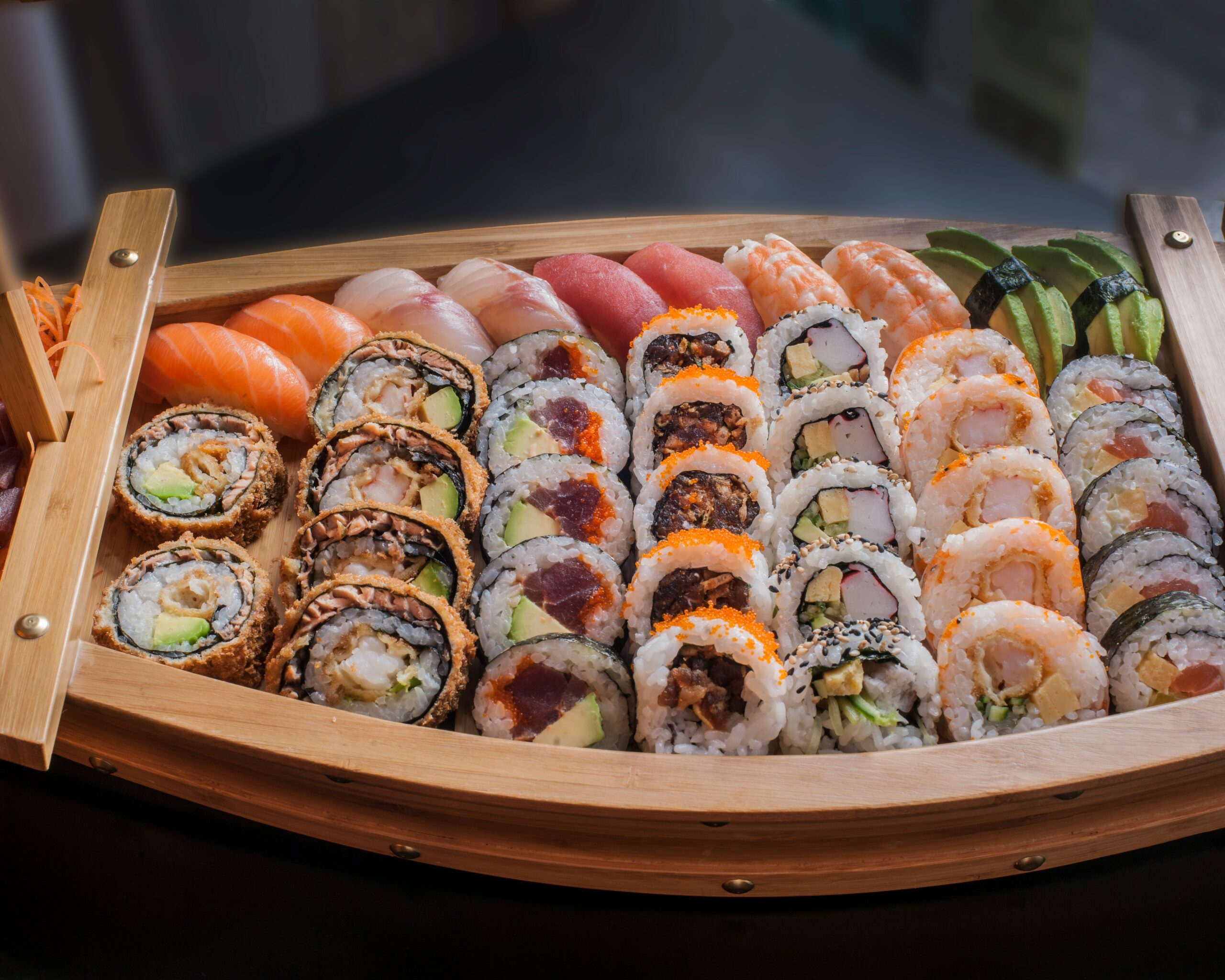
Tourism sites usually show nigiri and rolls. But sushi is far more varied than that. Here are the main types you’ll encounter in Japan:
Nigiri (握り) — The most classic form. A chef hand-presses an oval mound of rice and lays a slice of fish or other topping on top. Sometimes a tiny smear of wasabi is placed between the rice and the topping. This is what most people picture when they think of sushi.
Maki (巻き) — Rice and fillings rolled in a sheet of nori (dried seaweed) and cut into rounds. Hosomaki are thin rolls with one ingredient. Futomaki are thick rolls with multiple fillings. The California roll that became famous overseas is a style of maki — though it’s almost never eaten in Japan itself.
Gunkanmaki (軍艦巻き) — “Battleship roll.” A small oval of rice wrapped in a strip of nori, with toppings that can’t easily sit on flat rice — sea urchin (uni), salmon roe (ikura), or finely chopped ingredients. The name comes from the shape, which resembles a warship.
Temaki (手巻き) — Hand rolls. A cone of nori filled with rice and toppings, meant to be eaten immediately before the nori goes soft. There’s something deeply satisfying about eating a temaki — it feels personal, informal, alive.
Chirashi (ちらし) — “Scattered sushi.” A bowl of sushi rice topped with a colorful arrangement of various seafood, vegetables, and egg. Beautiful to look at, simple to eat, and very popular in home cooking.
Oshizushi (押し寿司) — Pressed sushi. Rice and toppings are layered in a wooden mold and pressed into a firm block, then cut into pieces. This style is particularly popular in the Kansai region — Osaka and Kyoto.
Inari (いなり) — Sweet, deep-fried tofu pouches filled with sushi rice. No fish involved at all. Often eaten at picnics and festivals. Underrated and delicious.
What Is Sashimi, Really?
Sashimi is simpler in concept, but no less sophisticated in execution.
The word sashimi (刺身) literally means “pierced body” — a reference to the traditional practice of leaving the tail and fin attached to the fish slices for presentation, so you could identify what you were eating.
Sashimi is simply fresh raw protein — usually fish or seafood, sometimes beef or horse meat — sliced with great precision and served as is. No rice. No cooking. Just the ingredient itself, in its purest form.
And because there is nowhere to hide, sashimi is one of the most demanding foods in Japanese cuisine. The quality of the fish must be exceptional. The knife work must be exact. The presentation must be beautiful. And the fish must be so fresh that eating it raw is not just safe, but genuinely delicious.
The Art of the Knife
In Japanese cuisine, the way sashimi is cut is not just practical — it’s an art form.
Different fish require different cutting techniques. Tuna is sliced in a smooth, pulling motion to preserve the texture of the flesh. Flounder (hirame) is cut differently, because its muscle fiber runs in a different direction. Squid is scored in a crosshatch pattern so it curls beautifully on the plate.
Japanese kitchen knives are designed specifically for this work. The yanagiba — a long, single-edged knife — is the traditional sashimi knife. A skilled chef can slice a piece of tuna so smoothly that the cut surface almost shines.
This is why sashimi, despite looking simple, represents some of the highest skill in Japanese cooking.
How Sashimi Is Served
A traditional sashimi plate is never just fish on a plate.
It typically comes with:
Wasabi — Real wasabi (hon-wasabi) is grated fresh from the wasabi plant and has a clean, bright heat that fades quickly. Most wasabi outside Japan — and even in many Japanese restaurants — is actually horseradish paste with green coloring. The difference is significant.
Soy sauce — Used for dipping. The correct technique is to dip the fish lightly, not to drown it. The soy sauce should enhance the flavor of the fish, not overpower it.
Gari (pickled ginger) — Thinly sliced ginger pickled in sweet vinegar. Eaten between different types of fish to cleanse the palate, not on top of the fish itself. (A common mistake among first-time visitors.)
Shiso (perilla leaves) — An aromatic herb with a flavor somewhere between mint and basil. Used as a garnish, sometimes wrapped around a piece of fish.
Daikon radish — Finely shredded into delicate white threads, used as a bed for the fish. It adds visual beauty and a mild, cleansing flavor.
The presentation of sashimi is carefully considered. Colors are balanced. Heights are varied. The arrangement should feel natural, not forced — like something beautiful that happened by itself.
The Key Differences, Side by Side
| Sushi | Sashimi | |
|---|---|---|
| Rice | Always included | Never included |
| Fish/seafood | Usually present, but optional | Always present |
| Raw fish required? | No — can be cooked | Yes — always raw |
| Served with | Soy sauce, wasabi, gari | Soy sauce, wasabi, gari, shiso, daikon |
| Origin | Street food (Edo period) | Refined cuisine (much older) |
| Eaten with | Hands (nigiri) or chopsticks | Always chopsticks |
| Skill focus | Rice preparation + knife work | Knife work + sourcing |
Can You Eat Sashimi If You Don’t Like Raw Fish?
Honestly — this depends on the fish.
There is a big difference between raw tuna (maguro), which is mild, clean, and almost meaty in texture, and raw mackerel (saba), which has a much stronger flavor. First-timers often do better starting with mild options:
- Tuna (maguro) — mild, meaty, almost universally liked
- Salmon (sake) — rich, buttery, very popular worldwide
- Yellowtail (hamachi) — slightly richer than tuna, very smooth
- Sea bream (tai) — delicate, light, elegant
If you’ve tried raw fish before and found it too strong or too “fishy,” I’d encourage you to try again in Japan with fresh fish from a good restaurant. The experience is often completely different from what people expect.
A Personal Note on Freshness
I grew up in central Japan, and I’ve been eating sashimi my whole life. My favorite is still simple: fresh tuna, good soy sauce, real wasabi. Nothing else.
But what I’ve come to understand over 40 years is that the most important word in sashimi is not “raw” — it’s “fresh.” The experience of eating truly fresh sashimi is completely different from eating fish that is merely not cooked. Fresh fish has a sweetness. A texture. A cleanliness that is unlike anything else.
When foreign visitors tell me they don’t like sashimi, I always ask the same question: “Where did you eat it?” Because sashimi eaten at a great Japanese restaurant near a fish market is a completely different food from sashimi at an all-you-can-eat buffet overseas.
Japan takes freshness seriously in a way that is genuinely cultural, not just culinary. The word shun (旬) refers to the peak season of an ingredient — the exact moment when it is at its most delicious. Japanese chefs and food lovers track the shun of different fish throughout the year the way a wine lover tracks vintages.
Eating the right fish at the right time, in the right place — that is what sashimi is really about.
Which Should You Try First?
If you’re visiting Japan for the first time and you’re not sure where to start, here is my honest recommendation:
Start with nigiri sushi. It’s approachable, the rice softens the experience of eating raw fish, and a good sushi chef will guide you through the options. Tell them it’s your first time. In my experience, Japanese sushi chefs love introducing newcomers to their craft.
Then try sashimi on its own. Once you’ve had a few pieces of nigiri and you’re feeling comfortable, order a small sashimi plate — tuna or salmon to start. Eat it with a light touch of wasabi and a brief dip in soy sauce. Pay attention to the texture. The flavor. The freshness.
And then, if you’re anything like me, you’ll understand why Japanese people treat raw fish not as something brave or exotic, but simply as one of the most beautiful things you can eat.
Have questions about Japanese food? Want to know what to order at a real Japanese sushi restaurant? Feel free to reach out via the contact form — I’m always happy to talk about food. It’s basically my favorite subject.
— Yosi Central Japan, 2026