The Best Food in Central Japan That Nobody Outside Central Japan Knows About
By Yoshi | Japan Unveiled
I have a problem with Japanese food journalism.
Not with Japanese food. Never with Japanese food. My feelings about Japanese food are well documented on this blog and can be summarized as: deeply, possibly irrationally positive.
My problem is with how Japanese food gets written about. Specifically, with the geographic distribution of that writing.
When foreign food writers come to Japan — and they come frequently, with enthusiasm, with expense accounts, with genuine curiosity — they go to Tokyo. They eat sushi at Tsukiji or Toyosu. They eat ramen in Shinjuku. They eat tempura in Ginza. They eat wagyu in a restaurant that required three months and a personal connection to book.
Some of them go to Kyoto. They eat kaiseki. They photograph tofu. They write about the delicacy and refinement of Kansai cuisine with the reverence it deserves.
A few of them go to Osaka. They eat takoyaki and okonomiyaki and write about kuidaore — eating yourself to ruin — as though this is a concept unique to Osaka rather than a description of how I personally approach most meals.
And then they go home. They write their articles. They make their lists. “The 20 Best Foods in Japan.” “What to Eat in Tokyo.” “A Food Lover’s Guide to Kyoto.”
Central Japan does not appear. Nagoya gets, at most, a footnote. The Chūbu region — where I have lived my entire life, where some of the most distinctive and underappreciated regional food in Japan has been developing for centuries — is treated as a transit zone between the places that matter.
This is a mistake. A significant, recurring, well-documented mistake that I am going to spend the rest of this article correcting.
I live here. I have eaten here for over forty years. I know things.
Let me tell you them.
- First: What Is “Central Japan”?
- 1. Miso Katsu — Nagoya
- 2. Hitsumabushi — Nagoya
- 3. Tenmusu — Nagoya / Mie
- 4. Kishimen — Nagoya
- 5. Ogura Toast — Nagoya
- 6. Miso Nikomi Udon — Nagoya
- 7. Tebasaki — Nagoya
- 8. Shizuoka Oden — Shizuoka
- 9. Kanazawa Sushi — Ishikawa
- 10. Sansai Ryori — The Japan Alps
- A Final Note on Being Overlooked
First: What Is “Central Japan”?
A geographic note, because the term is vague enough to cause confusion.
When I say central Japan — the Chūbu region — I am referring to the broad middle section of Honshu, Japan’s main island, stretching roughly from the Japan Alps in the north to the Pacific coast in the south. It includes nine prefectures: Aichi, Gifu, Mie, Shizuoka, Nagano, Yamanashi, Niigata, Toyama, and Ishikawa.
The dominant city is Nagoya — Japan’s fourth-largest city, the capital of Aichi Prefecture, and the center of a metropolitan area of approximately ten million people that is somehow almost entirely absent from international food media.
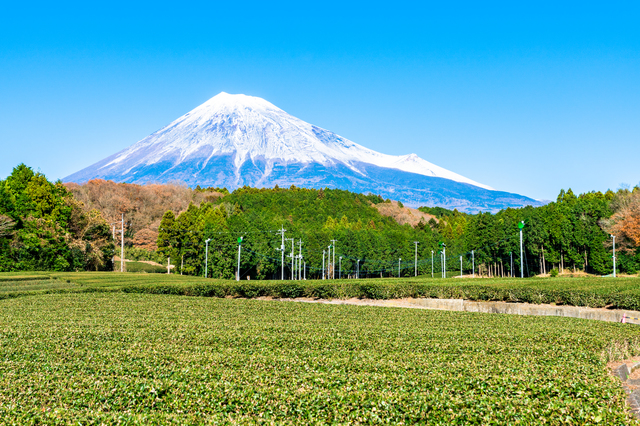
The region is home to Mount Fuji (in Shizuoka). It is home to the Japan Alps. It is home to some of the finest sake-producing regions in the country, some of the best seafood in Japan, extraordinary agricultural output, and a distinctive food culture that has developed in relative isolation from the more internationally visible food cultures of Tokyo and Kyoto.
It is also home to me. Which I acknowledge is not, by itself, a qualification. But combined with forty years of eating here, I believe it gives me standing to say the following:
Central Japan has food that will change how you think about Japanese cuisine. And almost nobody outside this region knows about it.
1. Miso Katsu — Nagoya
The Dish That Proves Miso Can Do Anything
I have mentioned miso katsu in my tonkatsu article. I am going to mention it again here, at greater length, because it deserves it.
Miso katsu is tonkatsu — breaded, deep-fried pork cutlet — served not with the standard brown tonkatsu sauce used throughout the rest of Japan, but with a thick, dark, intensely savory sauce made from hatcho miso.
Hatcho miso is the key to understanding Nagoya food culture and, by extension, understanding why central Japan’s cuisine is different from everywhere else.
Hatcho miso is produced exclusively in Okazaki, a city approximately thirty kilometers east of Nagoya, in a tradition that dates to the early Edo period — over four hundred years ago. It is made from soybeans — only soybeans, no rice or barley — fermented in enormous cedar vats, each holding up to six tons of miso, for a minimum of two years and often considerably longer. The vats are stacked with river stones weighing several tons to provide pressure during fermentation.
The result is a miso that is unlike any other in Japan. Almost black in color. Intensely thick — dense enough to stand a chopstick in. The flavor is extraordinary: deeply savory, slightly bitter, complex in a way that requires real attention to fully understand, with an umami depth that other misos approach but do not quite reach.
Poured over a freshly fried tonkatsu cutlet — thick, dark, glossy, trembling slightly with heat — it transforms the dish entirely. The sweetness and bitterness of the hatcho miso balances the richness of the pork and the crunch of the panko in a way that standard tonkatsu sauce does not attempt and cannot replicate.
The first time I took a foreign visitor to a miso katsu restaurant, she took one bite, put her chopsticks down, and stared at her plate for a full three seconds before saying anything.
What she said was: “Why doesn’t the rest of the world know about this.”
It was not a question. It was an accusation.
She was correct.
Where to eat it: Yabaton is the most famous miso katsu chain, with multiple locations throughout Nagoya. For a more local experience, smaller neighborhood restaurants throughout Aichi Prefecture serve their own versions — often with family recipes for the miso sauce that have been refined over generations.
2. Hitsumabushi — Nagoya
The Eel Dish That Teaches You Something New With Each Bite
Eel — unagi — is eaten throughout Japan, and throughout Japan it is delicious. But in Nagoya, eel reaches a form of expression that is completely unique and, I would argue, the single greatest way to eat eel that exists anywhere.
Hitsumabushi (ひつまぶし) is grilled eel — kabayaki style, lacquered with a sweet soy-based glaze and grilled over charcoal — served over rice in a ohitsu, a round wooden container. The eel is pre-sliced into small pieces. The meal comes with a set of accompaniments: wasabi, nori, green onion, and a small pot of dashi broth or tea.
The instruction — and hitsumabushi comes with instructions, which is one of the things I love about it — is to eat the dish in three different ways.
First portion: Scoop directly from the ohitsu into a bowl. Eat the eel and rice together, unadorned. Experience the pure combination — the sweet-savory glaze, the rich eel fat, the clean rice. This is the baseline. This is already extraordinary.
Second portion: Scoop into a bowl again. This time, add the toppings — wasabi, nori, and green onion — over the eel and rice. The wasabi adds heat that cuts through the eel’s richness. The nori adds a marine depth. The green onion adds freshness. The same eel, with accompaniments, becomes a different experience.
Third portion: Scoop into the bowl once more. Pour the hot dashi broth — or green tea, in some restaurants — over everything, creating a kind of ochazuke with eel. The broth dissolves the glaze slightly, loosens the rice, and creates a soup-like dish that is warm and gentle and completely unlike the first two preparations.
Fourth portion: Eat it however you liked best. Return to the preparation that pleased you most. This is the instruction.
Three different dishes from the same bowl. Three different flavor experiences from the same set of ingredients. The philosophy of hitsumabushi is essentially the philosophy of good Japanese food in miniature: the same material, expressed differently, reveals different truths.
I have eaten hitsumabushi dozens of times. I still have not decided which of the three preparations I prefer. I consider this a feature rather than a problem.
Where to eat it: Atsuta Horaiken is the most historically famous hitsumabushi restaurant in Nagoya — established in 1873, located near Atsuta Shrine, with a queue that begins forming before opening. For a less ceremonial but equally delicious version, numerous eel specialty restaurants throughout Nagoya serve excellent hitsumabushi. Book in advance wherever you go.
3. Tenmusu — Nagoya / Mie
The Rice Ball That Contains a Surprise
Tenmusu (天むす) is a rice ball — onigiri — with a shrimp tempura inside.
That description does not do it justice. Let me try again.
Tenmusu is a compact triangle of seasoned rice, wrapped in nori, containing a whole piece of shrimp tempura — tail still attached, still slightly crispy despite being enclosed in rice — seasoned with a delicate soy-based sauce. The tempura is sized precisely to fit inside the rice ball. The tail protrudes slightly from the top.
The genius of tenmusu is textural. Hot rice, slightly yielding. Nori, slightly chewy. And then, in the center, the shrimp tempura — no longer crackling as it would be freshly fried, but still firm, still seasoned, still carrying the flavor of good dashi in its batter. The warmth of the rice has transformed the tempura from crispy to tender. This is not a flaw. It is the point.
Tenmusu originated in Tsu, the capital of Mie Prefecture, in the 1950s or 60s — the exact origin is contested, as it often is with beloved regional foods. It was popularized in Nagoya, where it became a standard part of the food culture. Today it is sold throughout central Japan — at train stations, in specialty shops, in convenience stores — and is almost entirely unknown outside the region.
The first time you eat a tenmusu, you will think: why is this not everywhere? The combination of rice ball and tempura is obvious in retrospect — portable, satisfying, complete. And yet outside central Japan, it barely exists.
Where to eat it: The original Meijiken in Tsu City, Mie Prefecture, is considered the birthplace. In Nagoya, tenmusu is available at station kiosks and specialty shops throughout the city. They are excellent as an ekiben — eaten on the train as you arrive into or depart from central Japan.
4. Kishimen — Nagoya
The Flat Noodle That Deserves International Fame
Kishimen (きしめん) is Nagoya’s version of udon — but describing it as “udon” is like describing a cello as “a violin, but lower.” Related, yes. The same instrument, no.
Kishimen noodles are flat — wide and thin, like ribbons, entirely unlike the round, thick tubes of standard udon. The width is typically two to three centimeters; the thickness approximately two millimeters. They are made from the same wheat flour and water as udon, but the different shape produces a completely different eating experience.
Flat noodles have more surface area than round noodles of equivalent weight. This means they pick up more broth with each bite, absorbing flavor more efficiently. They also have a different texture — softer on the outside, slightly firmer in the center, with a silkiness that round noodles do not have. They move differently in the mouth. They require different attention.
The broth served with kishimen in Nagoya is — naturally — more assertive than the gentle Kansai udon broth. It is darker, richer, more fully flavored, built from a dashi base and seasoned with the region’s characteristic preference for robust flavor. The color contrast between the pale, almost translucent flat noodles and the dark, complex broth is striking.
Traditional kishimen toppings: thinly sliced kamaboko fish cake, katsuobushi bonito flakes, and green onion. Simple and exactly right.
Kishimen has been a Nagoya specialty since at least the Edo period — it appears in historical documents as a regional food distinctive to the area. Despite this history, despite its genuinely excellent qualities, it has almost no presence outside central Japan and essentially no international recognition whatsoever.
This is inexplicable to me. I have accepted it as one of the mysteries of food geography.
Where to eat it: Kishimen is available throughout Nagoya — at train station restaurants, at casual udon shops, and at dedicated kishimen specialists. The kishimen served at Atsuta Shrine’s restaurant is particularly famous and worth the visit.
5. Ogura Toast — Nagoya
Breakfast That Requires Explanation and Rewards Curiosity
Nagoya has a coffee shop culture — kissa culture — that is unlike anywhere else in Japan.
The Nagoya morning service — morning service or simply mōningu — is a local institution. You pay for a coffee. With the coffee, you receive free toast, a boiled egg, and sometimes a small salad. The coffee is not expensive. The toast and egg are genuinely free. This has been the convention in Nagoya coffee shops since the 1950s and continues to this day.
Within this coffee shop culture, a specific toast combination has emerged that is distinctive to Nagoya and completely unknown outside it.
Ogura toast (小倉トースト) is thick, slightly sweet Japanese white bread — shokupan — toasted until golden, spread generously with butter, and then topped with a thick layer of ogura an — sweet red bean paste made from whole azuki beans.
Red bean paste on toast. With butter.
I understand that this sounds wrong. I am asking you to set aside that reaction and think about it with an open mind. Because the combination — the slight bitterness of the toast, the richness of the butter, the sweet, earthy, slightly grainy texture of the red bean paste — works in a way that is not immediately obvious from the description but becomes obvious at the first bite.
It is, essentially, the Japanese equivalent of toast with jam and butter — but with a depth and a complexity that jam cannot match. Red bean paste has an earthiness, a savory undertone, a dense richness that fruit jam does not have. Combined with butter on good shokupan, it is a breakfast that satisfies in a way that is disproportionate to its simplicity.
Ogura toast is eaten by Nagoya residents every morning, in coffee shops where the proprietor has known the regular customers for twenty years, over morning newspapers and conversations about nothing important and the specific quiet pleasure of a good breakfast before the day begins.
It is, I think, one of the most underrated breakfast foods in Japan. Possibly in the world.
Where to eat it: Any traditional kissa (coffee shop) in Nagoya. Look for older establishments with hand-lettered signs and the word mōningu in the window. Arrive between seven and ten in the morning.
6. Miso Nikomi Udon — Nagoya
The Udon That Hatcho Miso Made Better
We return, inevitably, to hatcho miso. Because hatcho miso does not limit itself to tonkatsu. Hatcho miso has opinions about udon as well.
Miso nikomi udon (味噌煮込みうどん) is udon — thick, robust, slightly firm udon — simmered directly in a broth made from hatcho miso, which is to say: simmered in the most intense miso in Japan. The udon is cooked in the miso broth from raw, absorbing the flavor of the broth as it cooks. It arrives at the table still boiling — served in the individual earthenware pot in which it was cooked, the lid slightly ajar to release steam, the broth dark and glossy and tremendously aromatic.
The noodles in miso nikomi udon are intentionally slightly underdone by conventional standards — firm, with a definite chew, almost al dente. This is not an error. Soft noodles in a broth this assertive would disappear. The firmness of the noodle provides structural resistance — something to bite against, something that carries rather than merely absorbs the miso flavor.
The pot arrives with a lid. The lid is removed at the table. The steam rises. The smell of hatcho miso — rich, complex, slightly sweet and slightly bitter simultaneously — fills your immediate atmosphere.
If you are eating this on a cold day in Nagoya — and Nagoya winters are cold enough to make warm food feel genuinely necessary — miso nikomi udon is one of the most satisfying meals available anywhere.
Standard toppings include: chicken pieces, fu (wheat gluten cakes), green onion, kamaboko, and an egg cracked directly into the simmering pot just before serving.
Where to eat it: Yamamotoya Honten is the most famous specialist — an institution in Nagoya with a history stretching back to the Meiji period. Multiple locations throughout the city. Queue early.
7. Tebasaki — Nagoya
The Chicken Wings That Built a City’s Identity
I mentioned Nagoya tebasaki in my yakitori article as something requiring a dedicated mention. Here is that mention.
Nagoya-style chicken wings — tebasaki — are not the same as chicken wings in the rest of Japan, and not the same as chicken wings anywhere in the world. They are a specific thing, done in a specific way, that produces results distinct enough to justify the trip to Nagoya by themselves.
The preparation: whole chicken wings — the tebasaki cut, which includes the flat and the tip but not the drumette — are deep-fried without any coating or batter until the skin is crackling crisp. They are then tossed in a glaze of soy sauce, sake, mirin, and sugar, reduced until it is thick and slightly sticky. The glazed wings are immediately finished with a generous coating of white and black sesame seeds and black pepper.
The result: a chicken wing with a skin so crispy it shatters audibly when you bite through it, covered in a glaze that is simultaneously sweet, savory, and faintly caramelized, with the sesame seeds adding nuttiness and slight crunch and the black pepper adding a warmth that builds slowly across the meal.
The technique of eating tebasaki — there is a specific technique, which Nagoya people learn young and employ with the confidence of long practice — involves holding the wing at both ends, twisting slightly, and pulling the two bones free cleanly, leaving the meat in one piece. When done correctly, the meat separates from the bones in a single, satisfying movement. When done incorrectly, you make a mess. I recommend practicing with your first wing before attempting the technique in company.
Sekai no Yamachan — “World’s Yamachan” — is the most famous tebasaki chain in Nagoya, having originated the specific style of spiced, sesame-covered wing that is now synonymous with the city. They have expanded throughout Japan but remain most authentic in Nagoya.
Where to eat it: Sekai no Yamachan, multiple Nagoya locations. Also: Furaibo, another Nagoya tebasaki institution with its own distinct seasoning. Order both and conduct your own comparison. This is, I assure you, an excellent use of an evening.
8. Shizuoka Oden — Shizuoka
Oden That Doesn’t Look Like Oden
Before I tell you about Shizuoka oden, let me establish what standard oden is.
Oden is a Japanese winter dish — a hot pot of various ingredients simmered in a clear, light dashi broth: daikon radish, boiled eggs, konnyaku, fish cakes, tofu, and other items. The broth is delicate and pale. The flavor is clean and subtle. Oden is comfort food of the gentle, warming variety.
Shizuoka oden is not that.
Shizuoka oden (静岡おでん) is simmered in a broth made from dark soy sauce and beef stock — the broth is almost black. The ingredients are skewered on bamboo sticks. Everything — the daikon, the eggs, the fish cakes, the konnyaku — is the same dark color as the broth after simmering in it for hours or days. The contrast with standard pale oden is dramatic enough that first-time visitors sometimes need a moment to confirm that what they are looking at is, in fact, oden.
The flavor is accordingly more assertive. The broth has depth and richness from the beef stock and the dark soy sauce. The ingredients have absorbed this broth thoroughly. Each piece tastes deeply, consistently savory — nothing pale or subtle about it.
The serving tradition adds another layer of specificity: Shizuoka oden is served with two condiments that are mandatory rather than optional. Aonori — dried green seaweed powder — is sprinkled generously over the top. Dashi powder made from dried sardines is also sprinkled over, or mixed with a small amount of miso and applied as a paste.
These garnishes are not decorative. The aonori adds a fresh, slightly briny note that lifts the richness of the dark broth. The dashi powder adds another layer of umami that deepens the savory quality of the whole dish.
Shizuoka oden is sold at outdoor stalls and small shops throughout the city — particularly at the oden yokocho in Shizuoka city’s Aoba district, a covered alley of tiny oden stalls, each with its own stewing pot that has been simmering continuously for years. The smell, as you approach, is extraordinary.
Where to eat it: The Aoba Oden Yokocho in Shizuoka city — a short walk from Shizuoka Station. Evening is the best time. Sit at the counter of whichever stall looks most well-worn.
9. Kanazawa Sushi — Ishikawa
The Sushi That Challenges Tokyo’s Supremacy
I am going to say something that will cause controversy among Japanese food lovers and that I stand behind completely.
Kanazawa, the capital of Ishikawa Prefecture on the Sea of Japan coast, serves sushi that is among the finest in Japan. Possibly the finest.
This opinion is not eccentric. Within Japan, Kanazawa’s sushi reputation is well established — the city has been called “little Kyoto” for its cultural heritage, but among serious food lovers, “the sushi city that isn’t Tokyo” might be more accurate.
The reason is the Sea of Japan.
The Sea of Japan — the body of water between the Japanese main islands and the Korean peninsula — has different marine conditions from the Pacific coast. It is colder, in many areas. Its seafood is distinctly different in species composition and flavor profile. Kanazawa, sitting directly on the Sea of Japan coast, has access to fish and seafood that Tokyo’s fish markets can only receive after transport — and transport time, however brief, affects quality.
The specific seafood that makes Kanazawa sushi exceptional:
Nodoguro (のどぐろ) — blackthroat seaperch, known in the industry as the “king of white fish.” Its flesh is extraordinarily fatty — rivaling the fat content of toro tuna — and has a delicate, clean sweetness that is unlike any other white fish. Nodoguro is expensive everywhere in Japan. In Kanazawa, it is at its freshest and its best.
Buri (ぶり) — yellowtail caught in winter from the Sea of Japan, called kan-buri — “cold yellowtail.” The cold water of winter concentrates the fat in buri in a way that summer yellowtail cannot match. Kan-buri is available only from December to February and is one of the great seasonal fish of the Sea of Japan coast.
Kani (かに) — snow crab, the seasonal specialty of the Sea of Japan coast from November to March. Kanazawa snow crab — particularly the branded Kaga crab certified from specific fishing grounds — is considered among the finest in Japan.
Shiro ebi (白えび) — tiny, translucent white shrimp found almost exclusively in Toyama Bay, adjacent to Ishikawa. Eaten raw as sashimi or as a topping on sushi, they have a delicate sweetness and a texture so tender it dissolves rather than being chewed.
Kanazawa sushi chefs work with this extraordinary raw material with the precision and restraint that the ingredients deserve. The result is sushi that does not attempt to impress through spectacle but simply presents exceptional seafood at its natural best.
Where to eat it: The Ōmi-chō Market in central Kanazawa — a covered market operating since the 18th century — has numerous sushi restaurants and fresh seafood stalls. Morning is the best time for market sushi. For a more formal experience, numerous sushi restaurants throughout the city serve omakase courses that showcase the Sea of Japan’s seasonal best.
10. Sansai Ryori — The Japan Alps
Mountain Food That Most People Have Never Considered
Japan has a profound seafood culture, and this is justified. But Japan also has mountains — the Japan Alps that cut through the center of the Chūbu region — and the mountain food culture that has developed around them deserves recognition alongside the coastal cuisine.
Sansai (山菜) — “mountain vegetables” — refers to the wild plants foraged from mountain forests: bamboo shoots, bracken fern, taranome (angelica buds), fuki (butterbur), warabi (bracken), zenmai (royal fern), myoga (Japanese ginger), and dozens of other plants that grow wild and are harvested seasonally.
Mountain ryokan — traditional inns in the Japan Alps regions of Nagano and Gifu — serve multi-course meals built around sansai and local mountain ingredients: freshwater fish from clear mountain streams, mountain vegetables prepared in various ways, hand-made soba from local buckwheat, wild mushrooms in autumn, mountain river shrimp.
The cuisine of the Japan Alps is not glamorous in the way that kaiseki is glamorous. It does not require a Michelin star to appreciate. But it has a quality that is difficult to find elsewhere: absolute specificity of place. The ingredients come from within walking distance of where you are eating them. The cook preparing them has been gathering and preparing the same plants from the same mountains for decades.
The hoba miso of Gifu Prefecture — where a piece of dried magnolia leaf (hoba) is used as a cooking vessel, filled with miso, mushrooms, green onion, and sometimes beef or tofu, and placed directly over an open flame at the table — is one of the most sensory and memorable eating experiences I have ever had. The leaf smolders slightly at the edges. The miso bubbles. The fragrance of the burning leaf mingles with the miso and the mushrooms in a way that is entirely and exclusively of this place and this moment.
You cannot eat hoba miso anywhere else and have it be the same. The leaf matters. The mountain matters. The specific way the cold air outside the ryokan makes the heat of the flame at the table feel more necessary — that matters too.
Where to experience it: Any traditional ryokan in the mountain areas of Gifu or Nagano prefecture. Shirakawa-go, Takayama, Matsumoto — all have excellent ryokan serving mountain cuisine. Book at least one mountain ryokan night into any central Japan itinerary.
A Final Note on Being Overlooked
I have been writing this blog long enough to understand why central Japan gets overlooked in food media.
Tokyo is the world city. Kyoto is the cultural capital. Osaka is the food capital that everyone writes about. These places have the name recognition, the international visibility, the infrastructure for tourism that brings foreign visitors and the writers who follow them.
Central Japan has none of these advantages. Nagoya is a working city — large, prosperous, industrial in its bones, not primarily oriented toward tourism or international visibility. The Japan Alps are magnificent but require effort to reach. The Sea of Japan coast is one of the most beautiful stretches of coastline in the country and one of the least visited by international travelers.
None of this is a food quality issue. The miso katsu in Nagoya is as good as the ramen in Sapporo. The sushi in Kanazawa is as good as the sushi in Tokyo. The hitsumabushi at Atsuta Horaiken is unlike anything available anywhere else in the world.
The food does not need international validation. It has been here for centuries, feeding the people of central Japan with complete indifference to whether food writers in New York or London have noticed.
But I notice. I have noticed my whole life. And the purpose of this blog — from the very beginning — has been to share the Japan I know, not the Japan that appears in the first twenty search results.
This is the Japan I know.
Come and eat.
— Yoshi 🍣 Central Japan, 2026
Enjoyed this? You might also like: “I’ve Lived in Central Japan for 40 Years — Here’s What Tourism Sites Get Wrong About My Country” and “The 7 Regional Ramen Styles of Japan — and What Makes Each One Unique” — both available on Japan Unveiled.