Matsuri: The Complete Guide to Japanese Festivals
By Yoshi | Japan Unveiled
I want to tell you what a Japanese matsuri smells like before I tell you anything else about it.
It smells like yakisoba on a griddle. Like the specific char of taiko drumsticks that have been beaten for hours. Like incense from the portable shrine. Like the summer night — the particular warmth of a Japanese August evening that is different from any other warmth, that has a specific density and a specific smell that comes from rice fields and cedar forests and a country that is surrounded by sea.
If you have never been to a Japanese festival, you should go. I will tell you what to expect and what to do. But I want to be honest with you first: nothing I write is a substitute for the actual experience. The matsuri is one of those things that only reveals itself in full when you are inside it.
What Matsuri Is
Matsuri (祭り) — the word derives from the verb matsuru, meaning to worship, to venerate, to perform offerings to kami or ancestors. At its root, matsuri is religious practice: the periodic gathering of a community to honor the kami associated with their local shrine, to give thanks for past blessings, and to request continued protection.
In practice, contemporary matsuri range from solemn religious ceremonies of great antiquity to exuberant community celebrations that retain only vestigial religious content — street festivals that are, in the experience of most participants, primarily about the food, the dancing, the fireworks, and the pleasure of being together.
Both are matsuri. The spectrum from religious solemnity to festive celebration is itself part of what matsuri is — the traditional Japanese understanding that sacred and celebratory are not opposed but continuous, that honoring the kami and enjoying yourself are not in conflict.
Japan has thousands of matsuri. Every shrine has at least one festival per year; many have several. Every region has its own distinctive traditions. The matsuri calendar is continuous — there is a festival happening somewhere in Japan every single day of the year.
The Mikoshi: The Portable Shrine
The symbolic heart of most Shinto matsuri is the mikoshi — the portable shrine (omikoshi) in which the kami is believed to temporarily reside during the festival.
The mikoshi is an elaborate structure: a miniature shrine building on a platform, decorated with gold and lacquer and phoenix ornaments, carried on poles by teams of bearers who move through the streets of the community. The carrying of the mikoshi is not merely logistical — it is the ritual of bringing the kami out of the permanent shrine and through the community, allowing the kami’s presence to purify and bless the streets, the homes, and the people.
The mikoshi procession is accompanied by specific chanting — wasshoi, wasshoi — and the rhythmic bouncing of the portable shrine, which is understood to please the kami and encourage its continued presence. The teams of bearers, wearing festival happi coats and headbands, often damp with the exertion of carrying a structure that can weigh hundreds of kilograms, are performing both physical labor and religious service.
At major matsuri, the mikoshi procession is one of the most dramatic and visually striking spectacles available in Japan — the combination of the elaborate gilded structure, the synchronized movement of the bearers, the noise and the chanting and the music of the accompanying musicians creates something that is genuinely hard to see unmoved.
The Major National Matsuri
Gion Matsuri, Kyoto (July) — one of Japan’s three great festivals, celebrated for over a thousand years in Kyoto’s Gion district. The centerpiece is the yamaboko junko — a procession of enormous decorated floats (yamaboko), some over twenty meters tall, drawn through Kyoto’s central streets on wooden wheels. The floats are assembled over days before the procession from wooden structures that are stored year-round — some of the floats are designated Important Cultural Properties, their construction and materials centuries old.
The Gion Matsuri extends across the entire month of July with various events, but the main float processions — the Saki Matsuri on July 17th and the Ato Matsuri on July 24th — are the occasions that draw the largest crowds and the most international attention.
Awa Odori, Tokushima (August 12–15) — the largest dance festival in Japan, held over four evenings in the city of Tokushima on Shikoku. The awa odori is a form of bon odori — summer festival dance — with a specific stumbling, high-stepping style distinctive to Tokushima. Professional dance groups (ren) and amateur groups perform simultaneously through the streets, and the street-level participation — the ability to join a passing dance group, to be absorbed into the movement — makes the Awa Odori one of the most immersive festival experiences in Japan.
Nebuta Matsuri, Aomori (August 2–7) — enormous illuminated paper-and-wire floats, depicting figures from history, mythology, and kabuki theater, carried through the streets of Aomori at night. The floats are backlit from inside, glowing in the darkness. The combination of the illuminated floats, the taiko drumming, and the dancers in traditional costume creates a night festival experience unlike any other in Japan.
Sapporo Snow Festival (February) — technically not a matsuri in the traditional sense, but one of Japan’s most internationally famous winter festivals. Enormous snow and ice sculptures — some the size of buildings — constructed over weeks by teams of sculptors in Odori Park in the center of Sapporo. The scale of the sculptures and the specific beauty of illuminated ice at night make the Snow Festival a genuinely extraordinary visual experience.
Takayama Matsuri (April and October) — the festival of Takayama, a beautifully preserved castle town in the mountains of Gifu Prefecture near where I live. The spring festival (April 14–15) and autumn festival (October 9–10) each feature the procession of elaborate floats (yatai) equipped with mechanical puppets (karakuri ningyo) operated by hidden puppet masters using strings and levers. The floats are among the most technically sophisticated in Japan and the festival takes place in a townscape that has changed little in two centuries.
Local Matsuri: The Ones Nobody Writes About
The famous national matsuri are worth experiencing. The small local matsuri — the neighborhood shrine festival, the village harvest celebration, the bon odori in the temple courtyard that twenty people attend — are where you experience what matsuri actually is in Japanese daily life.
I have been going to my local shrine’s autumn festival my entire life. The main event is a mikoshi procession through the neighborhood that involves perhaps thirty bearers and perhaps fifty spectators. There are four or five yatai stalls. A local taiko group plays. Children run between the stalls with their spending money.
It is not spectacular. It is not photogenic in the way that the Gion Matsuri floats are photogenic. It is exactly what matsuri has been for most of Japanese history — a community gathering at a sacred place, doing the things that are done, being together in the specific way that the festival permits.
The pleasure is recognition. Of the same faces you have seen at this festival for twenty years. Of the specific smell that means this specific season has arrived. Of the continuity — the understanding that this will happen again next year, as it happened last year, as it happened before you were born.
What to Do at a Matsuri
Eat at the yatai stalls. Try everything once. Takoyaki, yakisoba, kakigori, karaage, taiyaki — all of them are better at a festival than anywhere else.
Watch the mikoshi procession if there is one. Stand close enough to feel the crowd. The noise and the movement are the experience.
Join the bon odori if one is happening. The dance is designed to be learned by watching. No one will mind if you join. Everyone was a beginner once.
Buy something from the stalls — a goldfish, a toy, a festival snack — even if you do not need it. The economy of the festival is part of the festival.
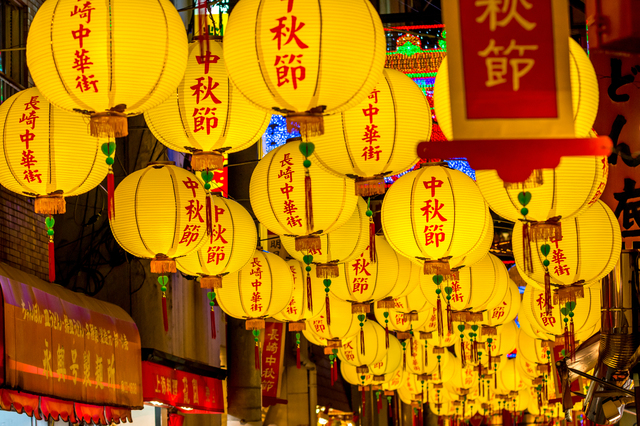
Stay until dark. The festival changes character in the evening — the lanterns and lights create a specific atmosphere, a liminal quality that is the time when, in traditional Japanese understanding, the world of kami and the world of humans are closest.
And when you leave, carry something of it with you. Not only the photographs. The smell of the griddle and the drum sound and the specific warmth of a summer night in Japan with people around you.
That is what matsuri is for.
— Yoshi 🏮 Central Japan, 2026
Enjoyed this? You might also like: “Hanami: Why Cherry Blossom Viewing Is About More Than Just Flowers” and “O-Bon: Japan’s Festival of the Dead — and Why It’s Actually Beautiful” — both available on Japan Unveiled.