Sento: The Neighborhood Public Bath That’s Slowly Disappearing
By Yoshi | Japan Unveiled
There is a building in my neighborhood that I have been walking past for thirty years.
It is not remarkable from the outside. A low wooden structure with a high chimney — the chimney is the giveaway, the tall smokestack that once released the steam from the wood-fired boiler below. A noren curtain at the entrance, divided into two halves: one side marked 男 (men), the other 女 (women). A small sign listing the hours and the price.
This is the sento — the neighborhood public bath — and it has been here since before I was born. The family that runs it has been running it for three generations. The grandmother who now sits at the entrance collecting entry fees was a child when her parents ran it. Her son helps with maintenance. Her grandchildren occasionally work the front desk after school.
When I first moved to this neighborhood, the sento was busy. The changing rooms held the noise of children and the conversation of retired men and the routine of people for whom this was simply where you went to bathe, several times a week, as a matter of practical life.
Now, most evenings, the changing rooms are quiet. The regular customers are older. The children who used to come with their fathers no longer come. The younger families in the apartment buildings nearby have their own bathrooms, and the idea of going to a public bath when you have a private one at home requires a reason that previous generations did not need to articulate.
The sento is still open. But I notice, when I walk past, that the light inside is dimmer than it was. Or perhaps I am imagining this.
Sento (銭湯) — literally “coin hot water” — is a public bathhouse heated with ordinary tap water rather than natural mineral springs. This distinguishes it from onsen, which uses naturally occurring mineral water, though the boundary has blurred as many modern sento incorporate onsen water or offer themed baths with added minerals.
The traditional sento structure is specific and recognizable. The entrance is a single building with two sides — men’s and women’s — joined at the center by the manager’s booth (bandai), a raised platform from which the manager can see both entrance areas simultaneously and collect fees from both sides. The changing rooms (datsuijo) are large, with wooden lockers, baskets for clothing, and the specific smell of wood and heat and the soap that has been used here for decades. Beyond the changing room, the bath itself: a large tiled space with individual washing stations along the walls and a central communal bath, often with a painted mural on the wall above — the classic sento mural is Mount Fuji, rendered in tile or paint, occupying the full wall above the bathtub.
The Mount Fuji mural is one of the most specific and least explicable traditions in Japanese bathing culture. Its origin is disputed — one account credits a Tokyo tile artist in the early 20th century who was commissioned to paint a wall and chose Fuji for its auspicious associations. The tradition spread and became so standard that a sento without a Fuji mural is unusual enough to be mentioned. The mural’s presence is functional in a specific way: it provides a fixed visual point for the eyes during the otherwise featureless experience of soaking. Mount Fuji, viewed from a hot bath, is a specifically Japanese aesthetic experience.
The History: Why Sento Existed
The public bath existed in Japan because, for most of the country’s modern history, private bathing facilities were unavailable to most urban residents.
The Edo period (1603–1868) city of Edo — now Tokyo — was one of the most densely populated urban environments in the world, with the vast majority of its population living in small wooden row houses (nagaya) that had no bathing facilities. The sento was not a luxury. It was infrastructure. The civic equivalent of a water supply.
At their peak in the postwar period, Japan had approximately 20,000 sento nationwide. The decline began in the 1970s and has continued without interruption: as private bathing became standard in new construction, as the apartment building replaced the row house as the dominant urban housing form, the practical necessity that had sustained the sento disappeared. By the time I write this, fewer than 3,000 sento remain in operation nationally, and the number declines each year.
What Is Being Lost
I want to be specific about what the sento provided that the private bathroom does not, because the argument for its preservation is not merely nostalgic.
The sento was, for most of its history, a community institution — a place where the residents of a neighborhood encountered each other regularly, outside the specific roles of work or family or commerce, in the specific democracy of shared nakedness. You cannot maintain your professional distance from your neighbor in a sento. You are both, simply, people who live nearby, bathing in the same water, in the same building, as you have been doing for years.
The social function of this regularity is difficult to quantify but real. Neighborhoods with active sento tend to have stronger social cohesion than neighborhoods without them — not because the sento causes the cohesion, but because they are both symptoms of the same underlying condition: a community whose members know each other.
The specific intimacy of communal bathing — the vulnerability and the trust it requires — produces a social relationship that is different in kind from the relationship produced by passing someone in a hallway or exchanging greetings at a mailbox. It is closer. More embodied. More human.
What is being lost as the sento disappears is not just a bathing option. It is one of the few remaining urban spaces where strangers become, gradually, neighbors.
The Sento Renaissance: What Is Being Done
The decline is real but not universal. In recent years, a sento renaissance has begun in several Japanese cities — particularly in Tokyo and Kyoto — driven by young architects, designers, and entrepreneurs who have taken on the renovation of old sento buildings and created spaces that retain the traditional structure while adding aesthetic and experiential dimensions that attract a new generation.
Koganeyu in Tokyo’s Kinshicho neighborhood — renovated with extraordinary design care, preserving the traditional bandai structure and the mural while creating a contemporary aesthetic that attracted immediate media attention — became a model for what the sento revival could look like.
Saruya in Kyoto, operating in a building from the Meiji period, has maintained its traditional character while developing a program of events — jazz nights, art exhibitions, community gatherings — that has brought new visitors to a space that would otherwise serve only its aging regular customers.
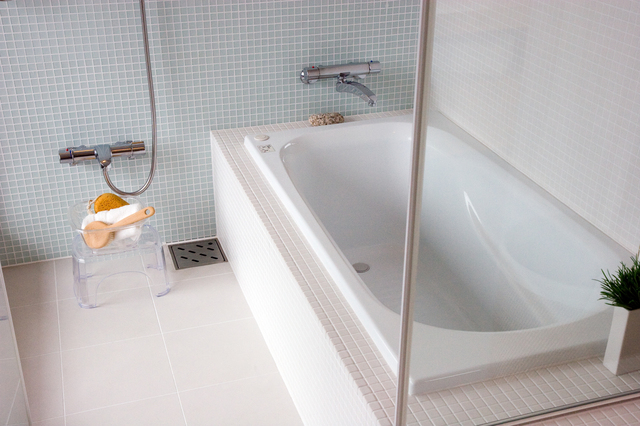
These revival sento are not solving the structural decline. The economics are difficult; the maintenance of old buildings is expensive; the entry fee — set nationally and lower than what the running costs require — makes profitability challenging. But they are demonstrating that the sento can be relevant to people who did not grow up going to them. That the experience — the communal bath, the Mount Fuji mural, the specific quality of sitting in hot water in a tiled room that has been here for eighty years — has value that the private bathroom cannot provide.
I hope they succeed. I hope my neighborhood sento survives.
The chimney is still there. The noren still divides men from women. The grandmother is still at the bandai.
For now.
— Yoshi 🛁 Central Japan, 2026
Enjoyed this? You might also like: “Onsen: The Complete Guide to Japan’s Hot Spring Culture” and “Satoyama: Japan’s Forgotten Countryside and Why It Matters” — both available on Japan Unveiled.