Why Japan Is So Safe — and What It Actually Costs
By Yoshi | Japan Unveiled
The question arrives in my email regularly, from visitors who have just returned from Japan or who are planning to go.
“Why is Japan so safe?”
The question is understandable. Japan’s crime statistics are, by international standards, extraordinary. The homicide rate is among the lowest in the developed world. Violent crime rates are a fraction of comparable economies. Foreign visitors consistently report that they felt more personally safe in Japan than anywhere else they have traveled — that they walked alone at night without anxiety, that they left belongings unattended without worry, that the specific quality of public safety they experienced was unlike anything they had known elsewhere.
This is real. Japan is genuinely safe in ways that require genuine explanation rather than simple assertion. But I also want to be honest about what produces this safety — because the explanation is more complicated, and more morally textured, than the simple “Japan is a polite society” narrative that most popular writing offers.
The Statistics: What the Data Actually Shows
Japan’s crime statistics are genuinely remarkable.
The homicide rate: approximately 0.2 per 100,000 people annually — one of the lowest in the world, significantly below the rates of Western European countries and dramatically below the United States (which is approximately 5 per 100,000).
Robbery rates: similarly low. Japan experiences approximately 2,000 robberies per year — a country of 125 million people, with major urban centres that draw tens of millions of tourists. The United States, with roughly 2.5 times Japan’s population, experiences approximately 100,000 robberies annually.
Reported theft: while petty theft does occur in Japan, the rates are significantly lower than comparable economies. The specific phenomenon of the unattended laptop left on a café table, the lost wallet returned with its cash intact, the bag left on a seat while the owner uses the restroom — these are common enough in Japan to be expected rather than remarkable.
The statistics are real. They reflect a genuine difference in the experience of public safety that visitors consistently notice and that residents take for granted.
The Explanations: Why Japan Is Safe
Multiple factors contribute to Japan’s safety, and the honest explanation requires acknowledging all of them rather than selecting the most culturally flattering.
The shame culture and social pressure. Japan’s social organisation — the emphasis on group belonging, on the maintenance of public face (mentsu), on the avoidance of behaviour that brings shame to oneself or one’s family — creates strong informal social pressure against the visible violations of social norms that constitute most petty crime.
The person who steals in Japan is not only risking criminal penalty — they are risking the specific shame of being identified as someone who steals, of having that identification reach their family, their employer, their community. In a culture where social identity is closely tied to group membership and where public shame is experienced as acutely as it is in Japan, this informal social cost is a genuine deterrent that operates in addition to the formal legal deterrent.
The gun culture absence. Japan has among the strictest gun control laws in the world. Civilian gun ownership requires a multi-step licensing process including written examinations, psychological evaluation, background checks, and an annual renewal process. The total number of civilian firearms in Japan is approximately 300,000 — compared to approximately 400 million in the United States. The specific absence of widespread civilian firearm access eliminates the specific categories of gun violence that account for a large proportion of violent crime in countries with permissive gun laws.
The police presence and community policing. Japan’s koban system — the small police boxes (kōban) distributed throughout residential and commercial neighbourhoods, staffed by officers who are expected to develop specific local knowledge and community relationships — provides a visible and accessible police presence that is qualitatively different from the patrol-car-based policing of most Western jurisdictions.
The koban officer who knows the neighbourhood, who knows the local residents, who is physically present in the community rather than accessible only through emergency calls — this officer provides both a deterrent presence and a specific community relationship that the large, centralised police station does not.
The economic equality dimension. Japan has relatively low economic inequality by international standards — the Gini coefficient (the standard measure of economic inequality) is significantly lower than the United States and lower than most Western European countries. The specific relationship between economic inequality and crime rates — robust in the criminological literature — suggests that Japan’s relative economic equality is a contributing factor to its low crime rates.
The historical and demographic factors. Japan is a relatively ethnically homogeneous country with a long history of specific cultural development in relative geographic isolation. These factors have produced specific social norms around behaviour, trust, and communal obligation that may contribute to the social safety that statistics reflect. However, these factors are also the most careful to cite without oversimplification — homogeneity and isolation are not necessary or sufficient conditions for safety, and many diverse, internationally connected societies achieve very different outcomes.
What It Actually Costs: The Honest Account
Here is where I want to be direct about something that the “Japan is so safe” narrative frequently omits.
The specific social mechanisms that produce Japan’s low crime rates — the shame culture, the social pressure toward conformity, the intense informal monitoring of behaviour — produce the safety as a side effect of a broader social control that has significant costs.
The conformity cost. The social pressure that deters theft also deters deviation from social norms more broadly — including deviation that is not harmful to others. The person who is different — in sexual orientation, in political view, in personal style, in cultural identity — experiences the same social pressure system that deters crime as pressure to conform, often at significant personal cost.
The crime that is not reported. Japan’s low reported crime rates reflect, in part, genuine safety. But they also reflect, in part, the specific social pressure against reporting that exists in a culture where the acknowledgment of being a crime victim is experienced as a form of shame, and where reporting can expose both victim and perpetrator to social consequences that the victim may prefer to avoid. Domestic violence, sexual assault, and various other crimes that occur primarily within existing social relationships are significantly under-reported in Japan relative to their actual incidence.
The justice system pressures. Japan’s criminal justice system has a conviction rate of approximately 99% — a figure that sounds like extraordinary law enforcement effectiveness but that actually reflects, in part, a system in which confession before trial is strongly incentivised and in which the absence of full adversarial trial process reduces the judicial scrutiny applied to evidence and prosecution.
The social isolation cost. The safety of Japanese public space is genuine. The safety of Japanese private relationships — the specific safety of individuals within their families, their workplaces, their social groups — is more complicated. The hikikomori phenomenon, the specific forms of workplace harassment, the patterns of domestic difficulty that the conformity-enforcing social system can conceal — these are real and they are part of the complete picture.
What the Safety Actually Feels Like
I want to end with something personal, because I live in this society and the specific quality of its safety is part of my daily experience.
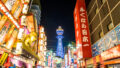
Walking home late at night — genuinely late, past midnight — through streets that are quiet but not threatening. The specific quality of the absence of threat: not just the statistical absence of crime but the physical relaxation that comes from not scanning the environment for danger. In Japan, particularly in the residential and commercial areas of ordinary Japanese cities, this physical relaxation is the default. It is so consistent that it becomes part of the background of daily life, noticed only when you travel somewhere where it is absent.
This is real and it is valuable. The specific quality of life that physical safety provides — the accumulated daily psychic cost of not having to be afraid in public spaces — is significant, and Japan provides it genuinely.
The price — the conformity, the unreported harms, the social control that produces the safety as a side effect — is also real. Both things are true simultaneously, and both belong in the answer to the question “why is Japan so safe?”
The answer is not simple. The safety itself, when you are walking home at midnight through the quiet streets, is genuinely there.
— Yoshi 🗾 Central Japan, 2026
Enjoyed this? You might also like: “Honne and Tatemae: Japan’s Two Faces — and Why Both Are Real” and “The Japanese Concept of Gaman: The Quiet Power of Patient Endurance” — both available on Japan Unveiled.