By Yoshi | Japan Unveiled
There is a specific kind of urban exploration that I have done many times across multiple Japanese cities, and it goes like this: it is late in the evening, I have missed the last convenient train, or I have several hours to fill between an appointment and a departure, and I walk into the amber-lit interior of a manga kissa (漫画喫茶 — manga café). I am shown to a small private booth — curtained or partially enclosed, containing a reclining chair, a computer terminal, a pair of headphones, and a small shelf of manga volumes — and for an hourly fee that is consistently, astonishingly affordable, I have access to tens of thousands of manga volumes, fast internet, a drinks bar, and the specific quality of solitude-within-public-space that these establishments uniquely provide.
The manga kissa and its close relative the netto kafē (ネットカフェ — internet café) are two of the most specifically Japanese urban institutions in existence, and they occupy a position in the social and cultural geography of Japanese otaku culture that is genuinely important and genuinely underappreciated. They are, simultaneously, commercial entertainment businesses, social infrastructure for specific populations with specific spatial needs, and the physical embodiment of a specific Japanese understanding of private space within public settings. Understanding them is understanding something important about how Japanese otaku culture inhabits the city.
The History: From Reading Room to Private Booth
The manga kissa’s antecedents in Japanese cultural history are the kashihon’ya (貸本屋 — lending book/manga shops) that flourished in Japan from the 1950s through the 1970s — small neighbourhood establishments where customers could rent manga volumes for a few yen per volume, providing affordable access to manga for readers who could not afford to purchase. The kashihon’ya was one of the primary distribution channels for the postwar manga industry, and the specific reading habits it cultivated — the extended, immersive reading of multiple manga volumes in sequence — established the cultural context from which the manga kissa would emerge.
The specific transition from lending shop to café format occurred in the late 1970s and 1980s, as the economics of the kashihon’ya model became increasingly unviable in competition with the retail manga magazine and volume market that had developed. The specific innovation of the manga kissa format: instead of lending manga for home reading, providing a physical space in which customers could read a large manga collection on-site, for an hourly fee, with the commercial viability supported by drink sales alongside the reading service.
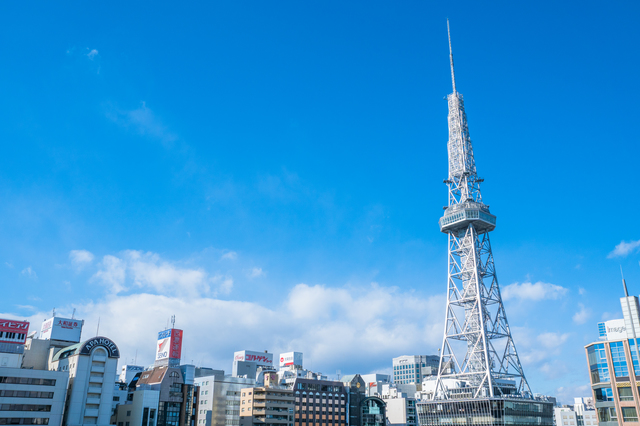
The first establishments described as manga kissaten (漫画喫茶店) appeared in Nagoya in the late 1970s — a specific origin story that has Nagoya-specific resonance for me as a central Japan resident. The format spread rapidly through the 1980s and 1990s, as the combination of large manga collections with computer access and private booth design evolved into the net café hybrid format that is the dominant current form. By the early 2000s, the manga kissa / net café hybrid had become a ubiquitous feature of Japanese urban commercial geography, with major chains operating hundreds of locations and smaller independent operations present in virtually every Japanese city of any size.
The Physical Environment: Architecture of Managed Solitude
The interior design of the manga kissa is one of the most carefully engineered environments in Japanese commercial space, and the specific design decisions that define it reflect a specific understanding of what the customer is there to experience.
The booth system: the core design unit of the manga kissa is the private booth — a space of approximately 1.5 to 2 square metres, enclosed by partitions that reach to approximately chest height on a seated person or ceiling height in the fully private variant, containing the reclining chair or flat bed surface that is the primary seating, the computer terminal (with headphone jack for audio privacy), and typically a small shelf or storage area. The booth system provides the specific experience of solitary, enclosed space within a shared building — a kind of urban hermitage that the small Japanese apartment and the shared workplace cannot provide.
The flat room variant (furatto rūmu — フラットルーム): the evolution of the booth into a room with a flat floor surface allowing fully horizontal sleeping has made the manga kissa an affordable overnight accommodation option for a specific category of user — the person who has missed the last train and needs to spend the night, the business traveller seeking an affordable urban alternative to the hotel, the person in specific housing difficulty who is using the manga kissa as temporary accommodation. The overnight package pricing at major chains is typically 1,500 to 2,500 yen for a six to eight-hour overnight stay — competitive with basic capsule hotel pricing and significantly below business hotel rates.
The manga collection: the scale of manga available at a major manga kissa chain — typically 20,000 to 50,000 volumes of manga titles spanning the full range of genre and demographic categories — makes the manga kissa one of the most practically comprehensive manga reading resources available, rivalling the holdings of major public libraries in total volume count while exceeding most libraries in the proportion of contemporary popular titles. The collection is organised by genre category (shōnen, shōjo, seinen, josei, sports, cooking, historical, horror, and various others) and within genre by title, allowing the experienced manga kissa user to navigate efficiently to specific titles or to browse within preferred categories.
The media provision beyond manga: most major manga kissa operations now provide access to a range of digital media beyond the physical manga collection — anime streaming through the booth’s computer terminal, a library of films and television programmes, gaming services (some booths include game consoles), music streaming, and magazine archives. The comprehensive media provision positions the manga kissa as a complete entertainment space rather than a manga-specific destination, and it is the breadth of this provision that justifies the “net café” portion of the hybrid nomenclature.
The Pricing System and Commercial Logic
The pricing structure of the manga kissa reflects its position as a time-based service rather than a per-item purchase, and the specific transparency of this pricing is one of its most commercially distinctive features.
The standard pricing model: an entry fee covers the first thirty or sixty minutes of access, with additional hourly rates for extended stays. The drinks bar — typically self-service, including soft drinks, coffee, tea, and instant noodle options — is included in the admission price at most major chains, providing the caloric and caffeine support for extended reading sessions without additional cost. The flat-rate pricing for unlimited time in a specific session window (the overnight package, the day package for business hours access) provides the predictable cost that the long-stay user requires.
The competitive dynamics: the manga kissa market is dominated by several major national chains (Aprecio, Selfplus, Manboo, Grandcyber) whose scale allows the investment in large manga collections and modern facilities that the independent competitor struggles to match. The specific competitive advantage of the national chains is the combination of their location density — the convenience of having a familiar format available at many locations across the city — and their loyalty programme infrastructure that rewards regular customers with accumulated discount credits.
The Social Dimensions: Who Uses Manga Kissa and Why
The manga kissa serves a remarkably diverse user base whose specific needs and motivations reflect the specific social functions that the establishment provides for different segments of Japanese urban life.
The commuter transit user. The person with a gap between business or social commitments, waiting for the next train, or extending time in a convenient central location before another appointment — this is the single most common user category by visit frequency, and the one for whom the manga kissa’s commercial model is most straightforwardly appropriate. The ability to spend two to three hours in comfortable, private, media-rich accommodation at a cost of 600 to 1,000 yen makes the manga kissa the most practical and most comfortable solution to the urban dead-time problem that the city regularly presents.
The otaku enthusiast. The person who uses the manga kissa as a manga reading destination in its own right — who arrives with a specific reading agenda (the next ten volumes of a specific series, or a retrospective reading of a specific completed work they have not encountered before) and who allocates several hours to systematic reading of a specific body of manga. This user is the one for whom the manga kissa’s manga collection scale matters most, and the one whose use of the establishment is most directly continuous with the lending manga tradition that the format descends from.
The overnight user. The population that uses manga kissa as affordable overnight accommodation is more demographically diverse than the stereotypical characterisation (the salaryman who missed the last train) suggests. The manga kissa overnight user population includes young people in housing transition, travellers seeking ultra-budget accommodation, workers whose shift hours make commuting home impractical, and — the most discussed and most socially concerning segment — people in housing precarity who use manga kissa stays as a stop-gap between more permanent accommodation. The manga kissa nanmin (漫画喫茶難民 — manga café refugees), as the media characterisation of this last group describes them, represent a genuine social issue that the manga kissa industry has engaged with ambivalently — acknowledging the need without being able to address it within the commercial model.
The gamer. The booth with gaming hardware (PlayStation, Nintendo Switch, or PC gaming configuration) is the destination for the user who wants access to games they do not own or gaming hardware they do not have at home. The gaming booth category has developed as a distinct commercial offering at some chains, with specific pricing that reflects the higher hardware cost and the premium gaming experience that the configuration provides.
The Cultural Significance: Private Space in a Dense City
The deepest significance of the manga kissa in the Japanese urban context is what it represents in the specific spatial economy of Japanese urban life: affordable private space in a city system that is extraordinarily expensive and that systematically reduces the private space available to the average resident.
The specific spatial reality of Japanese urban housing: the average Tokyo apartment rented by a single young adult provides approximately 25 to 35 square metres of total living space — a single room whose functional division into sleeping, eating, and working areas depends on space-minimising furniture and highly efficient use of every square metre. In this context, the manga kissa’s 2-square-metre booth is not less than home; it is a specific kind of solitude within public space that the tiny apartment, whose walls are thin and whose management may prohibit certain activities, sometimes fails to provide.
The philosopher Augustin Berque’s concept of milieu — the specific character of human-environment relationship that a culture produces — finds an interesting expression in the manga kissa. The specifically Japanese tolerance for small enclosed personal spaces — the ma (間 — interval, gap, negative space) that the Japanese aesthetic tradition understands as meaningful rather than empty — makes the manga kissa’s compressed private booth legible as a comfortable, human-scaled space rather than the claustrophobic enclosure that the same dimensions might suggest in a cultural context with different spatial values.
The manga kissa is not going to disappear. The specific combination of services it provides — affordable, private, media-rich, centrally located, available at any time — maps onto specific and persistent needs of urban Japanese life that no other institution fully addresses. Its evolution will continue: the addition of VR entertainment booths, the expansion of gaming configurations, the integration of food service beyond the drinks bar, and the continued development of the overnight package that makes it a genuine alternative to budget hotel accommodation are all directions that the chains are actively developing. The manga kissa of 2026 is already substantially different from the manga kissa of 2000, and the manga kissa of 2036 will be different again — but the specific social function it serves will remain, because the city that makes it necessary shows no sign of changing.
— Yoshi 📚 Central Japan, 2026
Enjoyed this? Continue with: “Akihabara: Inside Tokyo’s Otaku Capital” and “The Convenience Store Evolution: How the Konbini Changed Japan” — both available on Japan Unveiled.