The Japanese Diet: Why Japanese People Live So Long
By Yoshi | Japan Unveiled
Japan has, for most of the past several decades, topped or nearly topped international longevity rankings. Japanese women have the longest life expectancy of any nationality on earth — approximately 87 years as of recent data. Japanese men, while not leading the international rankings, are among the longest-lived male populations on the planet.
This longevity is real, well-documented, and the subject of significant scientific interest. It is also widely attributed, in popular writing both in Japan and internationally, to the Japanese diet — to the specific combination of foods, food preparation techniques, and eating habits that characterise traditional Japanese cooking.
The attribution is not wrong. The Japanese diet is associated with measurably better health outcomes across multiple measures. But the relationship between the diet and the longevity is more complex than the simple “Japanese people eat fish and live forever” narrative that popular writing sometimes offers, and understanding the complexity is understanding something real about both Japanese food culture and the science of diet and health.
What the Japanese Diet Actually Contains
Before discussing what the Japanese diet does to health, it is worth being precise about what it actually contains — because the popular understanding of “the Japanese diet” is often more specific and more simplified than the actual diversity of Japanese eating.
Rice is the foundational carbohydrate — short-grain japonica rice, sticky, slightly sweet, eaten in smaller portions than Western pasta or bread but eaten at virtually every traditional Japanese meal. Rice provides complex carbohydrate, some protein, and — in its unpolished genmai (brown rice) form — significant fibre and micronutrients.
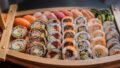
Fish and seafood are the primary animal proteins of traditional Japanese cooking — not necessarily because Japanese people do not eat meat, but because the specific culinary tradition developed around fish in ways that European culinary traditions developed around meat. The specific types of fish most commonly consumed — mackerel, salmon, sardines, tuna — are high in omega-3 fatty acids.
Soy products — tofu, miso, natto, edamame, soy sauce, tempeh-adjacent fermented products — provide protein, isoflavones, and in the fermented forms a range of probiotic compounds. Japan’s per-capita soy consumption is among the highest in the world, and the variety of forms in which soy is consumed is remarkable.
Vegetables — consumed in larger quantities and in more diverse forms than most Western diets, including specific vegetables (gobo burdock, renkon lotus root, daikon radish, various seaweeds) that are absent or uncommon in non-Japanese cuisines. Seaweed — wakame, kombu, nori, hijiki — provides iodine, various minerals, and specific fibre types.
Green tea — consumed at volumes that provide significant quantities of catechins, the antioxidant compounds that have been the subject of substantial health research.
Fermented foods — miso, pickled vegetables (tsukemono), natto, various other fermented preparations — provide probiotic bacteria and the specific health benefits associated with a diverse gut microbiome.
The Specific Health Mechanisms
The health research on specific elements of the Japanese diet has identified several mechanisms that may contribute to the longevity associated with Japanese eating patterns.
Omega-3 fatty acids from fish. The correlation between high fish consumption and cardiovascular health outcomes is one of the most robustly established findings in nutritional epidemiology. Omega-3 fatty acids — particularly EPA and DHA, found in high concentrations in fatty fish — are associated with reduced inflammation, improved lipid profiles, and lower rates of cardiovascular disease. The Japanese population’s high fish consumption is consistently cited as a likely contributor to Japan’s low cardiovascular disease rates.
Isoflavones from soy. Soy isoflavones — genistein and daidzein primarily — have been studied for their potential effects on cardiovascular health, bone density, and hormone-sensitive cancers. The research is complex and the evidence mixed in some areas, but the association between high soy consumption and specific positive health outcomes has been observed in multiple Japanese population studies.
The fermentation factor. The growing scientific understanding of the gut microbiome’s role in overall health has produced renewed interest in the traditional Japanese diet’s fermented foods. Miso, natto, and various pickled preparations contain live bacterial cultures that contribute to microbiome diversity. Natto specifically — with its Bacillus subtilis var. natto bacteria — produces compounds including vitamin K2 and nattokinase that have demonstrated specific health associations in research.
Seaweed and iodine. Japan’s high seaweed consumption provides iodine in quantities that support thyroid function in ways that the limited seaweed consumption of most other diets does not. The association between Japanese seaweed consumption and specific health outcomes has been observed, though the causal mechanisms are not fully established.
The anti-inflammatory overall pattern. Perhaps more important than any individual component is the overall inflammatory profile of the traditional Japanese diet — low in the processed foods, refined sugars, and industrial seed oils that are associated with chronic inflammation, and high in the anti-inflammatory compounds (omega-3s, antioxidants, fibre) that are associated with reduced inflammatory burden.
Hara Hachi Bu: The Eating Principle That May Matter Most
Among all the dietary and cultural factors associated with Japanese longevity, the one that receives the most attention from researchers interested in caloric restriction and its health effects is hara hachi bu — a traditional Japanese eating principle that translates approximately as “eat until you are 80% full.”
The principle — attributed to a Confucian teaching and associated particularly with the long-lived population of Okinawa, which has been the subject of extensive longevity research — suggests that the appropriate stopping point for eating is not satiation but the point at which you have eaten enough to not be hungry, without reaching fullness.
The specific mechanism by which hara hachi bu might contribute to longevity is related to caloric restriction research, which has consistently shown — in animal studies and in some human studies — that moderate caloric restriction (eating less than ad libitum intake) is associated with extended lifespan and delayed onset of age-related diseases. The hara hachi bu principle, consistently applied across decades, would produce a sustained mild caloric restriction that could have cumulative beneficial effects.
The Japanese population does not universally practise hara hachi bu — the principle is a traditional teaching rather than a universally observed behaviour — but its presence as a cultural ideal, and the evidence from the Okinawan population studies that suggest it may be more consistently practised there than in the rest of Japan, has made it a significant focus of longevity research.
The Okinawa Exception: The World’s Longevity Capital
The island prefecture of Okinawa has historically had the longest life expectancy in Japan and has attracted international research attention as one of the world’s five documented Blue Zones — geographic areas with unusually high concentrations of centenarians and unusually low rates of age-related disease.
The traditional Okinawan diet — before the post-World War Two American influence introduced fast food and a Western dietary pattern — was distinctive even within the context of the broader Japanese diet. It was notably low in fish (surprising for an island culture), high in purple sweet potato (beni-imo), high in goya (bitter melon, a vegetable consumed in significant quantities in Okinawa and much less commonly elsewhere in Japan), high in tofu (especially a specific Okinawan-style tofu called shima tofu), and moderate in pork (particularly in slow-cooked preparations that render out much of the fat).
The Okinawan longevity advantage has been partially eroded in younger generations, whose dietary patterns have shifted significantly toward Western fast food — a natural experiment that has provided some of the clearest evidence that the dietary pattern rather than purely genetic factors is responsible for the traditional longevity advantage.
The Honest Complexity: What the Diet Cannot Explain
I want to be honest about the limits of dietary explanations for Japanese longevity, because the popular narrative oversimplifies a genuinely complex picture.
Japanese longevity is associated with the Japanese diet, but it is also associated with several other factors that are not primarily dietary.
Universal healthcare access. Japan has had universal health insurance since 1961 and one of the highest rates of medical utilisation in the developed world. Regular preventive care, early disease detection, and the specific management of conditions like hypertension — which is common in Japan despite the otherwise healthy diet — contributes to longevity in ways that diet alone cannot produce.
Low obesity rates. Japan has among the lowest obesity rates of any developed country — approximately 3-4% of the population by BMI criteria compared to 30-40% in the United States. The low obesity rate is associated with lower rates of all the conditions that obesity drives — cardiovascular disease, type 2 diabetes, certain cancers, joint problems — and is arguably the single most significant dietary-related contributor to Japanese longevity.
Social connection and community. The research on longevity consistently identifies strong social connections as a significant predictor of lifespan. Japanese culture — with its specific emphasis on community belonging, group identity, and the social structures of work, family, and neighbourhood — provides these connections in ways that more individualistic cultures may not.
Cultural attitudes toward aging. Japan’s Shinto and Buddhist traditions — and the specific Japanese cultural values of respect for elders, the continued social role of older people in family and community life, and the absence of the cultural marginalisation of aging that characterises some Western societies — may contribute to the specific psychological and social conditions that support longevity.
The Japanese diet is a genuinely healthy diet and it likely contributes to Japanese longevity. It is not the only explanation, and approaching it as a magic formula misses the specific complexity of what makes Japanese people live as long as they do.
— Yoshi 🐟 Central Japan, 2026
Enjoyed this? You might also like: “Miso Soup: The One-Bowl Philosophy That Defines Japanese Cooking” and “Okinawa: Why Japan’s Most Tropical Island Feels Like a Different Country” — both available on Japan Unveiled.