Miso Soup: The One-Bowl Philosophy That Defines Japanese Cooking
By Yoshi | Japan Unveiled
There is a bowl of miso soup on the table in front of me as I write this.
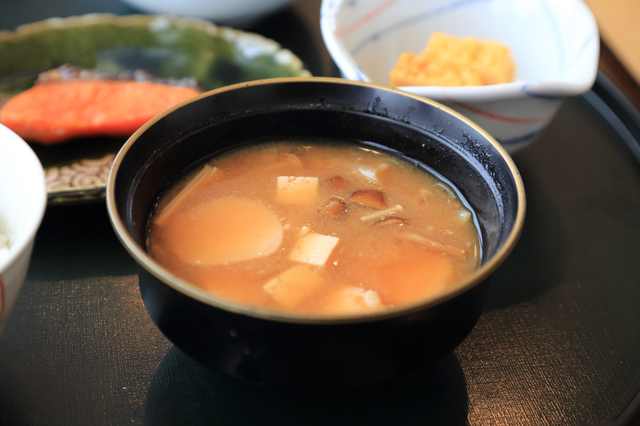
It is not remarkable miso soup. I made it this morning from the miso paste that has been in my refrigerator for the past three weeks — a medium-strength awase miso, a blend of white and red, produced by a company in Nagoya that I have been buying from for years — dissolved in dashi made from a small square of kombu that I soaked in cold water overnight. The ingredients added to the broth: a cube of soft tofu, a pinch of dried wakame seaweed that rehydrated as the soup heated, two slices of green onion added after I removed the pot from the heat.
Five minutes to make, start to finish. Less, if I count only active preparation rather than the overnight kombu soak.
The soup is, as I said, not remarkable. It is the miso soup I make every morning, with minor variations depending on what is in the refrigerator. It is hot. It is savoury in the specific way that miso-based broths are savoury — the umami depth that fermented soybean paste provides, the mineral undertone of the kombu dashi, the way the tofu absorbs the broth so that each piece carries the flavour of the liquid inside it.
I have been drinking miso soup every morning for as long as I can remember. My mother made it every morning. Her mother made it every morning. The morning bowl of miso soup is so fundamental to Japanese daily life that the Japanese phrase for a wife — okusan — is sometimes explained, in an older and now somewhat dated formulation, as the person whose cooking you wake up to, whose miso soup you drink, whose kitchen defines the specific taste of your ordinary days.
I want to tell you about this soup. Not its recipe — recipes are easy to find — but its meaning. What it represents in Japanese cooking culture, what it embodies philosophically, and why a bowl of fermented soybean paste dissolved in broth has managed to be the defining food of a nation for over a thousand years.
The History: Miso’s Long Journey
Miso — みそ, 味噌 — is fermented soybean paste. In its most basic form: soybeans are cooked, mashed, mixed with salt and koji mold (Aspergillus oryzae), and left to ferment for periods ranging from a few weeks to several years. The koji breaks down the proteins and starches in the soybeans, producing a complex mixture of amino acids, sugars, and aromatic compounds that is the source of miso’s characteristic deep flavour.
The technique of producing fermented soybean paste arrived in Japan from China and Korea — where similar fermented soybean products (doubanjiang, doenjang) have existed for millennia — sometime around the 7th century CE. The specific Japanese development of this technique produced miso — a product that, while related to its Chinese and Korean ancestors, is distinct in its specific microbial ecology, its fermentation conditions, and the particular flavour compounds it produces.
By the Heian period (794–1185), miso was an established part of the Japanese diet — primarily consumed by the aristocracy, who used it as a seasoning and as a component of the elaborate court cuisine. By the Kamakura period (1185–1333), miso had spread significantly beyond the aristocracy. Buddhist monasteries — which were the primary centres of food culture and food preservation technology in medieval Japan — developed mugi miso (barley miso) and other varieties as part of the Buddhist vegetarian dietary tradition. Miso provided the protein and flavour complexity that animal products could not.
The Warring States period (Sengoku, roughly 1467–1615) saw miso become a staple food of the military class. Miso was shelf-stable, nutritionally dense, and capable of being dissolved in hot water to produce an instant meal for armies in the field. Daimyo — regional lords — competed to produce superior miso, partly for practical military reasons and partly for the same reasons that any powerful person invests in the quality of their table. The famous Tokugawa connection: the Tokugawa clan of Mikawa Province — the clan that would eventually unify Japan and establish the Edo shogunate — was associated specifically with hatcho miso, the intensely aged, deeply savoury miso that remains the pride of the Nagoya area and that I have written about in my article on the best food of central Japan.
By the Edo period (1603–1868), miso soup had become the daily breakfast staple of the Japanese urban population — the food that sustained the craftsmen, merchants, and labourers of Edo’s dense urban environment through the morning’s work. The misoya — the miso shop — was one of the essential retail establishments of Edo neighbourhoods, providing fresh miso of various varieties to customers who might buy small quantities daily.
And through all of this history — through the aristocratic Heian period and the military Kamakura period and the warring Sengoku period and the mercantile Edo period — the miso soup itself remained essentially unchanged. Hot dashi broth. Dissolved miso paste. Simple additional ingredients. Served immediately.
The Philosophy: Ichiju Sansai
To understand miso soup in Japanese cooking culture, you need to understand the framework within which it operates.
The traditional Japanese meal structure — the one that has organised Japanese eating from the Heian court to the contemporary family dinner table — is called ichiju sansai: one soup, three sides.
The meal has a centre: steamed white rice. Around the rice are arranged three side dishes (sansai): typically a protein (grilled fish, simmered tofu, braised meat), a vegetable dish, and a fermented or pickled item. And alongside all of this is the soup: ichiju. One soup.
In the vast majority of Japanese meals, that one soup is miso soup.
This is not a coincidence or a default born of laziness. It is a deliberate compositional choice that reflects specific thinking about the role that soup plays in a meal. Miso soup does several things simultaneously that no other soup does as efficiently or as well in the Japanese culinary context.
It provides warmth — the hot liquid that begins and accompanies the meal, warming from the inside in a way that is particularly valued in Japanese food culture.
It provides umami depth — the fermented miso and the dashi together provide a background of savoury complexity against which the other elements of the meal are experienced. Eating rice alone is eating a neutral carbohydrate. Eating rice alongside miso soup means eating the rice against a backdrop of deep savouriness that makes the neutrality of the rice a pleasure rather than a lack.
It provides hydration — the liquid that is consumed as part of the meal, particularly important in a diet that is otherwise relatively dry (rice, grilled fish, pickled vegetables).
And it provides a structural anchor — the element that is consistent across all the variation of the meal’s other components. The protein might be salmon today and mackerel tomorrow. The vegetable might be spinach today and burdock tomorrow. But the miso soup is there, serving its function, connecting the meal to the long history of miso soup at Japanese tables.
This last point — the consistency of miso soup as a structural anchor — is the most philosophically interesting. Miso soup’s presence is so consistent that its absence is noticed and felt. The meal without miso soup is a meal with something missing. This is not a matter of nutritional calculation. It is a matter of completeness — the specific completeness that ichiju sansai provides when all its elements are present.
The Dashi: The Foundation Everything Stands On
Before miso soup can exist, dashi must exist. And before dashi can be understood, the concept of umami — the fifth basic taste, identified and named by Japanese scientists in the early twentieth century — must be understood.
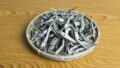
Umami — the Japanese word translates approximately as “savoury deliciousness” — is the taste produced by specific amino acids and nucleotides, particularly glutamate, inosinate, and guanylate. These compounds are present in high concentrations in specific foods: dried kombu kelp, dried bonito (katsuobushi), dried shiitake mushrooms, dried anchovies (niboshi), and various fermented products including miso itself.
Dashi is Japanese stock — the liquid produced by extracting these umami compounds from their source ingredients into water. The most fundamental dashi is kombu dashi: cold water in which a piece of dried kombu kelp has been soaked for several hours or overnight, then gently heated to just below boiling to complete the extraction. The resulting liquid is clear, lightly flavoured, and intensely savoury in a way that is less obvious than the savouriness of meat stock but that makes everything cooked in or with it taste more fully of itself.
Ichiban dashi — first dashi — adds a second umami source: dried bonito flakes (katsuobushi) added to the heated kombu water, allowed to steep briefly, and then strained out. The resulting dashi is the foundation of most Japanese cooking — the liquid in which miso soup is made, in which sauces are balanced, in which simmered dishes are cooked. Its flavour is the background against which Japanese cooking happens, so fundamental to the cuisine that Japanese cooks who have been using it their entire lives sometimes do not consciously register it as a flavour in itself but simply as the taste of everything being right.
The miso soup made with good dashi is qualitatively different from the miso soup made without it. This is the reason that instant miso soup — which uses dashi powder rather than real dashi — is a functional substitute but not a genuine equivalent. The powder delivers some of the umami compounds but not the full complexity of real dashi, and the difference is perceptible.
The Miso: A World of Variety
Japanese miso is not a single product. It is a family of products, varying in colour, flavour, saltiness, and intensity, each with its own specific applications and its own regional associations.
White miso (shiro miso) — fermented for a relatively short period, typically one to three months, with a high proportion of rice koji and a low proportion of soybeans. The result is sweet, mild, and pale in colour. White miso is associated with Kyoto and the Kansai region — the cuisine of the imperial court and of the Buddhist temple tradition developed a preference for white miso’s gentle flavour. Kyoto’s shiro miso ozoni (New Year’s soup) is one of the most immediately identifiable regional variations in Japanese cuisine.
Red miso (aka miso) — fermented for longer, typically six months to a year or more, with a higher proportion of soybeans and less koji. The longer fermentation produces a darker colour and a deeper, more assertive flavour — more savoury, more complex, with a slight bitterness that white miso does not have. Red miso is associated with northern Japan, with Sendai being the most famous regional variety.
Hatcho miso — the extreme end of the red miso spectrum. Hatcho miso is made exclusively from soybeans (no rice or barley koji), fermented in cedar barrels under stone weights for a minimum of three years and sometimes significantly longer. The result is intensely dark — almost black — extremely salty, deeply bitter, and with a complexity of flavour that has no equivalent in any other miso variety. Hatcho miso is specific to Okazaki City in Aichi Prefecture, produced by two companies that have been making it using essentially the same method since the Edo period.
Awase miso (blended miso) — the most commonly used miso in contemporary Japanese home cooking, a blend of white and red miso that combines the sweetness and mildness of the former with the depth and saltiness of the latter. Awase miso is the versatile middle ground — appropriate for most applications, consistent in flavour, and available in the premixed form that makes daily miso soup production straightforward.
Barley miso (mugi miso) — made with barley koji rather than rice koji, producing a distinctive slightly earthy flavour associated with rural Kyushu and some parts of the Chugoku region.
The selection of miso for the morning bowl is, in Japanese households, a genuine choice with genuine implications for the flavour of the meal. Different misos require different amounts — the saltier varieties need less, the milder varieties more — and different misos interact differently with different ingredients. The household miso is part of the household’s taste identity, one of the flavour constants that makes a family’s food recognisably theirs.
The Ingredients: What Goes in the Bowl
Miso soup accommodates a range of additional ingredients — gu, the Japanese term for the solid components in a soup — and the selection of these ingredients is one of the primary ways that miso soup varies across seasons, regions, and households.
Tofu — the most universal gyoza ingredient, appearing in more miso soups than any other addition. Momen tofu (firm) or kinugoshi tofu (silken) both work, producing different textures. The silken tofu, cut into small cubes, absorbs the broth particularly well and has a specific delicacy that makes it one of the most satisfying miso soup ingredients.
Wakame seaweed — dried wakame, rehydrated in the broth, is one of the most common pairings with tofu in miso soup. The wakame provides colour, slight chewiness, and a mild sea flavour that complements the miso beautifully.
Green onion (negi) — sliced green onion added after the soup is removed from heat, preserving its fresh flavour and slight crunch. The most common garnish for miso soup.
Clams (asari) — asari miso shiru, miso soup with short-necked clams, is one of the classic Japanese breakfast soups. The clams provide an additional layer of seafood umami that amplifies the dashi base. Seasonal — most available in spring and autumn.
Daikon radish — cubed daikon, simmered until just tender, in a richer miso broth. More substantial than the tofu-wakame combination, more appropriate as a cold-weather soup.
Mushrooms — shiitake, enoki, maitake, or shimeji, each contributing their own flavour and texture. Autumn mushroom miso soup is a specific pleasure of the Japanese culinary calendar.
Potatoes (jagaimo) — cubed potatoes in miso soup is a home cooking staple that produces a heartier, more filling bowl appropriate for a substantial breakfast or light lunch.
Pork (ton) or clam (asari) with various vegetables — the tonjiru variant of miso soup — pork and root vegetable miso soup — is substantial enough to constitute a meal in itself. A winter staple.
The seasonal rotation of miso soup ingredients is one of the most direct expressions of Japanese kisetsukan — seasonal consciousness — in everyday cooking. Spring: sansai (mountain vegetables), clams, young tofu. Summer: myoga (Japanese ginger bud), edamame, cucumber (unusual but real). Autumn: mushrooms, sweet potato, chestnuts. Winter: daikon, root vegetables, pork.
The bowl changes with the year. The bowl is always miso soup.
How to Make Miso Soup Correctly
I want to give you the information needed to make genuine miso soup, because the instructions that appear in most international sources are often simplified in ways that compromise the result.
Make real dashi. The single most important step. Place a five to ten centimetre square of dried kombu in one litre of cold water and leave it overnight, or for at least thirty minutes at room temperature. Remove the kombu before heating. Heat the water to just below boiling — small bubbles forming at the bottom, but not yet rolling — and add a large handful of katsuobushi (dried bonito flakes). Remove from heat immediately. Allow to steep for three to five minutes. Strain through a fine mesh strainer or cheesecloth. This is ichiban dashi, and it will make your miso soup qualitatively better than dashi powder.
Do not boil the miso. Miso contains live microorganisms that are destroyed at high temperatures, and boiling drives off the aromatic compounds that give miso its complexity. The miso should be dissolved in the dashi after it has been removed from heat, or added to the broth over very low heat well before it boils. Use a ladle to scoop a small amount of hot dashi, dissolve the miso into this ladle, then pour the dissolved miso back into the pot.
Add ingredients at the right time. Ingredients that need cooking — daikon, potato, harder vegetables — go in early, in the cold or gently heating dashi. Delicate ingredients — tofu, wakame, green onion — go in late, at or just before the miso is added. The goal is each ingredient perfectly cooked in the bowl, not overcooked from too long in the pot.
Adjust the miso by taste, not by measurement. The saltiness of miso varies enormously between varieties and brands. Start with less than you think you need — approximately one tablespoon per three hundred millilitres of dashi as a starting point — dissolve it into the broth, taste, and add more as needed. The correctly seasoned miso soup should be savoury without being salty, and the miso flavour should be present but not overwhelming.
Serve immediately. Miso soup is at its best the moment it is made. It can be kept warm over very low heat, but it should not be kept warm at high heat, and it should not be stored and reheated — the delicate aromatics that make fresh miso soup excellent are the first things to be lost when the soup is cooked again.
The Morning Bowl: What It Actually Means
I want to return to where I began — the bowl of miso soup on my table — and try to articulate what I think that bowl actually means.
It means continuity. The miso soup I drink this morning is related by an unbroken line of practice to the miso soup drunk by Heian courtiers, by Kamakura warriors, by Edo craftsmen, by my grandmother, by my mother, by me every morning for as long as I can remember. The specific product has changed — the miso varieties available today did not all exist in their current forms a hundred years ago, the dashi technique has been refined, the additional ingredients vary by what is in season and what is in the refrigerator. But the essential thing — fermented soybean paste dissolved in dashi broth, drunk hot in the morning — has been essentially unchanged for a very long time.
It means care. Miso soup made correctly — with real dashi, with miso chosen for its specific quality and its compatibility with today’s ingredients — is an act of attention. It is five minutes of specific, focused cooking in the morning. In a life that often does not have much time for specificity, five minutes of something done with care is not nothing.
And it means home. The specific flavour of the miso soup that a Japanese person grew up eating — their mother’s miso, their grandmother’s miso, the specific regional variety and specific ratio of ingredients that defines their childhood breakfast — is one of the most powerful taste memories in the Japanese sensory vocabulary. The miso soup of your childhood is the taste of a specific morning, a specific kitchen, a specific life. When you make the same miso soup in your own kitchen, you are not merely making breakfast. You are connecting yourself to something larger than the bowl.
One soup. The bowl that holds everything.
— Yoshi 🍲 Central Japan, 2026
Enjoyed this? You might also like: “Japanese Breakfast: The Meal That Changes How You Think About Mornings” and “Why Japanese Rice Is Different — and Why It Matters” — both available on Japan Unveiled.