- Japanese Comfort Food: 10 Dishes That Heal the Soul After a Hard Day
- 1. Ochazuke (お茶漬け) — Tea Over Rice
- 2. Tamago Kake Gohan (卵かけご飯) — Raw Egg on Rice
- 3. Okayu (お粥) — Japanese Rice Porridge
- 4. Miso Shiru (味噌汁) — Miso Soup
- 5. Karaage (唐揚げ) — Japanese Fried Chicken
- 6. Niku Jaga (肉じゃが) — Meat and Potato Stew
- 7. Onigiri (おにぎり) — Rice Balls
- 8. Rāmen (ラーメン) — At the Right Moment
- 9. Tonjiru (豚汁) — Pork and Vegetable Miso Soup
- 10. Yakisoba (焼きそば) — Fried Noodles
Japanese Comfort Food: 10 Dishes That Heal the Soul After a Hard Day
By Yoshi | Japan Unveiled
There is a specific quality of comfort that certain foods provide — a warmth that is not merely thermal, a satisfaction that goes beyond the nutritional, a specific psychological ease that the body and the mind recognise together as relief.
Every food culture has its comfort foods. The specific foods that provide this quality of relief are, in every culture, the foods of childhood, of home, of the specific domestic warmth that the word “home cooking” describes in its deepest sense.
In Japan, these foods are specific. They are not the elaborate preparations of kaiseki or the technical achievements of sushi; they are the simple, warm, slightly starchy, slightly savoury preparations that a Japanese person thinks of when they are tired or cold or unwell or simply in need of the specific comfort that only familiar food can provide.
Let me tell you what they are.
1. Ochazuke (お茶漬け) — Tea Over Rice
Ochazuke is the simplest and most specific of Japanese comfort foods: plain cooked rice with hot green tea poured over it, served with simple garnishes — nori (dried seaweed), umeboshi (pickled plum), wasabi, or various other small accompaniments.
The specific comfort of ochazuke is in its simplicity and its warmth. The rice that was slightly too dry, the rice that was left over from dinner, becomes something specifically satisfying when hot tea is poured over it: the tea warms the rice, softens any slight dryness, and adds the specific gentle bitterness of green tea to the mild starchiness of the grain.
Ochazuke is the food you make when you are tired and it is late and you do not want to cook but you want something warm and real. It takes three minutes. It always works.
2. Tamago Kake Gohan (卵かけご飯) — Raw Egg on Rice
TKG — the abbreviation that Japanese food enthusiasts use — is one of the most polarising Japanese comfort foods in international contexts and one of the most universally beloved within Japan.
The preparation: a raw egg, cracked over a bowl of hot freshly cooked rice, broken and stirred into the rice, seasoned with soy sauce. The heat of the rice begins to cook the egg slightly — not enough to fully set it, but enough to warm it and to begin the transformation from raw egg to the specific custardy, rich coating that makes TKG what it is.
The result: rice coated in a silky, rich egg layer, seasoned with soy sauce, with the specific umami depth that the yolk provides and the specific lightness that the white provides. It is the breakfast that many Japanese people eat before they have enough energy to make breakfast.
The safety note: Japanese eggs are specifically safe to eat raw — the production standards, the testing protocols, and the handling chains that Japanese egg production uses make raw egg consumption in Japan a genuinely different risk proposition from raw egg consumption in most other countries. I have written about this in a separate article.
3. Okayu (お粥) — Japanese Rice Porridge
Okayu is the Japanese equivalent of the congee found across various Asian food cultures: rice cooked with much more water than standard rice preparation, producing a thick porridge that is the specific food of illness, recovery, and early childhood.
If you are sick in Japan — genuinely sick, not just tired — someone will make you okayu. The specific logic: okayu is easy to digest (the extended cooking breaks down the rice starch more completely), warm, nourishing, and gentle on a system that cannot manage more demanding food. It is the specific food of care — made for you by someone who wants you to feel better, eaten when you are weak enough to need it.
The comfort of okayu is partly in its associations. The person who has eaten okayu made by a parent or a partner during illness carries a specific positive emotional association with its specific warmth and its specific gentle flavour. Eating okayu when well can access that association.
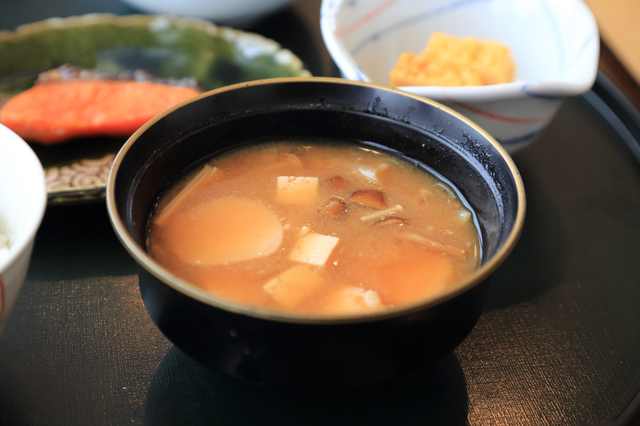
4. Miso Shiru (味噌汁) — Miso Soup
I have written a full article on miso soup and its philosophical dimensions elsewhere on this blog. Here I want to acknowledge it simply as comfort food, which it emphatically is.
The specific comfort of miso soup: it is warm, it is umami-rich, it is immediate. The preparation of a good miso soup takes approximately four minutes. The consumption of a bowl of miso soup provides the specific satisfaction of a warm liquid that contains protein (the tofu or the clam), the mineral depth of the dashi, and the complex fermented savouriness of the miso.
Miso soup at the right moment — cold morning, exhausted evening, slight feeling of unwellness — is a specific and reliable form of comfort that the complexity of the flavour does not predict. It is simple and it is deep at the same time.
5. Karaage (唐揚げ) — Japanese Fried Chicken
Karaage — Japanese fried chicken, marinated in a mixture of soy sauce, sake, ginger, and garlic, coated in potato starch, and deep-fried to a specific golden crispiness — is the comfort food of celebration and of abundance.
Where some Japanese comfort foods are about warmth and simplicity, karaage is about specific pleasure — the specific joy of something crispy and rich and deeply savoury. The crunch of the starch coating, the juiciness of the marinated chicken within it, the specific flavour that the soy-and-ginger marinade produces — karaage is a food that makes the act of eating specifically pleasurable rather than merely satisfying.
It is sold at every convenience store, at every izakaya, at every festival stall. It appears in bento boxes. It is made at home on weekend evenings when the family wants something specific and good.
6. Niku Jaga (肉じゃが) — Meat and Potato Stew
Niku jaga (niku = meat, jaga = potato) is the Japanese home cooking equivalent of meat and potatoes — the stew of thinly sliced beef (or sometimes pork), potatoes, onion, and shirataki (konjac noodles), simmered in a sweet soy sauce-based broth.
The specific flavour of niku jaga — sweet, savoury, with the specific depth of the soy-mirin-sake broth — is one of the most universally recognisable flavours of Japanese home cooking. It is the dish that Japanese people most commonly describe as okan no aji (母の味 — “mother’s taste”) — the specific flavour associated with childhood, with home, with the domestic warmth of a specific person’s cooking.
The origin story: niku jaga is sometimes described as Japan’s adaptation of the British stew, specifically as an attempt by a Meiji-era Navy officer (Tōgō Heihachirō, the admiral who won the Battle of Tsushima) to recreate the beef stew he had eaten in England, using Japanese ingredients. Whether the specific origin story is accurate matters less than the emotional truth it expresses: niku jaga is the Western stew that Japan made its own, adapted so thoroughly that it is now specifically Japanese in its flavour and its emotional associations.
7. Onigiri (おにぎり) — Rice Balls
The rice ball as comfort food may seem too simple to merit mention — but the specific comfort of a well-made onigiri, eaten warm or at room temperature, is genuine and specific.
The specific comfort: the rice, slightly compressed by the shaping, holds its warmth longer than a bowl of rice. The nori wrapping provides the specific mineral note and the specific texture contrast of seaweed against rice. The filling — the umeboshi, the tuna mayo, the sake (salmon), the kombu — provides the specific flavour element that the rice alone does not.
An onigiri, eaten while standing at a convenience store counter or on a train platform or sitting on a park bench at lunch — this is one of the most reliably comforting small meals in the Japanese food culture. Its portability is part of its comfort; it can be eaten anywhere, which means the comfort is available anywhere.
8. Rāmen (ラーメン) — At the Right Moment
Ramen is comfort food at specific moments in ways that it is not at other moments. I am not describing the elaborate bowls of the dedicated ramen shop, which are more analogous to a fine dining experience than to comfort food. I am describing the ramen eaten late at night, after drinking, at the twenty-four-hour shop near the station — or the bowl eaten at home from a bag ramen, enhanced with whatever was in the refrigerator.
The shime ramen (〆ラーメン) — the ramen eaten as the last dish of an izakaya evening — is a specifically Japanese food ritual that requires acknowledgment as comfort food. The specific satisfaction of a bowl of ramen at midnight, after beer and sake and small plates of food, with the particular warmth and richness of the broth at that specific moment — this is a specific comfort that could not be replicated at any other time of day.
9. Tonjiru (豚汁) — Pork and Vegetable Miso Soup
Tonjiru is the upgraded, heartier sibling of miso soup — a substantial soup made from pork belly, gobo (burdock root), daikon, carrot, konjac, and tofu, seasoned with miso.
The specific comfort of tonjiru is in its substance. Where miso soup is a supporting element of a larger meal, tonjiru can be the main event — a bowl of this soup with rice constitutes a complete and deeply satisfying meal. The pork fat enriches the broth; the burdock and carrot provide specific earthiness; the miso provides its standard depth.
Tonjiru in winter, at a school sports festival or a community event, served from a large pot — this is one of the most specifically communal Japanese food experiences, the soup that appears when a large group of people need warming up.
10. Yakisoba (焼きそば) — Fried Noodles
Yakisoba — wheat noodles stir-fried with pork, cabbage, and various other vegetables, seasoned with a thick, slightly sweet sauce — is the comfort food of summer festivals, of quick weeknight dinners, and of the specific afternoon when you want something filling and specifically satisfying.
The festival yakisoba — made on a large iron griddle at a matsuri stall, served in a styrofoam container with a plastic fork, eaten standing in the summer evening — is comfort food in a specific atmospheric sense. The combination of the warm evening, the smell of the festival, and the specific slightly-too-sweet-and-savoury sauce of the yakisoba produces a specific summer memory that the food can access whenever it is eaten.
The home yakisoba is more modest but equally satisfying: noodles and whatever vegetables are available, the sauce from a bottle, eaten quickly at the kitchen table. It is the dinner when you were not planning to cook.
— Yoshi 🍱 Central Japan, 2026