Japanese Gardens: The Philosophy Behind the Rocks and the Raked Sand
By Yoshi | Japan Unveiled
There is a garden in Kyoto that contains fifteen stones.
The stones are arranged in five groups — of five, two, three, two, and three stones respectively — set in a rectangular bed of raked white gravel, enclosed by a low clay-topped wall of weathered plaster, with a wooden verandah on one side from which the garden is viewed. The gravel is raked daily into parallel lines that curve around the base of each stone group.
The garden is approximately twenty-five metres long and ten metres wide. It has no plants. No water. No trees. Nothing but the fifteen stones, the raked gravel, and the walls that enclose them.
It is, by the assessment of many people who care deeply about gardens, the most beautiful garden in the world.
The garden is Ryoanji — the rock garden of the Ryōan-ji temple in Kyoto, created sometime in the late fifteenth or early sixteenth century, maintained essentially unchanged since. It attracts millions of visitors per year. It has been the subject of philosophical essays, art historical analysis, mathematical studies (there is a scholarly literature on the precise arrangement of the stones), and the quiet contemplation of countless individuals who have sat on the verandah and tried to understand what they are looking at.
The question most commonly asked at Ryoanji — and asked with genuine puzzlement, not as a rhetorical flourish — is: what does it mean?
I want to try to answer that question. Not definitively — the specific meaning of Ryoanji is contested and perhaps intentionally unresolvable — but in a way that places the garden in the broader context of Japanese garden philosophy and the specific aesthetic and spiritual traditions that produced it.
The Three Major Japanese Garden Types
Japanese garden design encompasses several distinct traditions, each with its own aesthetic principles, historical origins, and intended experience. Understanding the major types clarifies why specific famous gardens look the way they do.
The Karesansui: Dry Landscape Garden
The karesansui (枯山水) — literally “dry mountain water” — is the garden type that most surprises and most puzzles Western visitors: a garden that represents water without containing water, that represents landscape without the biological abundance usually associated with landscape.
The karesansui uses raked gravel or sand to represent water — the raking patterns suggesting the movement of streams, the surface of a pond, or the openness of the sea — and carefully selected and placed stones to represent mountains, islands, or other landscape features. The stones are chosen for their specific visual qualities: their shape, their texture, their colour, and the specific way they suggest natural forms without imitating them.
The karesansui tradition developed in Zen Buddhist temple settings, and its aesthetic is directly connected to Zen philosophy: the preference for suggestion over statement, for the single carefully chosen element over the accumulation of elements, for the space that allows the viewer’s mind to complete the composition rather than providing everything explicitly.
Looking at a karesansui is not the same as looking at a representational painting of a landscape. The garden does not ask you to see the gravel as water in the way that a painting asks you to see the painted surface as a landscape. It asks you to inhabit a specific quality of attention — a focused, open awareness that allows the specific beauty of the stones and the raked surface to be experienced directly, without the mediation of narrative or symbolic decoding.
Ryoanji works — when it works — in this specific way: not by presenting a coherent symbolic statement that can be decoded, but by creating conditions for a specific quality of contemplative attention that the viewer then inhabits. The question “what does it mean?” is, in this sense, the wrong question. The right question is: what does it do to you when you look at it?
The Stroll Garden: Landscape in Motion
The kaiyū-shiki (回遊式) — the stroll garden, literally “circuit-style” garden — is the opposite of the karesansui in almost every way: abundant, varied, changing with movement, designed to be experienced over time and through space rather than from a single viewpoint.
The stroll garden is a large landscape garden through which a path leads visitors on a circuit, presenting different views, different garden environments, and different aesthetic experiences at each turn. The great stroll gardens of the Edo period — Kōraku-en in Okayama, Kenroku-en in Kanazawa, Kairaku-en in Mito — were developed by regional lords as expressions of wealth, cultural sophistication, and political power.
The design principle of the stroll garden is shakkei — borrowed scenery — in combination with the garden’s internal composition. The designer arranges the plantings, the paths, the ponds, and the structures so that natural features outside the garden’s boundaries — a distant mountain, a particular tree, the sky above — appear to be part of the garden’s composition. The famous Shinjuku Gyoen in Tokyo uses the surrounding buildings of the city as a kind of backdrop; the classical stroll gardens of Okayama and Kanazawa use their regions’ specific mountains and skies.
The stroll garden is the most immediately accessible of the Japanese garden types to Western visitors — it has plants, water, paths, pavilions, the abundance and variety that Western landscape garden tradition also values. But it is organised by different principles: the specific sequence of views, the management of concealment and revelation, the use of borrowed scenery, and the relationship between the garden’s internal composition and the larger landscape that frames it.
The Tea Garden: The Garden as Preparation
The roji — the tea garden or tea path — is the most functionally specific of the major Japanese garden types, designed not to be enjoyed in itself but to prepare the visitor for the tea ceremony that awaits at the end of the path.
I have described the roji briefly in my article on matcha and the tea ceremony, but it deserves more specific treatment here. The roji is a garden designed to create a specific psychological transition: from the ordinary world of daily life to the heightened attention and presence required for the tea ceremony. Every element of the roji — the specific quality of the stepping stones, the arrangement of the moss and the planting, the presence of a water basin (tsukubai) where visitors ritually purify their hands and mouth before entering the tea room — is chosen and placed to facilitate this transition.
The stepping stones of the roji require specific attention — they are not uniform, and walking them requires looking at each step, which redirects attention from the general environment to the specific and immediate. This is deliberate: the specific quality of attention that the tea ceremony requires begins on the path.
The moss that covers the ground of a well-maintained roji garden is one of the most immediately beautiful elements of Japanese garden aesthetic. Moss requires specific conditions — shade, moisture, the specific acidity of the soil — and its cultivation is an art in itself. The Saiho-ji temple garden in Kyoto — known as the Moss Temple — is perhaps the most famous example of moss cultivation in Japanese garden history, with over one hundred and twenty varieties of moss covering the ground of the stroll garden around the central pond.
Key Principles of Japanese Garden Design
Across all three major garden types, several specific design principles operate with varying emphasis.
Ma — the concept I wrote about in my previous article on this blog — is fundamental to Japanese garden design. The spaces between the stones in a karesansui, the spaces between the planting groups in a stroll garden, the specific emptiness of the roji path’s stepping stones — these spaces are not leftover areas to be filled. They are compositional elements as important as the stones and plants they surround.
Miegakure — the principle of “hide and reveal.” Japanese garden design consistently avoids showing everything at once. Paths turn so that what is ahead is not visible from where you are. Plantings conceal and reveal specific views depending on where in the garden you are standing. This is the opposite of the Western formal garden tradition, which typically reveals the garden’s full extent from the primary viewpoint (the house, the entrance gate). Japanese gardens unfold over time and movement.
Fuzei — atmosphere, or the mood created by the specific combination of elements in the garden. A garden that achieves fuzei has a specific and coherent quality of atmosphere that is felt immediately upon entering, even before any specific element is consciously registered. Fuzei is not produced by any single design decision but by the accumulated effect of all of them — the light, the sound of water, the texture of the stone and the moss, the temperature of the air — working together toward a specific experiential quality.
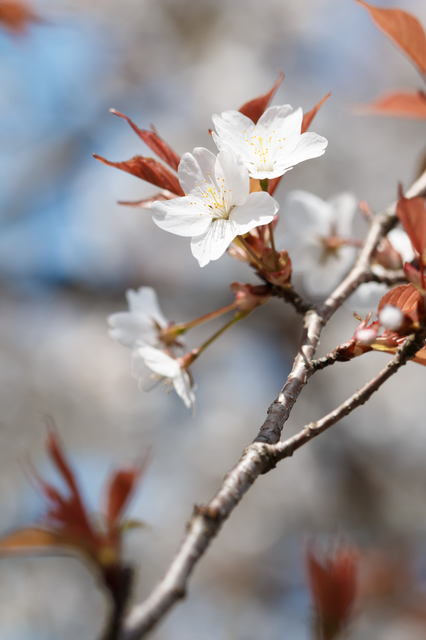
Seasonal change — Japanese garden design is fundamentally temporal, designed to change across the seasons in ways that are anticipated and valued. The cherry blossoms of spring, the new green of early summer, the full growth of midsummer, the colour of autumn, the specific quality of winter bare branches against snow — the garden is designed to be beautiful at all times, with each season offering something the others do not.
Asymmetry — Japanese garden composition consistently favours the asymmetric over the symmetric. The symmetric composition — the matching planting on each side of an axis, the geometric regularity of a formal parterre — is the Western formal garden tradition. Japanese composition uses odd numbers (three, five, seven stones; three planting groups at different heights), irregular placement, and the natural asymmetry of organic forms to create compositions that feel alive and specific rather than imposed.
The Famous Gardens: A Brief Guide
Ryoanji (Kyoto) — the karesansui I began with. Accessible by bus from central Kyoto. Arrive early in the morning for the best experience — the garden’s effect depends significantly on relative quiet and the ability to sit with it for an extended period. Ten minutes is not enough. Thirty minutes, in relative quiet, with genuine attention, is closer to what the garden offers at its best.
Kenroku-en (Kanazawa) — considered one of Japan’s three great gardens, along with Korakuen (Okayama) and Kairaku-en (Mito). A large stroll garden with a central pond, multiple pavilions, and extraordinary seasonal displays — the snow-covered garden with the lanterns of the famous yukitsuri (rope supports for the snow-laden branches of the karasaki pine) in winter is one of the most photographed images in Japanese garden culture.
Kokedera (Saiho-ji, Kyoto) — the Moss Temple. Requires advance reservation (a written application to the temple is necessary; tourist agencies can assist). The experience of walking through the moss garden — the extraordinary density and variety of the moss, the quality of the light that penetrates the forest canopy, the specific atmosphere of the garden — is unlike anything else in Japanese garden culture.
Shinjuku Gyoen (Tokyo) — the most accessible major garden to visitors staying in Tokyo, a former imperial garden now a public park. Contains elements of Japanese garden design alongside French formal and English landscape garden sections. The cherry blossom season display is among the most beautiful in Tokyo.
Adachi Museum of Art Garden (Shimane) — not a traditional garden in the historical sense, but the most extraordinary contemporary deployment of Japanese garden aesthetic: a series of landscape compositions viewed as living paintings from designated indoor viewpoints within the museum. The garden is not accessible by foot — it is experienced exclusively as viewed framing through windows and openings in the museum building. This approach — the garden as picture — is radical and extremely effective.
Visiting Japanese Gardens: How to Experience Them Well
The most common mistake visitors make at Japanese gardens is moving too quickly. The garden is not a checklist of features to be photographed and marked. It is an experience to be inhabited.
The practical advice: find a viewpoint and stay with it for at least ten minutes. Do not look at your phone. Let the garden’s specific qualities arrive gradually rather than trying to process them immediately. The quality of atmosphere that the best gardens produce — the fuzei — is not visible at a glance. It arrives over time.
Seasonal timing matters. The cherry blossom season (late March to early April depending on location) is the most popular and the most crowded. The new green season of early summer (late April to May) is among the most beautiful and significantly less crowded. Autumn colour (late October to mid-November depending on latitude) is spectacular and popular. Winter — particularly in gardens where snow is possible — offers the stark, minimal beauty that Japanese garden aesthetics values in its fullest expression.
Early morning visits, before the main visitor flow, provide the quality of quiet that the contemplative garden experience benefits from. Most public gardens open at 8 or 9am.
Photography is permitted in most public gardens, but the camera should be a tool for noticing rather than a substitute for looking. The photograph of a garden is not the experience of the garden. The garden is the experience of the garden.
— Yoshi 🪨 Central Japan, 2026
Enjoyed this? You might also like: “Wabi-Sabi: Why Japan Finds Beauty in Imperfection” and “The Japanese Concept of Ma” — both available on Japan Unveiled.