By Yoshi | Japan Unveiled
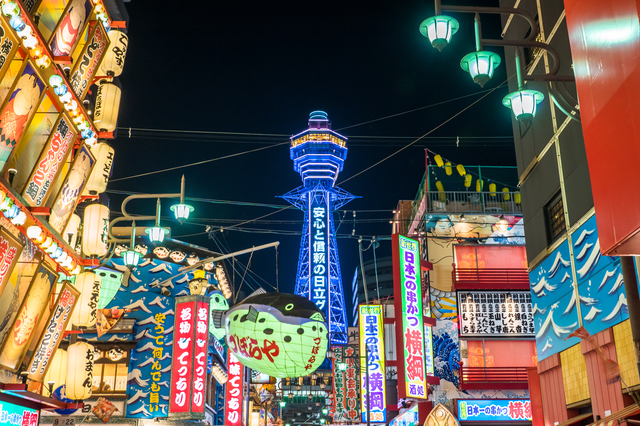
There are streets in every major Japanese city that look, in daylight, like ordinary commercial streets. Modest signage, ordinary storefronts, nothing that announces what is specifically done here as opposed to anywhere else. Then evening comes, and the neon starts, and the men in suits who stand in the doorways of small establishments — clipboard in hand, voice pitched at precisely the right degree of invitation — begin to appear. Women in evening wear emerge from building entrances, walking toward the nearby restaurant where they eat before their shift begins. A cab deposits a man in the suit of a successful professional who walks directly to a specific door and rings a bell not visible from the street. By midnight the street is transformed: not louder, not chaotic, but dense with the specific purposeful activity of an economy that does not appear in Japan’s official tourism materials and that most Japanese people do not discuss with foreigners they have just met.
Japan’s mizu shōbai — the “water trade,” as the entertainment district economy is poetically named, evoking the fluid, changeable, uncertain nature of a business that depends entirely on the shifting moods and appetites of its customers — is one of the most economically significant and least publicly acknowledged industries in the country. It encompasses everything from the most upscale hostess clubs (kurabu) in the Ginza, where an evening of conversation with elegantly dressed women while drinking expensive whisky can cost a corporate expense account the equivalent of a month’s salary, to the tiny “snack bars” (sunakku) in rural towns, where a woman of a certain age pours drinks and listens sympathetically to the agricultural workers who have been her regulars for twenty years. Between these poles lies an enormous range of establishment types, service formats, and social functions, all of which share the basic commercial proposition that the company of an attractive and attentive person, in an intimate setting, accompanied by alcohol, is worth paying for.
This is a subject that requires both honesty and care. The mizu shōbai encompasses genuine exploitation alongside genuine service, genuine connection alongside commercial transaction, genuine entertainment alongside practices that raise serious ethical concerns. I want to describe it accurately, which means neither condemning it wholesale nor pretending that its more problematic dimensions do not exist.
The Taxonomy — A Field Guide to Japan’s Night Establishments
Understanding Japan’s night economy requires navigating a terminology of establishment types that is both precise and culturally specific. Let me describe the major categories.
The hostess club (kurabu or kyabare) is the most prestigious and most expensive tier of the hostess industry. High-end hostess clubs, concentrated in Tokyo’s Ginza and Kabukicho districts and in Osaka’s Kitashinchi, employ women (hostesses) who are selected for their conversational skills, their social polish, and their appearance. The format is consistent: the customer (almost always male) is seated in a private booth or at a table, and a hostess is assigned to sit with him, pour his drinks, light his cigarette, keep his glass filled, and provide conversation, flattery, and the specific form of attentive feminine company that is the product being sold. There is typically no physical contact beyond the conventional social — no sexual services are provided at legitimate hostess clubs, a distinction from other categories of establishment that is legally and culturally significant. The cost is substantial: a few hours at a high-end club, with drinks and hostess charges, can cost between 50,000 and several hundred thousand yen.
The host club — the male-staffed equivalent of the hostess club, serving a predominantly female clientele — is the most visually distinctive element of Japan’s night economy, primarily because of the appearance of the young men who work as hosts. Host club workers (hosts) maintain an extreme visual presentation that is recognizably derived from the visual kei aesthetic: elaborate hair, dramatic makeup, fashionable and often gender-bending clothing. They perform the same basic function as hostesses — attentive company, conversation, drinking together, flattery — for a predominantly female clientele that includes women who are themselves working in the night economy and who spend their earnings at host clubs, and women from other backgrounds who find in the host club experience something that their ordinary lives do not provide. The Kabukicho area of Shinjuku — Tokyo’s largest entertainment district — is the most concentrated host club zone in Japan and has a host club culture that is visible in the street presence of elaborately dressed young men during the day as well as in the evening operations.
The sunakku (snack bar) is at the opposite end of the size and cost spectrum from the kurabu. A typical sunakku is a very small establishment — perhaps eight to twelve seats at a counter and a couple of small tables — run by a single woman (the mama-san) who may have one or two part-time staff. The format is similar to the hostess club but informal: customers drink (the pricing is straightforward and relatively modest), the mama-san and her staff talk with them, karaoke may be available, and the atmosphere is more neighborly than ceremonial. The sunakku is the neighborhood equivalent of the upscale club — the place where the local business owner goes after a difficult day, the regular who has been coming for fifteen years and whose relationship with the mama-san is something between regular customer and trusted friend. Sunakku culture is most visible in the entertainment districts of smaller cities and towns, where it represents a significant fraction of the total nighttime commercial activity.
Cabaret clubs (kyabare), snack bars, and various hybrid forms fill the middle of the range. The category of “pink salons,” “delivery health services,” and other establishments that provide sexual services alongside or in lieu of conversation-based entertainment occupy the legal margins and sometimes the illegal territory beyond them. The legal and regulatory framework distinguishing legal from illegal in this space is complex and inconsistently enforced, and I will not attempt to map it comprehensively here.
The Mama-San — An Underappreciated Figure of Japanese Business
The mama-san — the female proprietor of a sunakku or small hostess establishment — is one of the more distinctive and underappreciated figures in Japanese commercial life. A good mama-san is simultaneously a business owner, a bartender, a therapist, a mediator, a social memory, and a specific kind of friend to the men who are her regular customers. The combination of skills this requires — the business acumen to run a small establishment profitably, the social intelligence to manage a range of customer personalities and moods, the genuine warmth that makes customers want to return, and the specific art of listening without judgment that is the core of the service she provides — is considerable.
The listening function of the mama-san is, I think, underappreciated as a social service. Japanese professional and family culture, as I describe in the salaryman article, requires an enormous amount of emotional performance — the maintenance of the appropriate emotional face in professional contexts, the suppression of frustration and doubt and resentment in the interest of social harmony, the continuous management of the gap between what is felt and what is expressed. The sunakku is one of the few social environments in which a man can say, relatively directly, what he is actually feeling, and the mama-san is the person to whom he says it. She has heard variations of what he is telling her many times before. She does not offer simple solutions, which would be unhelpful. She listens, reflects back what she has heard, and manages the conversation in a way that allows the customer to feel heard and somewhat relieved without having to take any action or revise any aspect of his life. This service is genuinely valuable, and the fact that it is provided within a commercial framework does not make it less real.
The business of running a sunakku is more complex than it appears. The mama-san must maintain relationships with her suppliers, manage her licensing compliance (sunakku are regulated under the Law on Businesses Affecting Public Morals), handle the occasional difficult customer, and keep her regular customers feeling that their specific relationship with her is special rather than commercial — which requires genuine skill in a situation where the commercial nature of the relationship is obvious. The financial margins in sunakku operation are typically thin, and many mama-san supplement their income with the proceeds of informal lending to trusted regular customers. The long-term relationships that underpin the sunakku business are its primary asset, which means that a mama-san who must close for health reasons or family circumstances is typically unable to sell the business as a going concern — the value is in the relationships, and the relationships do not transfer.
The Host Club’s Darker Dimensions
The host club industry has attracted serious journalistic and academic attention in Japan for reasons that go beyond its visual spectacle. The economic dynamic of the host club — in which hosts cultivate emotional dependency in female customers who spend progressively larger amounts in pursuit of the relationship they feel developing — raises genuine concerns about exploitation.
The host club’s business model depends on “shimei” — the designation of a specific host as a customer’s preferred companion — and the associated escalation of spending that successful shimei cultivation produces. A host who successfully cultivates a customer’s emotional attachment can expect that customer to spend on “champagne calls” — the purchase of expensive bottles as a public tribute to the host — and other high-margin products that escalate the bill significantly beyond the base service charge. The emotional manipulation required to produce this spending is real: hosts are trained in techniques for creating intimacy, managing the customer’s emotional state, and sustaining the impression of a relationship that is personal rather than commercial. Customers who have developed strong attachments to specific hosts have been documented spending amounts that exceed their income, taking out loans, and in extreme cases engaging in activities they would not otherwise have considered in order to sustain the spending.
The connection between host club spending and the supply of women to other sectors of the mizu shōbai is a documented and significant phenomenon. Some women who work in the night economy — as hostesses, in adult entertainment, or in other capacities — direct a significant portion of their earnings to host clubs where they have become regular customers and have developed emotional attachments to specific hosts. The cycle — work in the night economy, spend the proceeds at host clubs, need to earn more to sustain the spending — is one that critics of the host club industry have documented and that Japanese public health researchers have connected to exploitation and economic vulnerability.
The host club industry’s relationship with organized crime (yakuza) has been a concern in this context. Yakuza organizations have historically had connections to various sectors of the mizu shōbai — controlling or taxing certain establishments, providing financing and protection, and in some cases facilitating the human trafficking that supplies women to the more exploitative sectors of the entertainment industry. The specific extent and form of these connections has changed over decades as law enforcement has targeted organized crime more aggressively and as the yakuza’s overall presence in the commercial economy has contracted. But the connections are not simply historical.
What Foreign Workers in the Mizu Shōbai Reveal
The presence of foreign workers in Japan’s night economy — particularly in the hostess and entertainment sectors — illuminates dimensions of the industry and of Japanese immigration policy that are not visible from the standard accounts of either topic.
Through the 1990s and into the 2000s, a significant portion of the hostesses in certain tiers of the Japanese night economy were foreign women — primarily from the Philippines, Colombia, Russia, and Eastern Europe — who came to Japan on “entertainer” visas that nominally permitted them to perform in entertainment establishments but that were in practice used to supply hostess clubs with foreign workers. The living and working conditions of these women varied enormously: some were working in legitimate establishments under conditions that, while exploitative by the standards of their home countries’ professional options, were not criminal; others were in conditions of debt bondage and severe exploitation that met the definition of human trafficking.
The visa category that had been used to supply the hostess industry was substantially tightened in the mid-2000s, primarily in response to pressure from the United States government, which placed Japan on its trafficking watch list partly on the basis of the entertainer visa issue. The reform reduced the supply of foreign women working in the hostess sector but did not eliminate the underlying demand, which has been met through other channels including irregular immigration and deceptive recruitment.
The experience of foreign women working in Japan’s night economy has been documented by researchers, journalists, and advocacy organizations in ways that provide an important corrective to the sanitized image of the mizu shōbai as a colorful Japanese cultural eccentricity. At its worst, the industry involves serious exploitation of vulnerable women who came to Japan seeking legitimate employment and found themselves in situations they could not easily leave. This reality coexists with the genuine social functions and relatively benign practices that characterize other parts of the same industry, and both need to be held in view.
What the Night Economy Says About Japan
The existence and the scale of Japan’s mizu shōbai is, ultimately, an expression of something real about Japanese society: the persistent gap between what Japanese professional and family culture permits in terms of emotional expression and human connection, and what Japanese people actually need. The night economy fills this gap commercially, which creates its own ethical complexities, but the gap itself is the fundamental fact. A society that requires its men to maintain extraordinary emotional self-control in their professional and domestic lives, that provides limited spaces for honest expression of frustration and desire and loneliness, will generate demand for commercial spaces that offer what the mainstream social structure does not.
This does not make the mizu shōbai good, or its exploitative dimensions acceptable. It places it in a context that helps explain both why it exists at the scale it does and why meaningful reform is difficult. The demand is structural, not incidental, and addressing it requires engaging with the broader social arrangements that produce it rather than simply regulating the commercial expression.
Japan’s night economy is not unique. Every major city has its version of commercial companionship, its spaces where money purchases the simulacrum of connection. What Japan’s version demonstrates is how a specific cultural context — the specific emotional requirements of the salaryman life, the specific constraints on emotional expression in Japanese professional culture, the specific dynamics of a society where genuine social connection is both deeply valued and structurally difficult to achieve — shapes the character and the scale of a universal human phenomenon. The mizu shōbai is, in this sense, one of Japan’s more honest institutions: it does in the open, with prices attached, what other societies pretend they do not do at all.
— Yoshi 🌃 Central Japan, 2026
Enjoyed this? Continue with: “The Salaryman’s Real Life” and “Izakaya — The Real Third Place” — both available on Japan Unveiled.