Onsen: The Complete Guide to Japan’s Hot Spring Culture
By Yoshi | Japan Unveiled
I want to begin with the water.
The water comes from underground — from the geological activity that makes Japan one of the most volcanically active countries on earth, from the heat generated by tectonic movement far below the surface, from aquifers that have been slowly mineralizing for thousands of years. By the time this water reaches the surface — through natural springs, through wells bored into the earth by generations of innkeepers and bathhouse operators who knew where to drill — it carries in solution a specific mineral composition that varies by location. Sulfur in one spring, iron in another, sodium chloride in a third, silica in a fourth.
Each composition does something different to the water. To its color, its smell, its feel against skin. To what it is claimed to do for the body — the specific therapeutic attributions that Japanese hot spring culture has developed over centuries of experimentation and observation.
And each composition does something different, also, to the person immersed in it.
I have been going to onsen since I was a child. My first memory of a hot spring is of a rotenburo — an outdoor bath — somewhere in the mountains not far from here, in winter, the air cold enough to see my breath, the water hot enough to be on the edge of comfortable, the steam rising around me and the stars visible above the steam.
I am forty-something years old and I have been chasing that specific quality of experience ever since.
This guide is for people who want to understand what onsen is, what it requires of you, and how to have the experience correctly.
What Onsen Actually Is
Onsen (温泉) — hot spring — has a legal definition in Japan. Under the Hot Spring Law (Onsen-hō) of 1948, a water source qualifies as onsen if it emerges from the ground at a temperature of 25°C or above, OR if it contains specific concentrations of designated minerals regardless of temperature.
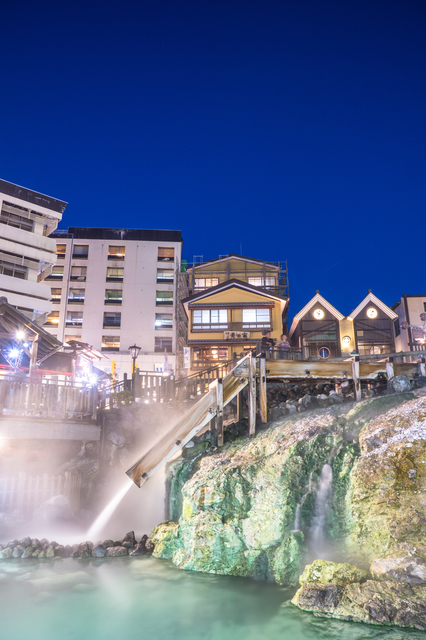
Japan has approximately 27,000 onsen sources and approximately 3,000 onsen towns (onsen-chi or onsen-machi) — concentrations of ryokan, public bathhouses, and bathing facilities built around a natural hot spring source. The geological conditions that produce this abundance — the volcanic activity, the tectonic complexity — are the same conditions that make Japan prone to earthquakes and eruptions. Japan’s geological instability is, in this specific dimension, a gift.
Not every facility that calls itself an onsen is one. Sento — public bathhouses heated with ordinary tap water — are distinct from onsen and do not carry onsen’s therapeutic attributions. Facilities that mix artificially heated water with a small proportion of natural onsen water occupy a gray zone. If the distinction matters to you, check whether the facility specifies gensen kakehōgushi — water flowing directly from the source without recycling — which indicates genuine, undiluted onsen water.
The Water Types: What You Are Bathing In
Japanese onsen are classified by their mineral composition — the izumi-shitsu or spring quality — and each type is attributed with specific therapeutic properties. Some of these attributions are traditional wisdom without clinical validation; others have genuine supporting evidence. All of them affect the actual experience of the water.
Simple thermal springs (tanjun-sen) — the mildest type, essentially hot mineral water without high concentrations of any specific mineral. The most widely available and most suitable for extended soaking and for sensitive skin. Many of the most famous onsen towns use simple thermal springs.
Sodium chloride springs (shio-sen) — salt water, often with a slightly viscous quality, warming and said to be effective for muscle pain and joint problems. The high salt content means the mineral effect continues after you leave the bath — the salt residue continues to retain heat in the skin.
Sulfur springs (io-sen) — identifiable immediately by their distinctive rotten egg smell, which most bathers come to associate with quality and authenticity. The sulfur content gives the water a slightly milky appearance and a specific skin-softening effect. Famous for skin benefits. The smell fades from skin within hours but from clothes within days.
Bicarbonate springs (juso-sen) — slightly effervescent in some cases, with a skin-softening quality that has earned them the name bijin-no-yu — “beautiful woman’s water.” The skin after bathing in a bicarbonate spring has a specific smoothness.
Acidic springs (san-sei-sen) — high acidity, typically associated with volcanic areas. Very few in number. The acidity can be harsh on skin; bathing time should be limited. Famous for antibacterial properties.
Iron springs (tetsu-sen) — orange or brown colored water from iron content, oxidizing to a rust color upon contact with air. The distinctive appearance is part of the experience. Said to be beneficial for anemia and gynecological conditions.
Radioactive springs (hōshanou-sen / radon springs) — contains small amounts of radon. Found at specific locations including Misasa in Tottori Prefecture. The level of radioactivity is below any danger threshold and is claimed to have hormetic therapeutic effects. This is a real category despite sounding alarming.
The Rules: Onsen Etiquette
Onsen has specific rules that are not merely etiquette but the practical requirements of a bathing culture shared by many people in a small space. Understanding these rules is essential for a good experience — not because violation will produce dramatic consequences, but because following them correctly allows the experience to be what it is.
Wash before you enter the bath. This is non-negotiable. Every onsen facility has a washing area (kake-yu shower stations) adjacent to the main bath. You sit on a low stool, wash your entire body with soap and shampoo, rinse thoroughly, and then enter the communal bath. The water in the communal bath is shared. You do not bring soap or dirt into it.
No swimwear in most traditional baths. The traditional onsen bath is entered naked. Swimwear is associated with facilities that cater to international tourists or that have specific mixed-gender bathing areas (konyoku). Standard onsen have separate baths for men and women; both are entered without clothing.
Keep your small towel out of the water. You are given a small towel upon entry. This towel is used for washing and for modest coverage while moving between areas. In the bath itself, the towel is folded and placed on your head (a traditional habit associated with preventing overheating), not placed in the water.
No tattoos in most traditional onsen. This rule is widely enforced, with roots in the historical association between tattoos and organized crime (yakuza). The policy is changing — some facilities now admit tattooed guests or have designated tattooed-friendly hours — but many traditional ryokan and public bathhouses maintain the prohibition. Foreign visitors with tattoos should research specific facilities before visiting. Covering cream exists but is not always accepted. This rule affects a significant number of Western visitors; checking in advance avoids disappointment.
Be quiet. The onsen bath is not a social venue in the loud sense. Conversation is fine but should be conducted at low volume. Splashing is inconsiderate. Swimming is not appropriate. The bath is for soaking, relaxing, and the specific meditative quality of hot water immersion. This quality is destroyed by noise.
Do not stay too long at once. Onsen water is hot — typically 40 to 44°C. Sustained immersion at this temperature can cause lightheadedness or, in extreme cases, heat-related illness. The traditional guidance: enter for ten to fifteen minutes, exit, rest, rehydrate, and re-enter if desired. Many experienced bathers alternate between hot baths and cold baths (mizuburo) or outdoor air exposure.
Drink water. Sweating in a hot bath for an extended period causes significant fluid loss. Most onsen facilities provide drinking water at the exit. Drink it.
Types of Onsen Facilities
Public bathhouse (sento or onsen sento) — the most accessible form. A public facility where you pay an entry fee, are given or rent a small towel, wash, and bathe. The atmosphere ranges from utilitarian neighborhood bathhouses to elaborate facilities with multiple bath types, sauna, and outdoor baths. Entry fees typically range from 500 to 1,500 yen.
Day-use onsen (higaeri onsen) — facilities that offer onsen bathing without accommodation. Many ryokan offer day-use bathing during specific hours. Specialized day-use onsen facilities are often large and elaborate — multiple bath types, rotenburo, sauna, restaurant, rest areas. Popular for day trips from urban areas.
Ryokan with onsen — the full experience. Staying at a traditional Japanese inn with an onsen bath, where the bathing is integrated into the overall experience of omotenashi hospitality. The ryokan onsen typically includes the main communal bath and often private baths (kashikiri buro) that can be reserved for individual parties — ideal for those who prefer privacy or have tattoos. The kaiseki dinner, the yukata, the futon on tatami, the breakfast — the onsen at a ryokan is not just a bath. It is the center of an experience.
Japan’s Most Famous Onsen Destinations
Hakone (Kanagawa) — ninety minutes from Tokyo, with views of Mount Fuji on clear days. The most accessible major onsen destination for Tokyo visitors. Multiple spring types available across a compact area. The ryokan quality ranges from standard to extraordinary.
Beppu (Ōita, Kyushu) — one of Japan’s highest volumes of onsen water output. Eight distinctive springs — the Beppu Hells (Jigoku Meguri) — each with dramatically different colored water. A wilder, more theatrical onsen destination than the refined mountain-resort experience of Hakone.
Kinosaki Onsen (Hyogo) — a preserved onsen town on the Japan Sea coast, where staying at a ryokan grants access to seven public bathhouses spread through the town. Guests walk between bathhouses in yukata, sampling each spring’s different character. One of Japan’s most complete onsen town experiences.
Kurokawa Onsen (Kumamoto, Kyushu) — a small, beautifully preserved onsen village of approximately thirty ryokan in a mountain valley. The atmosphere is the most traditionally Japanese of any onsen destination I have visited — no large modern hotels, no chain facilities, just traditional ryokan and their baths in a setting that has changed little in decades.
Nozawa Onsen (Nagano) — a ski resort with exceptional hot springs, where the village’s thirteen public bathhouses (o-yu) are owned communally and maintained by the community. Entry to the main bathhouses is free (donations appreciated). The combination of excellent skiing and genuine old-fashioned onsen town atmosphere is unusual and excellent.
Gero Onsen (Gifu) — one of Japan’s top three onsen, not far from where I live. The water — sodium bicarbonate spring — is exceptionally smooth and skin-softening. Gero sits in a mountain river valley and the combination of the water and the landscape is one I return to.
A Personal Note
I said at the beginning that my first memory of an onsen was in winter, outdoors, with cold air and hot water and stars.
What I remember most clearly is not the visual. It is the specific quality of the transition from cold air to hot water — the moment of immersion, the breath that you let out, the specific surrender of the body’s tension to the heat. For that first minute in the water, everything that was tight in you releases.
This is not metaphor. It is literal — the thermal effect on muscle tissue, on circulation, on the nervous system. The chemistry of hot mineral water does specific things to a body.
But the experience is also more than chemistry. It is the experience of arriving somewhere and being cared for by heat and water and the geological generosity of a country that put this resource in so many of its mountains and valleys. It is the specific Japanese understanding that the body deserves this. That taking thirty minutes to sit in hot water and not think about anything is not indulgence. It is maintenance. It is how you keep yourself going.
I take my children to onsen. I took them when they were very young. They will take their children someday.
This is how a practice persists: not through instruction but through the body’s memory of what the water felt like, and the wanting to feel it again.
Come to Japan. Find an onsen. Get in the water.
The rest will take care of itself.
— Yoshi ♨️ Central Japan, 2026
Enjoyed this? You might also like: “New Year in Japan: What Really Happens When the Country Shuts Down” and “Why Japanese People Work So Much — and Whether They Actually Want To” — both available on Japan Unveiled.