Udon: Why Kagawa Prefecture Takes Noodles More Seriously Than Anywhere on Earth
By Yoshi | Japan Unveiled
I want to tell you about a pilgrimage.
Not a religious pilgrimage — though the word is not entirely wrong for what I am describing. A food pilgrimage. Specifically, the practice known in Japan as udon junrei — udon pilgrimage — in which participants travel to Kagawa Prefecture on the island of Shikoku specifically, and sometimes exclusively, to eat udon noodles at as many of the prefecture’s legendary udon shops as possible in a limited period of time.
I have done this pilgrimage twice. The first time, I was in my early thirties and deeply sceptical that a place could be sufficiently distinguished by a single noodle dish to justify the travel. I arrived in Kagawa by overnight ferry from Osaka, ate my first bowl of sanuki udon at a small shop that opened at six in the morning, and revised my position entirely within the first three bites.
The second time, I knew what I was going for.
Kagawa Prefecture — the smallest prefecture in Japan by area, located on the northeastern coast of Shikoku — is, by any rational measure, more serious about udon than anywhere else on earth. The prefecture has approximately eight hundred udon shops for a population of approximately nine hundred thousand people — a ratio of one udon shop for every eleven hundred people that is extraordinary by any standard of food retail density. The prefecture consumes more udon per capita than any other region of Japan. And the specific style of udon that Kagawa has developed — sanuki udon, named for the old province that became modern Kagawa — is, in the considered judgement of people who have eaten udon across Japan and across the world, genuinely different from and genuinely excellent in comparison to all other udon traditions.
I want to tell you what makes it different. And I want to tell you what the specific culture of udon in Kagawa reveals about the relationship between a place and its food — about how a community can come to understand a single dish so completely that the dish becomes the expression of the community itself.
What Udon Is
Before Kagawa, the basics.
Udon — うどん — is a thick wheat flour noodle, one of the three major Japanese noodle types alongside ramen and soba. It is the simplest of the three in its fundamental construction: wheat flour, water, and salt, combined in proportions that produce a dough that is kneaded extensively, rested, rolled, and cut into thick noodles of approximately four to six millimetres width.
The simplicity of the ingredients — no egg, no alkaline solution, no buckwheat, nothing that complicates the basic wheat-water-salt triangle — means that the quality of the finished noodle depends almost entirely on technique: the specific water content, the kneading method and its duration, the resting time, the rolling thickness, the cutting width, and above all the specific texture that results from getting all of these variables right.
That texture is what udon is about. Not the flavour — wheat flour noodles in lightly salted water have a relatively mild flavour that the broth, sauce, or toppings will amplify and direct. The texture: the specific chewiness, the resistance and the give, the quality of what happens when the tooth meets the noodle that separates excellent udon from adequate udon and makes the eating of the former a genuinely different experience from the eating of the latter.
The Japanese word for this quality is koshi — a term that refers to the elastic, chewy firmness of a noodle that has been properly made. Koshi is what the udon pilgrim is seeking in Kagawa. It is what the Kagawa udon tradition has, across generations of refinement, learned to produce with extraordinary consistency.
Sanuki Udon: What Makes It Different
The specific qualities of sanuki udon that distinguish it from other udon traditions in Japan are well-documented and genuinely distinctive.
The texture: extreme koshi. Sanuki udon is firmer than most other Japanese udon styles. Where Tokyo-style udon (Kanto udon) tends toward a softer, more yielding texture — a regional preference that reflects the darker, more strongly-seasoned broth with which Tokyo udon is traditionally served — sanuki udon maintains a chewiness that is at the extreme end of the udon texture spectrum. The noodle resists the bite, then gives way cleanly, then provides a sustained chewiness in the mouth that is the defining sensory characteristic of well-made sanuki udon.
This extreme koshi is produced by a combination of factors: the specific flour used (Kagawa millers have historically sourced specific wheat varieties with the protein content that produces the best koshi), the high salt content in the noodle dough (more salt than most other udon traditions use, which strengthens the gluten network), the specific kneading technique (extended and intensive, sometimes involving the practitioner treading the dough with their feet — ashi-fumi, foot kneading — to develop a specific quality of gluten structure), and the precise resting and cutting process.
The broth: delicate and clean. In deliberate counterbalance to the intense texture of the noodle, sanuki udon broth is lighter and cleaner than most other regional udon broths. Where Kanto-style udon uses a dark, soy-forward broth (kake) that is assertive and warming, sanuki udon broth is typically a clear, pale, dashi-forward broth seasoned lightly with soy sauce — more an amplification of the dashi’s natural flavour than a dominant flavour statement in itself.
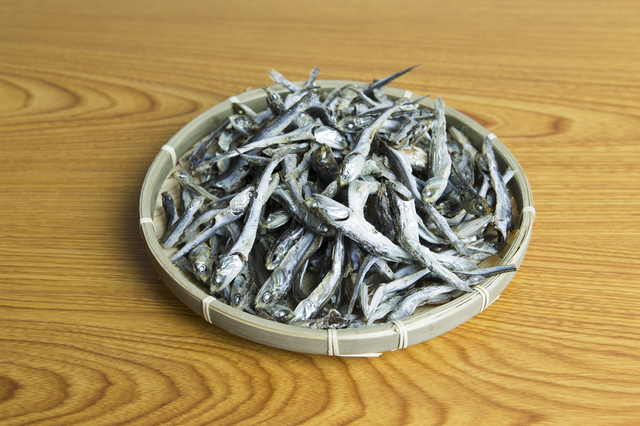
The dashi for sanuki udon is typically made with iriko (dried anchovies or sardines) rather than katsuobushi — producing a slightly fuller, more oceanic base that is characteristic of the coastal cuisine of Shikoku and that pairs specifically well with the noodle’s intensity.
The lightness of the broth is not a compromise or a minimalism of resource. It is a deliberate decision: the broth should not compete with the noodle. The noodle is the experience. The broth is the context that allows the noodle to be fully experienced.
The Udon Ecosystem of Kagawa
The udon culture of Kagawa is not just about individual excellent noodles — it is about a complete ecosystem of udon production and consumption that has developed over centuries and that is unlike anything else in Japanese food culture.
The Self-Service Shop
The most characteristic format of the Kagawa udon experience is the serufu no mise — the self-service shop. These establishments — often family-operated, sometimes operating from converted garages or farmhouses, sometimes operating at specific times of day and closed the rest of the time — offer udon at extraordinary prices (a basic bowl often costs less than three hundred yen) through a self-service system that requires understanding several unwritten conventions.
The typical procedure: you enter, you tell the person behind the counter what size bowl you want (small, medium, large) and what basic preparation (warm in broth, cold with dipping sauce, cold with sauce poured over). You receive your bowl of plain udon. You move along the counter, where various toppings — tempura, green onion, raw egg, grated ginger, sesame seeds — are available. You add what you want. You pay at the end, the toppings calculated separately from the noodle.
The system requires familiarity, and the first-timer in a Kagawa self-service udon shop may spend several confused minutes understanding what is being offered and in what order. This is entirely normal and tolerated with good grace by the staff, who are accustomed to pilgrims who have never encountered the format before.
The Farm Shop
Some of the most celebrated udon in Kagawa is available at nouson no mise — farm shops, udon operations attached to or operated from actual farms. These establishments often source their flour directly from the farm’s own wheat crop, mill it on-site or at a nearby mill, and produce udon with a connection to their ingredient source that city restaurants cannot replicate.
The farm shop udon experience includes the specific atmosphere of eating in a converted farm building — sometimes literally sitting on tatami mats in a farmhouse kitchen, sometimes in a simple shed — that gives the eating a quality of directness and simplicity that the best restaurants in the world, with their architectural ambitions and their carefully designed spaces, cannot quite achieve.
The Competitive Landscape
Kagawa udon shops exist in a state of friendly but genuine competition that has driven quality upward across the entire prefecture. The best shops are discussed among udon pilgrims with the intensity of connoisseurship — specific shops known for exceptional koshi, specific shops known for outstanding broth, specific shops whose tempura is as worth the trip as the noodle.
The Tabelog ratings (Japan’s primary restaurant review platform) for Kagawa udon shops are followed with the attention that wine scores receive from wine collectors. The shops that consistently perform at the top of the ratings attract pilgrims from across Japan and increasingly from international visitors who have heard that this is where udon reaches its fullest expression.
The Regional Competition: Kanto vs. Kansai vs. Sanuki
Japanese udon exists in a context of genuine regional competition — a competition between fundamentally different stylistic traditions that is conducted, in Japan, with the specific seriousness that food-based regional identity always receives.
The primary divide: Kanto (Tokyo and eastern Japan) versus Kansai (Osaka, Kyoto, and western Japan). And then Sanuki (Kagawa) as its own independent tradition that defies the Kanto-Kansai binary.
Kanto udon is served in a dark, soy-forward broth — kake — that uses a higher proportion of dark soy sauce than Kansai broth, producing a colour that is nearly brown and a flavour that is assertive and warming. Kanto udon noodles are softer than sanuki udon, suited to the richer, more dominant broth.
Kansai udon uses a lighter, dashi-forward broth with less soy sauce — transparent amber rather than dark brown — that allows the delicate flavour of the kombu-and-katsuobushi dashi to be clearly perceived. Kansai udon noodles are also soft, but the eating experience is dominated by the broth rather than the noodle.
Sanuki udon operates on a different axis entirely — the noodle dominates, the broth supports, and the texture of the noodle is the primary measure of quality rather than the flavour of the broth or the balance of the seasoning.
The Kanto-Kansai debate — conducted seriously by the citizens of each region and with amusement by everyone outside both regions — is fundamentally about what you want to eat when you eat udon: the warming richness of a strongly-seasoned broth, or the delicate sophistication of a lightly-seasoned dashi-forward broth. Both positions are defensible. Both reflect genuine regional culinary traditions with long histories.
Sanuki udon mostly watches this debate with the equanimity of a tradition that is confident in its own specific excellence.
How Kagawa Became the Udon Capital
The historical reasons for Kagawa’s udon dominance are specific and interesting.
Kagawa was historically one of Japan’s most wheat-producing regions — the climate of eastern Shikoku, with its relatively dry summers and mild winters, suits wheat cultivation well. The long-standing availability of high-quality local wheat gave Kagawa’s noodle makers a specific advantage: access to excellent raw material, consistently, which allowed the development of technique that depended on and expressed the quality of that raw material.
The Kompira-san pilgrimage — the famous pilgrimage to the Kotohiragu shrine in Kotohira, one of the most popular pilgrimage destinations in Japan — brought large numbers of pilgrims through Kagawa for centuries. The pilgrimage infrastructure developed to feed these travelers included numerous udon shops along the pilgrimage routes, and the competition for pilgrim custom drove quality upward in ways that parallel the development of food culture around other major pilgrimage routes in Japan.
The salt production of Kagawa — the Setonaikai (Inland Sea) coastline was historically one of Japan’s most productive salt-producing regions — gave Kagawa’s udon makers reliable access to high-quality salt, which is the third critical ingredient (alongside flour and water) in udon production. The specific mineral content of Kagawa sea salt, and its ready availability, may have influenced the development of the specific salt-forward noodle dough that produces sanuki udon’s characteristic koshi.
Making Sanuki Udon at Home
Sanuki udon can be made at home — and making it at home is one of the most satisfying home cooking projects available, combining a low ingredient cost with a high technique ceiling and a genuinely rewarding result.
The flour: use a strong bread flour rather than all-purpose flour — you need the high gluten content. Japanese chūkikyōrikiko (semi-strong flour) is ideal if you can find it; bread flour is the accessible substitute.
The salt and water: dissolve 30 grams of salt in 190ml of water for 500 grams of flour. The high salt content is intentional and essential for koshi development.
The mixing: combine the salted water with the flour gradually, mixing until a rough dough forms. The dough will be quite stiff — stiffer than bread dough, stiffer than pasta dough.
The kneading — this is where the work is: knead the dough for a minimum of fifteen minutes by hand. Traditional Kagawa technique involves placing the dough in a plastic bag and kneading it with your feet — standing on it, walking across it — which distributes pressure more evenly than hand kneading and is genuinely more effective at developing koshi. If this approach seems extreme, fifteen minutes of vigorous hand kneading will produce good results.
The rest: the kneaded dough must rest for at least thirty minutes — longer is better, up to several hours — wrapped tightly to prevent drying. The rest allows the gluten network to relax and the flour to fully hydrate.
The rolling and cutting: roll the rested dough on a floured surface to approximately three millimetres thickness. Fold the rolled sheet into thirds or quarters and cut into noodles approximately four to five millimetres wide.
The cooking: cook in a large pot of boiling unsalted water — udon requires plenty of water — for eight to twelve minutes depending on thickness. Test by biting a noodle: it should be just barely translucent throughout. Shock in cold water immediately after cooking.
The result will not be identical to the best sanuki udon in Kagawa. It will, however, be significantly better than most udon available outside Japan, and it will give you a direct understanding of what koshi means and what it requires.
The Udon Pilgrimage: A Practical Guide
For visitors to Japan who want to experience Kagawa udon properly, the practical information.
Getting there: Kagawa is accessible by the Seto-Ohashi Bridge from Okayama on the Honshu main island, or by ferry from Osaka or Kobe. The high-speed rail (shinkansen) does not reach Shikoku; the most practical route from Tokyo is the bullet train to Okayama, then the Marine Liner limited express to Takamatsu (the Kagawa prefectural capital).
Takamatsu as base: Takamatsu is the logical base for the udon pilgrimage, with numerous excellent udon shops within the city itself and easy access to the famous shops in the surrounding countryside.
Renting a car: many of the most celebrated Kagawa udon shops are in locations not easily reached by public transport. Renting a car in Takamatsu and using one of the various udon pilgrimage route guides — available in both Japanese and increasingly in English — allows access to the full range of what the prefecture offers.
Timing: most shops are open for lunch service only (typically 10am to 2pm). Some of the most celebrated shops run out of noodles before their stated closing time. Arriving early is strongly recommended.
Volume management: the typical bowl of udon at a Kagawa self-service shop is smaller than you might expect, and the low price means that eating at multiple shops in a single day is both affordable and physically possible. Three to four shops in a day is a typical pilgrimage pace for the serious participant.
— Yoshi 🍜 Central Japan, 2026
Enjoyed this? You might also like: “Ramen vs. Udon vs. Soba — What’s the Difference and Which Should You Try First?” and “Soba: The Noodle That Takes a Lifetime to Master” — both available on Japan Unveiled.