Umami: The Fifth Taste That Japan Gave the World
By Yoshi | Japan Unveiled
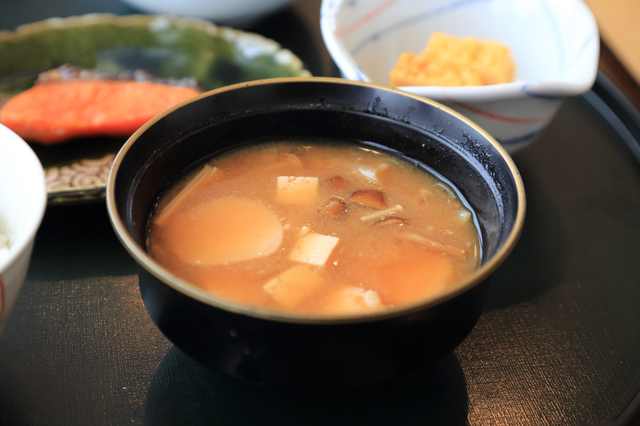
In 1908, a professor at Tokyo Imperial University named Kikunae Ikeda was eating a bowl of tofu in dashi broth — the kombu kelp stock that is the foundation of Japanese cooking — and noticed something.
The broth was not salty. It was not sweet. It was not sour or bitter. It had a quality of savouriness that the existing vocabulary of taste did not adequately describe — a depth and a roundness and a specific satisfaction that he had been experiencing his entire life without being able to name.
He went to his laboratory and spent the following months isolating the specific chemical compound responsible for what he was experiencing. The compound was glutamate — specifically, the glutamate ion produced when the seaweed’s protein was dissolved in hot water. He named the taste it produced umami — from the Japanese umai (delicious) and mi (taste).
He had not discovered a new flavour. He had named something that had existed in human experience and in human cooking for as long as cooking had existed. But the naming of it — the identification of a specific biochemical mechanism responsible for a specific quality of taste — was the beginning of a scientific and culinary revolution whose consequences are still unfolding.
Umami is now recognised by food scientists internationally as the fifth basic taste, alongside sweet, salty, sour, and bitter. The concept has been incorporated into professional culinary training, into the product development strategies of the global food industry, and into the everyday vocabulary of food discussion in multiple languages.
It is, in its origins, entirely Japanese.
What Umami Is: The Science
Umami (旨味) — the characters mean “delicious taste” — is the taste sensation produced by the amino acid glutamate and the nucleotides inosinate (IMP) and guanylate (GMP) when they interact with specific taste receptors on the tongue.
The specific receptors: in 2002, researchers at the University of California San Diego identified the specific receptor proteins (T1R1 and T1R3, forming a heterodimer) that respond to glutamate and produce the umami taste signal. The discovery of the receptor provided the biological basis for umami as a distinct taste category — not a combination of other tastes but a separately detected signal with its own receptor mechanism.
The specific compounds:
Glutamate — an amino acid found in high concentrations in protein-rich foods that have been aged, fermented, dried, or otherwise processed in ways that break down proteins and release free glutamate. Parmesan cheese, ripe tomatoes, fish sauce, soy sauce, miso, katsuobushi (dried bonito), kombu (dried kelp), shiitake mushrooms — all are high in free glutamate.
Inosinate (IMP) — a nucleotide found in high concentrations in meat and fish, particularly in dried or cooked form. Katsuobushi is one of the most concentrated natural sources of IMP.
Guanylate (GMP) — a nucleotide found in particularly high concentrations in dried shiitake mushrooms.
The synergy effect: when glutamate is combined with IMP or GMP, the perceived umami intensity is dramatically greater than the sum of the individual compounds. This synergy — the specific amplification of umami perception when the compounds are combined — is the scientific basis for the specific combinations of ingredients that appear in the great culinary traditions: the kombu (glutamate) and katsuobushi (IMP) combination in Japanese dashi, the Parmesan (glutamate) and anchovy (IMP) combination in Italian cooking, the beef (IMP) and tomato (glutamate) combination in Western stew traditions.
These combinations were not developed through scientific knowledge of the biochemistry. They were developed through the accumulated culinary experience of generations of cooks who discovered, empirically, that certain ingredient combinations produced a more satisfying depth of flavour than either ingredient alone. The science explains why. The cooks knew it worked long before the explanation existed.
Umami in Japanese Cooking: The Invisible Architecture
The specific role of umami in Japanese cooking is unlike its role in most other culinary traditions — not because Japanese cooking uses more umami-producing ingredients (it does, but so do many other traditions) but because Japanese cooking has developed specific techniques for extracting, concentrating, and deploying umami with unusual precision and intentionality.
Dashi — the Japanese stock — is the primary vehicle for this precision. I have written about dashi in my article on miso soup, but its significance for umami deserves specific emphasis here. Dashi is not simply a flavoured liquid. It is a precisely calibrated extraction of specific umami compounds — the glutamate from kombu, the inosinate from katsuobushi — in proportions and concentrations that are specifically adjusted for different applications.
The specific technique of kombu dashi — cold water extraction followed by gentle heating to just below boiling — is designed to extract glutamate efficiently while avoiding the development of unwanted compounds (seaweed aromatics that develop at higher temperatures) that would compromise the broth’s specific clarity. The extraction temperature is umami-optimised.
The addition of katsuobushi to produce ichiban dashi (first dashi) adds inosinate to the glutamate base, activating the synergy effect and producing a broth of greater umami intensity than either ingredient alone could produce. The quality of ichiban dashi — its specific depth, its specific round savouriness — is the result of this synergy being maximally activated through the correct proportions and the correct technique.
The three umami dashi traditions:
Kombu dashi (glutamate-forward) — used in delicate preparations where the flavour of the broth should support rather than overwhelm the ingredient. The specific mineral character of kombu dashi is associated with Kyoto cuisine, where it is used extensively in the vegetarian temple cooking (shojin ryori) tradition.
Katsuobushi dashi (inosinate-forward) — used in preparations where a stronger, more meat-adjacent savouriness is appropriate. The kakejiru (noodle soup base) that forms the broth of kake udon and kake soba is typically made with a katsuobushi-heavy dashi.
Niboshi dashi (sardine-based, also inosinate-forward) — used in specific regional applications, particularly in Kagawa Prefecture’s udon tradition and in certain ramen broths. Niboshi dashi has a stronger, more assertive umami character than katsuobushi dashi.
Shiitake dashi (guanylate-forward) — used in vegetarian preparations to provide umami depth without animal products. The specific quality of shiitake dashi umami — earthier, more complex, with specific aromatic notes that kombu and katsuobushi dashi do not have — is associated with Buddhist vegetarian cooking.
MSG: The Most Misunderstood Umami Compound
The discovery of glutamate as the primary umami compound led directly to the development of monosodium glutamate (MSG — ajinomoto in Japanese) — the sodium salt of glutamic acid, which Ikeda himself developed commercially through the company Ajinomoto beginning in 1909.
MSG is the most commercially significant and most globally controversial food additive derived from Ikeda’s discovery. In Japan, it is used as a flavour enhancer in cooking with the same normalcy that salt and soy sauce are used. Internationally, it developed a specific negative reputation — associated with the “Chinese Restaurant Syndrome” described in a 1968 letter to the New England Journal of Medicine that attributed headaches and other symptoms to MSG consumption in Chinese restaurant food.
The science on this is clear and has been clear for decades: the systematic scientific research on MSG has not supported the “Chinese Restaurant Syndrome” claims. Controlled studies in which MSG is administered without the subject’s knowledge consistently fail to produce the symptoms attributed to MSG consumption by people who claim sensitivity. The World Health Organization, the FDA, and food safety authorities internationally classify MSG as generally recognised as safe.
The persistence of the MSG-avoidance narrative in Western food culture — despite the scientific consensus — is a fascinating case study in how health myths can persist against evidence. It is also specifically relevant to the umami discussion because the MSG stigma has, ironically, prevented many Western cooks from directly using the most concentrated and most precise umami tool available, while they freely use the glutamate-rich parmesan, anchovies, fish sauce, and soy sauce that provide the same compound in the same form.
Glutamate is glutamate. The body cannot distinguish between the glutamate in MSG and the glutamate in kombu or parmesan or tomato. The specific form of delivery is irrelevant to the taste experience and the physiological effect.
Umami in the Global Culinary Revolution
The formal international recognition of umami as the fifth basic taste — occurring through the accumulation of receptor research published primarily in the 1990s and 2000s — has had measurable effects on professional culinary practice worldwide.
The gastronomy world: the umami concept has been enthusiastically adopted by the modernist culinary movement — the chefs associated with molecular gastronomy, Ferran Adrià, Heston Blumenthal, Thomas Keller and their contemporaries — as a scientific framework for understanding and manipulating flavour. The specific techniques of this movement — the precise control of temperature, the deliberate combination of ingredients for synergistic flavour effects — draw explicitly on the biochemical understanding of umami.
The food industry: the food manufacturing industry has understood umami’s commercial significance since Ajinomoto began selling MSG in 1909. The flavour enhancement of processed foods — the specific savouriness that makes processed snacks compelling, the specific depth that makes fast food satisfying despite limited ingredient quality — relies heavily on MSG and umami-producing additives. The science of umami has been, in this sense, commercially applied for over a century.
The home kitchen: the penetration of umami awareness into the home cooking context has been gradual but real. The specific advice — add anchovies to pasta sauce, use fish sauce in non-Asian dishes, use tomato paste rather than fresh tomatoes for richer umami, combine parmesan with mushrooms for synergistic depth — that cooking writers and food scientists have been providing increasingly since the 2000s is umami awareness translated into practical technique.
A Note on the Japanese Kitchen
I want to end with something personal, because the discovery and international spread of the umami concept is, for me, a specifically interesting example of Japanese cultural contribution.
Ikeda’s discovery — the naming of a taste that Japanese cooking had been specifically cultivating for centuries — was made possible by the specific depth of Japanese culinary knowledge. The generations of Japanese cooks who had developed and refined the dashi tradition, who had identified through empirical experience that specific combinations of specific ingredients produced specific qualities of flavour, had been working with umami knowledge long before Ikeda gave it a name and a biochemical explanation.
The naming did not invent the thing. But the naming made the thing transmissible in a new way — to food scientists who could investigate the mechanism, to chefs worldwide who could deliberately apply the principle, to the global food conversation that could now include umami as a shared concept rather than an unnamed quality of certain cuisines.
Japan gave the world a concept that explained something the world had been experiencing without understanding. This is one of the more generous cultural contributions I know of: not a product or a technique but a framework for understanding something that everyone has always felt.
The bowl of tofu in dashi broth that Ikeda was eating in 1908 is the same bowl that has been eaten in Japan for centuries. The taste it produced had always been there.
He just found the word for it.
— Yoshi 🍜 Central Japan, 2026
Enjoyed this? You might also like: “The Art of Dashi: Japan’s Invisible Flavor” and “Miso Soup: The One-Bowl Philosophy That Defines Japanese Cooking” — both available on Japan Unveiled.