Hanami: Why Cherry Blossom Viewing Is About More Than Just Flowers
By Yoshi | Japan Unveiled
There is a specific kind of light that exists in Japan for approximately two weeks every spring.
It is not quite pink and not quite white. It arrives at a moment when the air is still cool enough to need a jacket in the morning but warm enough, by afternoon, to sit outside without one. The trees that produce this light have been bare for months — their branches dark and skeletal against the winter sky, patient in the way that things that have survived many winters are patient.
And then, almost overnight, they are not bare anymore.
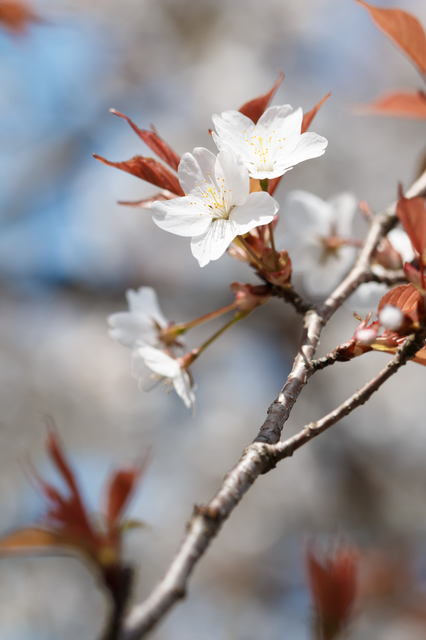
The cherry blossoms — sakura — open. And Japan, for approximately two weeks, becomes a different country.
I have lived inside this country for over forty years. I have seen the sakura open forty times. And I want to tell you something that I think most foreign visitors do not fully understand when they come to Japan specifically to see the cherry blossoms.
The flowers are beautiful. They are genuinely, almost unreasonably beautiful — the kind of beauty that stops your feet on the pavement and makes you stand still and look, even if you are late for something, even if you have seen them before. I do not want to minimize the flowers.
But the flowers are not, ultimately, what hanami is about.
Hanami (花見) — the word breaks down simply: hana means flower, mi means viewing. Flower viewing.
The practice is ancient — references to hanami appear in Japanese literature from the Nara period (710–794 AD), and the tradition of aristocrats gathering beneath plum trees (ume) in early spring to compose poetry and drink sake dates to at least the 8th century. By the Heian period (794–1185), the subject of flower viewing had shifted from plum to cherry, and the aesthetic and philosophical dimensions of the practice had begun to develop into something more complex than a pleasant outdoor gathering.
By the Edo period (1603–1868), hanami had become a national practice — no longer confined to aristocrats but extending to merchants, craftsmen, and ordinary city dwellers who spread their blankets beneath the cherry trees in the parks that Edo’s shoguns had, in a rare gesture of civic generosity, specifically planted for public enjoyment.
Today, hanami is one of the most widely observed cultural practices in Japan. Families, friends, colleagues, school groups — virtually everyone participates in some form. The cherry blossom forecast (sakura yohou) is reported on the national news with the same seriousness as typhoon tracking. People plan around it weeks in advance.
But here is the thing I want you to understand about what is actually happening when Japanese people gather beneath the cherry trees.
They are not, primarily, looking at the flowers.
They are eating and drinking and talking and laughing and sitting with the people they care about in a space that has been made temporarily magical by the presence of something beautiful and temporary.
The flowers are the occasion. The gathering is the point.
Mono No Aware: The Philosophy in the Petals
To understand why sakura specifically — and not, say, the beautiful autumn leaves, or the summer hydrangeas, or the winter camellias — carries this particular cultural weight, you need to understand a concept that I have touched on in other articles but that finds its fullest expression here.
Mono no aware (物の哀れ) — sometimes translated as “the pathos of things” or “an empathy toward things” — is a Japanese aesthetic concept that describes the bittersweet awareness of impermanence. The recognition that beautiful things do not last, and that this impermanence is not a flaw in them but the very source of their beauty.
The concept was articulated formally by the 18th-century scholar Motoori Norinaga, but the sensibility it describes runs through Japanese culture from the earliest literature to the present day. Ichi-go ichi-e — “one time, one meeting,” the understanding that each moment is unique and unrepeatable — is the same idea in a different form. The Japanese tea ceremony, with its emphasis on the specific season, the specific day, the specific gathering of people who will never be together again in quite this way, is built on the same foundation.
Sakura embodies mono no aware more completely than almost any other natural phenomenon in Japan. The cherry blossoms open suddenly, reach their peak quickly — typically five to seven days of full bloom — and then fall. Not gradually, not reluctantly, but decisively. A wind after the peak, and the petals fill the air like snow — hanafubuki, flower blizzard — and within days the branches are green again, and the brief, extraordinary thing is over.
The Japanese word for this falling is chiru — to scatter, to disperse. And the scattering of the petals is not experienced as the end of something beautiful. It is experienced as the completion of it. The full arc: the opening, the blooming, the falling. Beauty that includes its own ending.
This is why hanami gatherings have a quality that is difficult to describe to someone who has not participated in one. The laughter is real. The food and drink are real. The pleasure of being with friends is real. But underneath all of it, barely spoken, is the awareness that this is temporary — that the blossoms will be gone soon, that this specific gathering of these specific people in this specific spring will not come again. The impermanence is present in the beauty. The beauty is intensified by the impermanence.
Mono no aware, in full bloom, beneath the cherry trees.
What Hanami Actually Looks Like
Let me describe a real hanami, because the experience is somewhat different from the serene aesthetic contemplation that the concept of mono no aware might suggest.
It is crowded. Very crowded. The famous hanami spots — Maruyama Park in Kyoto, Ueno Park in Tokyo, Osaka Castle Park — are packed with people from early morning. Blue tarpaulins cover every available square meter of ground beneath the trees. The smell of grilled food drifts from portable barbecues. Someone’s Bluetooth speaker is playing music that is audible from twenty meters away. Children are running in directions that do not correspond to any obvious destination. Salarymen in loosened ties are considerably further into their second convenience store six-pack than the hour of the afternoon would seem to warrant.
It is, in other words, a party. A large, cheerful, slightly chaotic outdoor party that happens to be taking place beneath one of the most beautiful natural phenomena on earth.
The preparation begins days in advance. In many companies, the most junior member of the team is given the responsibility of basho-tori — place securing. This means arriving at the park before dawn — sometimes hours before dawn — to claim a spot by spreading a tarp and sitting on it until the rest of the group arrives later in the morning. This is understood as one of the entry-level professional indignities that junior employees are expected to accept with good grace. Most people who have done basho-tori describe it as simultaneously miserable and oddly memorable.
The food at hanami is central. Convenience store onigiri. Karaage. Tamagoyaki. Someone’s grandmother’s homemade pickles. Cherry blossom-themed wagashi — traditional Japanese sweets — in pale pink and white. Sakura mochi: glutinous rice cake filled with sweet red bean paste and wrapped in a pickled cherry leaf. The leaf is edible; the salt of the pickling contrasts with the sweetness of the filling in a way that is specifically and perfectly right for eating outdoors in early spring.
The drink is also central. Beer, largely. Canned cocktails. Sake, particularly at more traditional gatherings. The entire thing operates under a social permission that the cherry blossom season uniquely provides: outdoor daytime drinking that would be unusual in any other context is, during hanami, simply part of the ritual.
The Sakura Forecast: Japan’s Most Watched Weather Report
I want to spend a moment on the sakura forecast, because it reveals something important about how seriously Japan takes this season.
Every year, beginning in late January or early February, Japan’s weather services and major television networks begin tracking the sakura zensen — the cherry blossom front. This is a literal meteorological phenomenon: the invisible line separating the parts of Japan where the cherry blossoms have opened from the parts where they have not, moving northward across the country from late March to early May as temperatures rise.
The forecast is updated daily. It appears on the evening news alongside the regular weather report. It is discussed at workplaces, in family group chats, in the planning conversations of anyone who wants to time their hanami correctly. The difference between seeing the cherry blossoms at full bloom and arriving three days late — after a warm wind has stripped the petals — is the difference between the experience and the memory of the experience. The forecast is how you avoid being three days late.
The precision of this tracking reflects something real about the cultural stakes. Cherry blossom season is not infinitely flexible. You cannot simply reschedule it if the timing is inconvenient. The blossoms open when they open and fall when they fall, and the window for experiencing them at their best is measured in days, not weeks. The forecast exists because the experience matters enough to plan around, and planning requires information.
I check the forecast. I have checked it every year for forty years. I still feel a specific anxiety when the forecast suggests an earlier-than-expected opening — the fear of missing the peak, of being in the wrong place when the brief thing happens.
This anxiety is, I think, part of the point. The urgency is the awareness of impermanence in a different form. You have to pay attention. You cannot take it for granted. The cherry blossoms will not wait.
Regional Sakura: Beyond Tokyo and Kyoto
Foreign visitors to Japan during cherry blossom season almost universally head to Tokyo or Kyoto. Both are beautiful. Both are also extremely crowded during peak bloom, with the combination of domestic and international visitors creating something that tests the boundaries of the word “enjoyable.”
Japan’s sakura extends far beyond these two cities, and some of the most extraordinary cherry blossom experiences are in places that receive a fraction of the attention.
Hirosaki Castle, Aomori — the northernmost major hanami destination on Honshu, where the late bloom (usually late April to early May) coincides with the moat surrounding the castle filling with fallen petals. The effect — the castle reflected in a surface covered entirely with pink and white — is one of the most extraordinary visual experiences available in Japan in any season.
Yoshino Mountain, Nara — considered by many Japanese people to be the most beautiful sakura destination in the country. Thirty thousand cherry trees covering an entire mountain, so densely planted that the mountainside appears to be on fire in pale pink. The tradition of viewing Yoshino’s sakura dates back over a thousand years.
Philosopher’s Path, Kyoto — a canal-side walking path lined with cherry trees whose branches meet overhead, creating a tunnel of blossom. Less crowded than Maruyama Park and more intimate — a place for walking slowly rather than sitting on a tarp.
My local park — wherever you happen to be in Japan during cherry blossom season, there will be cherry trees. The local park, the riverbank, the school playground, the path between houses. Japan planted cherry trees everywhere, deliberately, over many generations, specifically so that nobody would be far from the thing when the season came. The small, local hanami — a family on a blanket, a few friends with convenience store food, nobody’s grandmother’s pickles this time — is as real as anything in a famous park.
Sometimes more real.
What I Think About, Beneath the Trees
I want to tell you something personal, because I think this article earns it.
Every year, at some point during hanami season, I find a moment to sit beneath the cherry trees alone. Not for very long. My family is usually nearby, the food is getting cold, someone needs something. But for a few minutes I sit and I look up at the blossoms against the sky and I do the thing that mono no aware requires, which is simply to be present with the knowledge that this is temporary.
I think about the forty springs I have seen. I think about the people I have spent them with — some of whom are gone now, in the way that people go. I think about the fact that I do not know how many more springs I will see, and that this specific spring, this specific afternoon, this specific arrangement of light through these specific petals, is happening once and will not happen again.
And then my daughter shouts something at me from six meters away, and I stand up, and we eat onigiri, and the afternoon continues.
This is hanami. The brief contemplation and the interrupted return to life. The awareness of impermanence that makes the ordinary afternoon feel, for a moment, precious.
The flowers are beautiful.
But that is what they are for.
— Yoshi 🌸 Central Japan, 2026
Enjoyed this? You might also like: “O-Bon: Japan’s Festival of the Dead — and Why It’s Actually Beautiful” and “New Year in Japan: What Really Happens When the Country Shuts Down” — both available on Japan Unveiled.