Matcha: From Zen Ceremony to Global Obsession — What Japan Really Thinks
By Yoshi | Japan Unveiled
There is a specific feeling I get when I walk past certain cafés in Tokyo and Osaka and see the matcha menu.
The matcha latte. The matcha cheesecake. The matcha ice cream sundae with three toppings. The matcha tiramisu. The matcha croissant. The matcha protein shake. The matcha everything, served in cups and plates and glasses decorated with the specific shade of green that has become, in the last decade, one of the most recognisable visual signals in global food culture.
The feeling is complicated. Part of it is genuine pleasure — the global interest in matcha means that the ingredient is being taken seriously by people outside Japan, that its flavour complexity is being recognised and explored, that something that was, a generation ago, essentially unknown outside Japan has become a genuine global food trend. This is good. The ingredient deserves the attention.
Part of it is something more like the feeling you get when a close friend’s specific quality — the thing you loved about them before anyone else noticed it — becomes the thing that everyone is imitating. The quality is still real. The imitation is not the quality.
And part of it — the part I want to be most honest about in this article — is a genuine bewilderment at how far the global understanding of matcha has drifted from the actual thing. Not in the sense that matcha lattes are fraudulent or that matcha-flavoured products are somehow disrespecting the tradition. But in the sense that the global popularity of matcha-as-flavour has almost completely obscured the existence of matcha-as-practice, which is the deeper and more interesting thing.
I want to correct this. Not by dismissing the matcha latte — I drink them, they are often excellent — but by placing them in the context of what matcha actually is, where it comes from, what the Japanese tea ceremony has been doing with it for six hundred years, and what the difference is between consuming matcha as a flavour and experiencing matcha as a practice.
What Matcha Actually Is
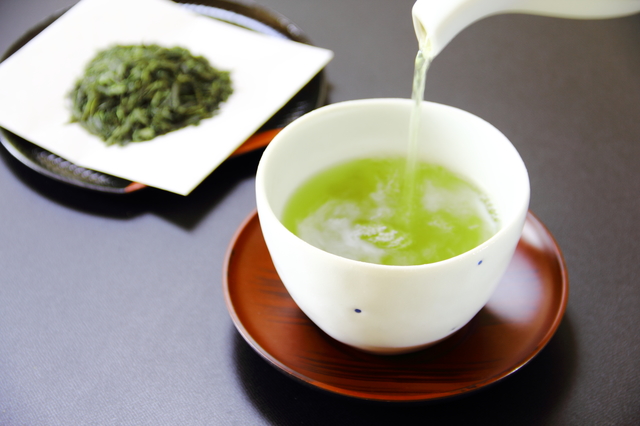
Matcha — 抹茶 — is a form of powdered green tea made from a specific category of tea leaf (tencha) that has been grown and processed in a specific way to produce a specific flavour and colour profile.
The production of matcha begins weeks before the harvest. Approximately three to four weeks before picking, the tea plants are covered — traditionally with bamboo structures draped with cloth, now increasingly with permanent shade structures — to reduce the amount of direct sunlight reaching the leaves. This shading does several things: it increases the production of chlorophyll (giving the leaves and the finished powder their characteristic intense green), it increases the production of amino acids (particularly L-theanine, which contributes to matcha’s characteristic umami depth and its specific neurological effects), and it reduces the production of catechins (which reduces bitterness).
The shaded leaves are harvested — the first flush of the year (ichibancha) in late April and May is considered highest quality — carefully, selecting only the youngest and most tender leaves. The harvested leaves are briefly steamed to halt oxidation (the process that turns green tea brown), then dried without rolling — a distinction from the processing of other green teas, which are rolled to shape the leaf. The dried, unrolled leaves (tencha) are then de-stemmed, de-veined, and ground to an extremely fine powder using traditional stone mills (ishiusu).
The stone milling is slow — a single mill can produce only thirty to forty grams of matcha powder per hour — and the slowness is not a production inefficiency but a quality requirement. The friction of high-speed milling generates heat that damages the delicate aromatic compounds in the leaf. Stone mills maintain low temperatures and produce a powder of specific fineness and specific particle shape that affects how the matcha disperses in water and how it tastes.
The result of all of this — the shading, the careful harvest, the specific processing, the slow stone milling — is a powder of extraordinary complexity. Tasting high-quality matcha directly is an experience of genuine depth: the initial sweetness from the elevated amino acids, the deep umami that L-theanine provides, the bitterness of the catechins that have been reduced but not eliminated, and the specific grassy, vegetal complexity that the chlorophyll-rich leaves contribute.
The Tea Ceremony: Matcha as Practice
To understand what matcha is in Japan, you must understand chado — the Way of Tea — the Japanese tea ceremony that has been the primary context for matcha consumption for six hundred years.
Chado is not a ceremony in the sense of a formal religious rite, though it has Zen Buddhist philosophical roots. It is a practice — a specific way of preparing and consuming tea that has been refined across centuries to embody specific aesthetic and philosophical values. The most associated figure is Sen no Rikyu (1522–1591), the tea master who formalized the specific aesthetic of wabi-cha — the tea ceremony of simplicity, imperfection, and presence — that has defined the Japanese tea tradition ever since.
The physical elements of the tea ceremony: the chashitsu (the tea room, typically a small, spare space designed to isolate its occupants from the ordinary world), the roji (the garden path leading to the tea room, designed to prepare the mind through its atmosphere), the mizuya (the preparation area adjacent to the tea room), the specific utensils — the ceramic tea bowl (chawan), the bamboo whisk (chasen), the bamboo scoop (chashaku), the lacquered tea caddy (natsume) — each chosen with care for their aesthetic qualities and their fitness for purpose.
The procedure: water is heated in a cast iron kettle (kama) placed over a heat source embedded in the floor or in a portable brazier. A small amount of matcha powder — typically two to four grams — is measured into the tea bowl with the bamboo scoop. A small amount of hot water — approximately 70 to 80 degrees Celsius, not boiling, which would destroy the delicate flavours — is added. The bamboo whisk is used to disperse the powder and introduce air, whisking in a specific M or W pattern until the matcha is fully dissolved and a layer of fine foam covers the surface.
The resulting bowl of tea — thick, bright green, bitter, intensely flavoured — is presented to the guest. The guest receives the bowl with two hands, bows in acknowledgment, rotates the bowl slightly to avoid drinking from the front face (the most beautiful part of the bowl, which should not be obscured by the mouth), and drinks in three to three and a half sips.
This is usucha — thin tea, the form of matcha most commonly encountered in formal tea ceremony. Koicha — thick tea — uses twice as much matcha powder and minimal water, producing a paste-like consistency that is shared from a single bowl among multiple guests, a form of intimacy and shared experience that the thinner preparation does not produce.
The entire procedure, from the beginning of preparation to the final cleaning of the utensils, is conducted in a specific sequence, with specific movements, with specific attention to each element. The attention is not to the procedure itself — the procedure is internalized through years of practice until it is automatic — but to the moment. The specific quality of the light in the tea room at this particular time of day. The sound of the water in the kettle. The texture of the bowl in the hands.
Ichi-go ichi-e — one time, one meeting. This gathering, these people, this bowl of tea will never occur again in exactly this form. The tea ceremony creates the conditions for experiencing this truth. Matcha is the vehicle.
The Quality Spectrum: From Ceremonial to Culinary
Not all matcha is the same, and the difference between the best matcha and the matcha used in most commercial preparations is significant enough to warrant explicit description.
Ceremonial grade matcha — the highest quality, produced from the first harvest of the youngest, most carefully shaded leaves, stone-milled to the finest powder, with the brightest colour and the most complex flavour. This matcha is intended to be drunk as tea — prepared with hot water and a whisk — and it is in this context that its quality is fully expressed. The flavour of ceremonial grade matcha drunk directly, with no milk or sugar, is an experience of genuine complexity: the initial sweetness, the deep umami, the clean bitterness, the lingering aromatic finish.
Ceremonial grade matcha is expensive — a high-quality 20-gram tin from a renowned Uji producer costs between 2,000 and 10,000 yen or more — and the cost reflects the labour-intensive production process, the quality of the source leaves, and the slow stone milling required. Buying expensive ceremonial grade matcha for use in baking or in lattes with milk and sugar is, from the perspective of the tea tradition, a significant misapplication — the milk and sugar will overwhelm the subtle qualities that justify the high price.
Premium culinary grade matcha — high quality, appropriate for high-end culinary applications where the matcha flavour needs to be present and bright but where the absolute complexity of ceremonial grade is not required. This is the grade used by serious pastry chefs and by cafés that take their matcha preparations seriously.
Standard culinary grade matcha — suitable for everyday cooking and baking applications, for matcha-flavoured products where the matcha is one element among several. Significantly less expensive than higher grades, with less flavour complexity and less vibrant colour.
Low quality matcha — the powder used in most mass-market matcha-flavoured products, made from lower-quality leaves, machine-milled rather than stone-milled, with a dull colour (yellow-green rather than bright green) and a bitter, astringent flavour lacking the sweetness and umami of higher grades. This is the matcha in most commercial matcha ice cream, most matcha chocolates, most matcha-flavoured confections sold internationally.
The difference between drinking high-quality ceremonial matcha as tea and consuming most matcha-flavoured products is approximately the difference between drinking a fine Burgundy and consuming grape-flavoured candy. The connection exists but the experience is entirely different.
The Growing Regions: Uji and Its Competitors
Japanese matcha production is concentrated in several specific regions whose specific growing conditions, long cultivation histories, and established production traditions have made them the recognised centres of matcha quality.
Uji (Kyoto Prefecture) — the most famous matcha-producing region in Japan, with a cultivation history dating to the thirteenth century when tea seeds from China were first planted in the area. The specific combination of the Uji River’s water supply, the morning mists that moderate temperature and humidity during the growing season, and the centuries of accumulated cultivation expertise have made Uji matcha the standard of quality against which all other matcha is measured.
The term Uji matcha is used loosely — some products labelled Uji matcha are processed in Uji but use leaves from other regions — but the most carefully produced Uji matcha, made from leaves grown specifically in the Uji area and processed according to traditional methods, is considered the finest matcha available.
Nishio (Aichi Prefecture) — close to where I live, in central Japan — is the largest matcha-producing region by volume in Japan, producing approximately fifty percent of Japan’s total matcha output. The area’s flat terrain, reliable water supply from the Yahagi River, and favourable climate for tea cultivation have made it a major production centre. Nishio matcha is typically positioned as a quality culinary grade option, more accessible in price than top Uji ceremonial matcha while maintaining genuine quality. I am, as a person from central Japan, not entirely unbiased in my appreciation of Nishio matcha. I acknowledge this.
Kagoshima (Kagoshima Prefecture) — the southernmost major tea-producing region in Japan, where the warmer climate produces leaves with a specific flavour profile that some drinkers prefer for its gentleness. Kagoshima matcha is increasingly available internationally as the region’s production has expanded.
The Global Matcha Boom: What Japan Actually Thinks
I want to be direct about the complicated Japanese response to the global matcha boom, because I think the complication is worth acknowledging honestly.
The Japanese response is not uniform, and it ranges across a spectrum from genuine pleasure to mild bewilderment to occasional exasperation.
The pleasure: the global interest in matcha has created economic opportunity for Japanese tea producers, particularly smaller Uji producers whose specific quality was undervalued in a domestic market where price competition from larger-volume producers was difficult. International consumers willing to pay premium prices for premium matcha have provided these producers with markets that have improved their economic position significantly.
The bewilderment: the specific products that have become globally popular under the matcha name — the heavily sweetened matcha lattes with oat milk, the matcha-flavoured snacks using low-grade powder, the matcha aesthetic applied to products with tenuous connection to actual tea — strike many Japanese people as a somewhat exotic interpretation of something they know in a completely different context. The matcha latte is not a Japanese invention. The specific Starbucks matcha latte that popularised the format internationally uses a sweetened matcha powder that is very different from the matcha used in Japanese tea ceremony. This is fine — the product is pleasant — but it is not, from the Japanese perspective, matcha in any deeply meaningful sense.
The exasperation: the appropriation of the tea ceremony aesthetic by products that have no connection to the tea ceremony tradition — the cha-bako (tea box) packaging, the bamboo whisk imagery, the chashaku iconography applied to matcha ice cream — can feel, to people who have spent years studying chado, like the reduction of a profound aesthetic and philosophical tradition to a superficial visual brand.
The exasperation is not universal and not expressed loudly. Japan is generally tolerant of its cultural products being adapted and exported. But the feeling that the global matcha boom has almost entirely divorced the ingredient from the practice that gives it its deepest meaning is a genuine and occasionally articulated observation.
How to Experience Matcha Properly
For the foreign visitor to Japan who wants to experience matcha beyond the café menu, the options are specific and accessible.
A tea ceremony experience. Numerous establishments in Kyoto, Tokyo, and other major cities offer tea ceremony experiences for visitors — ranging from brief thirty-minute introductions to full formal ceremony participation over several hours. The quality varies, and the most tourist-facing versions are abbreviated and simplified. The most valuable experiences are those offered by established tea schools (Urasenke, Omotesenke, Mushanokoji Senke are the three major schools of the Rikyu tradition) or by dedicated tea houses that maintain full ceremonial practice. These experiences require advance planning and sometimes Japanese language ability for the reservation process, but they are worth the effort.
Purchasing high-quality matcha. The most direct way to experience matcha properly is to purchase a small tin of high-quality ceremonial grade matcha — from Ippodo Tea in Kyoto, from Maruki Tea in Uji, from a reputable producer — and prepare it at home as tea. The equipment required: a small sieve to prevent lumps, a bamboo whisk (chasen), a bowl wide enough to whisk in. The procedure: sift two to four grams of matcha into the bowl, add approximately 70ml of hot water (70-80 degrees Celsius, not boiling), whisk in the M/W pattern until fully dissolved and lightly foamy. Drink immediately.
Visiting a serious matcha café. Not all matcha cafés are equal. In Kyoto, Uji, and other tea-producing regions, cafés operated by or affiliated with tea producers serve high-quality matcha as tea and in culinary preparations that genuinely express the ingredient’s qualities. These establishments typically also sell high-quality matcha powder that can be taken home.
Exploring Uji. Uji — accessible from Kyoto by local train in approximately twenty minutes — is the most complete matcha destination in Japan: tea fields, historic tea houses, the Byodoin temple (whose architecture appears on the ten-yen coin), and numerous tea producers offering tastings and retail sales. A half-day in Uji is a more complete matcha education than any number of matcha lattes, however well-made.
A Note on Caffeine and L-Theanine
I want to mention something that the scientific research on matcha has made increasingly clear and that is relevant to understanding why the global interest in matcha has extended beyond its flavour.
Matcha contains caffeine — approximately 35mg per 2-gram serving of matcha, comparable to a shot of espresso — but the cognitive and physiological effects of matcha caffeine are different from those of coffee caffeine. The difference is attributable primarily to the presence of L-theanine — the amino acid that matcha’s shading-intensive production elevates to much higher levels than other teas — which modifies the absorption and effect of the caffeine in specific ways.
L-theanine promotes alpha brain wave activity, which is associated with a state of calm alertness — focused without anxiety, energised without the jitteriness that caffeine alone can produce. The combination of caffeine and L-theanine in matcha produces a cognitive state that many users describe as qualitatively different from coffee: clearer, calmer, more sustained.
Buddhist monks used matcha specifically to support the alert, calm, focused state required for extended meditation practice. The tea ceremony itself — with its emphasis on full presence, on the specific awareness of each moment — is designed to produce and inhabit this state. The matcha is not incidental to the practice. It is pharmacologically supporting the practice.
This is the deepest connection between matcha and the tea ceremony. The drink and the practice reinforce each other: the practice creates the conditions for the drink to be fully experienced, and the drink creates the neurological conditions for the practice to be fully inhabited.
No matcha latte, however well-made, can reproduce this. But knowing that this is what matcha does — in its fullest context, prepared correctly, consumed with attention — changes the relationship to the ingredient even when you are consuming it in a form that falls short of the full experience.
The global matcha boom is not wrong. It is reaching toward something real. The thing it is reaching toward is there, in Japan, in tea rooms and tea houses, available to anyone who wants to experience it directly.
Come and drink.
— Yoshi 🍵 Central Japan, 2026
Enjoyed this? You might also like: “Wagashi: The Art of Japanese Traditional Sweets” and “Shrines vs. Temples: What’s the Difference and Does It Matter?” — both available on Japan Unveiled.