By Yoshi | Japan Unveiled
Drive far enough from any major Japanese city — half an hour past the last suburban train station, up into the hills or along the coast road that leads to the next town — and you will start to see them. A house with the shutters pulled down and rusted in place. Another with a small tree growing through what was once the roof. A third where the garden has grown so thick that the house behind it is visible only as a suggestion, a rectangular outline beneath the vegetation. And then another. And another. Entire streets where half the houses are in this condition, with a few inhabited homes interspersed between the empty ones like survivors in a disaster zone.
Japan has approximately eight million akiya — empty, abandoned houses. The number comes from the government’s quinquennial Housing and Land Survey and represents approximately thirteen percent of Japan’s total housing stock. The actual number is likely higher than the official count, because some abandoned properties are not captured in the survey methodology. In some rural prefectures, the vacancy rate exceeds twenty percent. In some villages and mountain communities, the proportion of empty houses is closer to half of the total. There are places in Japan where the question is no longer whether the village will survive but when it will stop existing.
This is a story about what happens when a country runs out of young people — or, more precisely, when the young people a country does have stop living in the places where older generations lived. It is a story about demographics and economics and the politics of agricultural land protection and the particular stubbornness of Japanese property law. But it is also a story about something more intimate: about what it means to watch a place you love slowly empty, and about the strange beauty and the very real sadness of the houses left behind.
- How We Got Here — The Arithmetic of Depopulation
- A Walk Through an Abandoned Village
- The Problem They Create for Those Who Stay
- The Akiya Banks — An Attempt at a Solution
- The Foreigners Coming In — A New Chapter
- The Satoyama Aesthetic — Finding Beauty in What Is Disappearing
- What the Akiya Crisis Teaches Us About Japan
How We Got Here — The Arithmetic of Depopulation
Japan’s population peaked at approximately 128 million people in 2008 and has been declining ever since. The demographic forces driving this decline — a birth rate well below the replacement level of 2.1 children per woman, a total fertility rate that has hovered around 1.2 to 1.3 for much of the past two decades, and an immigration policy historically resistant to the large-scale labor migration that has sustained the populations of other developed economies — were understood and documented long before their consequences became visible in the housing stock. What was predicted in academic demography papers in the 1980s and 1990s is now visible in the landscape.
The decline is not uniform. Japan’s major metropolitan areas — the Tokyo metropolitan region, the Osaka-Kobe-Kyoto conurbation, Nagoya and its surroundings — have maintained their populations through internal migration from rural areas, and in some cases have continued to grow even as the national total declines. The people who leave rural Japan do not disappear. They move to cities. The consequences of this internal migration are felt simultaneously in two places: in the cities, where housing demand from migrants maintains prices in desirable neighborhoods, and in the communities the migrants left, where the departure of working-age residents accelerates a feedback loop of decline.
The feedback loop works roughly as follows. A young family leaves a rural village to find better employment and educational opportunities in the city. Their departure means one fewer set of parents to send children to the local school. When the school’s enrollment falls below the minimum required to operate a full curriculum, it is consolidated with another school, often far away, which makes the village less attractive to the few families with young children who might otherwise remain. Local businesses lose customers. When a business closes, it eliminates local employment, which motivates further departures. The local clinic reduces its hours or closes. Public transport becomes less frequent. The village becomes less livable for older residents, who may eventually move to care facilities in the city. Their houses, when they leave, stand empty.
The property law dimension of the problem is crucial and insufficiently appreciated. When a house is abandoned in Japan, it does not immediately become available for someone else to purchase or occupy. The property remains legally owned by its last registered owner, and when that owner dies, it passes to their heirs under Japanese inheritance law. If the heirs do not want the property — if it has negative value, meaning the cost of maintaining it or demolishing it exceeds any realistic sale price — they may choose not to register the inheritance, leaving the property in a legal limbo where it has no current registered owner and therefore cannot be easily transferred to anyone who might put it to use. The 2023 revision to Japan’s inheritance registration law, which made registration mandatory within three years of inheriting, was a legislative response to this specific problem. But the backlog of un-registered abandoned properties accumulated over decades represents a challenge that will take decades to resolve even under the new rules.
A Walk Through an Abandoned Village
I have driven through the depopulating villages of the mountains behind my home region of central Japan many times over the years, watching the process of abandonment play out in slow motion. I want to describe what you see, because the numbers — eight million, thirteen percent, thirty years of decline — do not convey the texture of the thing.
The surviving residents of a depopulating village are typically elderly, often very elderly. You may encounter a woman in her eighties tending a small vegetable garden behind a house that has been in her family for five generations. She will tell you, if you stop to talk — and people in depopulating villages are often happy to talk, because visitors are unusual — that her children are in Nagoya, or Tokyo, or Osaka. That they come home at New Year and during the Obon festival in August. That the house next door has been empty since old Mr. Suzuki’s wife went into a care home three years ago, and nobody is quite sure what will happen to it. She tends her garden with the practiced efficiency of someone who has done the same things in the same way for sixty years, and there is in her demeanor neither complaint nor performance of happiness, just the matter-of-fact acceptance of circumstances as they are.
The empty houses she is surrounded by present in different stages of abandonment. The most recently vacated ones look almost normal from the street: shutters closed, mailbox full of unread circulars, grass in the garden not yet wholly out of control. Look closer and you see the small signs — a cracked roof tile not replaced, a gate hinge beginning to rust — that indicate the maintenance that keeping a Japanese house presentable requires has stopped. A few years further into abandonment, the vegetation has asserted itself more forcefully. The garden has become a thicket. The roof is visibly compromised. In an older house, the tatami that should be aired regularly has molded, and the moisture has begun the process of structural deterioration that accelerates in the following years.
The oldest abandoned houses — the ones that have been empty for a decade or more — are the most striking. In some cases, the roof has partially or entirely collapsed. In others, the structure is still standing but has been so thoroughly colonized by vegetation and moisture that it is indistinguishable from the landscape around it. The house has not been torn down; it has simply been absorbed. The land around it — which was once agricultural, carefully tended, the economic basis of the family that lived in the house — has reverted to something approaching its pre-agricultural state.
The beauty of these places is real and I do not want to sentimentalize it away. There is something genuinely moving about the persistence of the built environment in the absence of the people who built it — the stone walls still holding, the wood still jointed, the garden still showing traces of the careful design that once organized it. But the beauty coexists with the loss, which is equally real, and with the practical problems that the abandoned properties create for the communities they occupy.
The Problem They Create for Those Who Stay
Abandoned houses are not merely aesthetically melancholy. They create concrete problems for the people who live near them. An unmaintained house in Japan’s climate — rain, humidity, typhoons, the occasional earthquake — deteriorates rapidly and in ways that affect adjacent properties. Vegetation from an overgrown garden spreads to neighboring lots. Roof tiles loosened by weather fall onto neighboring walls or into the street. Rodents and other animals that colonize abandoned structures do not confine themselves to those structures. In areas with significant snowfall, an unmaintained roof that collapses under snow load may damage adjacent structures or utilities.
The legal framework has historically made it difficult for municipalities to act against these properties. The right to private property is strongly protected under Japanese law, and municipalities have been restricted in their ability to demolish or modify privately owned structures even when those structures pose safety hazards to the public. Legislation passed in 2015 gave municipalities somewhat greater authority to designate certain abandoned properties as “specified vacant houses” posing safety risks and to take action against them, but the process is slow, legally demanding, and expensive for cash-strapped rural municipalities.
The fiscal pressure on depopulating municipalities is itself part of the problem. As residents leave, the property tax base shrinks. With a smaller tax base, the municipality has less revenue to fund the services — roads, schools, healthcare facilities, snow removal, public transport — that make life in the area viable. The quality of services declines. This decline motivates further departures. The spiral continues.
The Akiya Banks — An Attempt at a Solution
Japan’s central and prefectural governments have developed a range of programs aimed at addressing the akiya crisis, the most prominent of which are the “akiya banks” — public databases that list available empty properties in depopulating areas, connecting potential buyers with properties whose owners wish to transfer them. As of the mid-2020s, there are akiya banks operating in most prefectures and many municipalities, and the number of properties listed has grown significantly as awareness of the programs has spread.
The prices in the akiya banks are, by urban Japanese or international standards, extraordinary. Properties that would cost hundreds of millions of yen in Tokyo — or hundreds of thousands of dollars in most American cities — are listed in rural akiya banks for one million to five million yen, roughly eight thousand to forty thousand US dollars at current exchange rates. Some properties are listed for zero yen: the owner simply wants to transfer the maintenance obligation to someone who will actually maintain the property, and has priced the asset accordingly.
The caveats on these apparently extraordinary bargains are significant. Many of the properties listed are in locations with minimal local services, difficult access in winter, and no employment opportunities within reasonable commuting distance. The houses themselves are often in condition that requires substantial renovation investment before they are habitable by modern standards — the cost of renovating an older Japanese house can easily reach ten to twenty million yen, more than double the purchase price. Japanese building standards and renovation permit requirements apply to these properties regardless of their rural location, and navigating them is complex even for Japanese nationals.
Foreign buyers face additional complexities. Japan does not restrict foreign ownership of property, but the practical difficulties of purchasing in Japan without Japanese language capability, without a domestic bank account, and without familiarity with the legal and administrative processes involved are significant. The rural municipalities that are most eager to attract new residents are also the ones least likely to have English-speaking staff or support resources for foreign residents.
The Foreigners Coming In — A New Chapter
Alongside the government programs, a grassroots movement of foreigners attracted to Japan’s depopulating countryside has emerged. The movement is small in absolute terms — the numbers involved are thousands, not the hundreds of thousands that would be needed to meaningfully address the akiya crisis — but it has generated significant media attention and represents a genuine cultural phenomenon.
The foreigners who come to rural Japan to renovate akiya and settle in depopulating communities arrive with a wide range of backgrounds and motivations. Some are retirees from English-speaking countries who find that their retirement savings go dramatically further in rural Japan than in their home countries, and who are attracted to the aesthetic and cultural richness of a traditional Japanese community even as that community is in demographic decline. Some are young people — often creative professionals, software developers, or craftspeople who can work remotely — who are drawn by the combination of cheap property, natural beauty, and access to craft traditions that still survive in rural Japan. Some are people who had lived in Japan previously, as students or teachers or exchange program participants, and who found themselves unable to surrender their attachment to the country even after returning home.
The experience of these settlers varies enormously depending on the specific community they join, the degree of local government support available, and their own language skills and cultural adaptability. The success stories are real and sometimes remarkable: communities that have welcomed foreign settlers with genuine warmth, where the settlers have integrated into local life to a degree that their Japanese neighbors did not initially expect possible, where the energy and perspectives that outsiders bring have contributed something genuinely valuable to communities that were at risk of losing the confidence and forward momentum necessary for survival. The difficult stories are also real: communities where the cultural gap proved too wide to bridge, where local resistance to outsiders created an environment of isolation that the settler could not sustain, where the physical difficulties of rural Japan — the winters, the wildlife, the infrastructure deficiencies — were greater than the settler had prepared for.
The Satoyama Aesthetic — Finding Beauty in What Is Disappearing
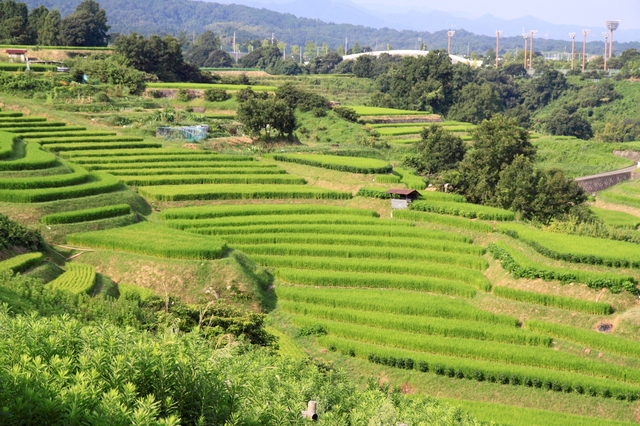
There is a concept in Japanese environmental aesthetics — satoyama — that refers to the landscape of the transition zone between mountain wilderness and agricultural flatland: the terraced rice paddies climbing the lower slopes of hills, the small mixed forests managed for timber and firewood and wild foods, the streams and ponds that fed the paddy fields, the farmhouses and their outbuildings embedded in the landscape they served. The satoyama was not a pristine wilderness but a human-modified landscape that, over centuries of management, had developed a distinctive and rich ecology alongside its agricultural function.
The satoyama landscape is, in the current period, one of the things that the akiya crisis is destroying. As villages empty, the terraced paddies are abandoned. Terraced paddies are labor-intensive to maintain — they require constant management of the water channels, the terrace walls, and the paddies themselves — and without the population to provide that labor, they revert within years to scrub and forest. The ecological communities that depended on the specific conditions of the managed satoyama — particular species of plants, insects, amphibians, and birds that thrived in the mosaic of paddies and forests and streams that human management created — are contracting with the landscape that supported them.
This loss has begun to attract attention and response from conservation organizations, urban volunteers, and the growing segment of Japanese society that values the satoyama landscape for its aesthetic, ecological, and cultural significance. “Satoyama conservation” projects, typically involving urban volunteers who travel to rural areas on weekends to help maintain paddies, forests, and traditional structures, have proliferated across Japan. These projects are not a solution to the depopulation problem — a dozen urban volunteers spending two weekends a year in a village cannot substitute for the residents who spent their entire lives there — but they represent a form of cultural memory maintenance that has value in its own right.
What the Akiya Crisis Teaches Us About Japan
The akiya crisis illuminates several deep features of Japanese society that are less visible in the more commonly discussed aspects of the country’s culture and economy.
First, it reveals the degree to which the postwar compact between the Japanese people and the Japanese state — the understanding that economic growth, corporate employment, and urban concentration would deliver prosperity — was accepted at a cost that is now becoming clear. The people who moved from rural villages to urban factories in the 1950s and 1960s contributed to Japan’s economic miracle, but they also severed the generational chains of knowledge and care that sustained rural communities. The houses they left behind, and the communities those houses represented, have been paying the cost of that severance ever since.
Second, it reveals the limits of Japan’s institutional rigidity. The property law obstacles that prevent efficient transfer of abandoned properties to new users, the agricultural land protection regulations that complicate the conversion of abandoned farmland to other uses, the building regulations that make renovation expensive and complex — these are institutions that made sense in the context of a growing, urbanizing society and that now create friction in a society facing the very different challenge of managing decline. The adaptations required are politically difficult precisely because the institutions that need to change were once valuable and are defended by constituencies that remain powerful even as their circumstances have changed.
Third, it reveals something about what Japan is, and what it might be. The akiya crisis has created the conditions for a kind of rural revitalization that Japan’s history has rarely seen: not the top-down economic development projects of the postwar decades but a more organic, more personal, more culturally complex process of community reinvention in which outsiders — Japanese urban dwellers, foreign residents, remote workers with no prior connection to agriculture — are finding reasons to inhabit places that their previous inhabitants chose to leave. This process is fragile, uneven, and insufficient to the scale of the problem. But it is real, and the villages where it is happening are, in some cases, demonstrably more alive than they were a decade ago.
The eight million empty houses are not merely a problem to be solved. They are an archive of a Japan that is passing — of the communities, the landscapes, the ways of living that the postwar economic transformation swept aside in its pursuit of growth. Preserving that archive, in some form, matters. So does building something new in its place. The question of how to do both simultaneously — how to honor what was while creating space for what might be — is one of the most interesting questions that contemporary Japan is asking of itself.
— Yoshi 🏚️ Central Japan, 2026
Enjoyed this? Continue with: “The Rice Paddy as Japan’s Soul” and “Japan’s Earthquake Psychology — Living on the Ring of Fire” — both available on Japan Unveiled.