Cherry Blossoms in Central Japan: Where Yoshi Actually Goes for Hanami
By Yoshi | Japan Unveiled
I have written about hanami — the Japanese practice of cherry blossom viewing — on this blog before, in an article about what the practice means philosophically and culturally. That article was about the cherry blossom as an idea: mono no aware, the beauty of impermanence, the specific quality of Japanese spring.
This article is different. This article is personal and practical.
Every spring — forty-plus springs now, every one of them — I go to see the cherry blossoms. Not to one of the famous spots in Kyoto or Tokyo that appear in every photograph of Japanese spring. To places that are closer to where I live, in central Japan, that I have been visiting for years, that I know in the specific way you know a place you return to annually and that you experience differently each time because you have changed and the specific year’s blossoms are different and the specific company is different and the specific moment in your life is different.
I want to share these places. Not as a definitive guide to central Japan hanami — the region is large and my knowledge of it is partial and personal. But as an honest account of where a forty-something Japanese man in central Japan actually goes to see cherry blossoms when he wants to see them properly, and what the experience is actually like.
A Note About Central Japan
“Central Japan” is a loose geographic term — it generally refers to the Chūbu region, the central portion of Honshu that includes Nagoya and the prefectures surrounding it: Aichi, Gifu, Mie, Shizuoka, Nagano, Toyama, Ishikawa, Fukui, and Yamanashi. This is a large and varied region, encompassing both the industrial flatlands around Nagoya Bay and the spectacular mountain scenery of the Japanese Alps.
The cherry blossom timing in central Japan varies significantly by altitude and microclimate. The Nagoya area — low elevation, influenced by the relative warmth of Ise Bay — typically blooms in late March to early April. The mountain areas — Nagano, the mountain passes of Gifu — bloom significantly later, sometimes extending into May at the highest accessible locations.
This variability is, for the dedicated hanami participant, an opportunity: the central Japan cherry blossom season can extend from late March to early May if you are willing to move with the altitude.
The Nagoya Area: The Local Circuit
I live close enough to Nagoya that I consider it my local city, and I have been doing the local Nagoya hanami circuit for as long as I can remember.
Tsuruma Park (Tsurumai Kōen, Nagoya) — the most popular cherry blossom viewing location in Nagoya, and with good reason. The park has approximately thousand cherry trees, including a substantial collection of old somei yoshino (the standard Japanese cherry variety), with trunks that have been growing for decades and branches that spread into a canopy dense enough to create tunnels of blossom. The park is close to a JR and subway station, which makes it accessible without a car. On peak weekend days, the park is extremely crowded, but the density of trees means there is usually space to find a relatively uncrowded corner if you are willing to explore beyond the main central areas.
I have been going to Tsuruma Park for hanami since I was a child — first with my parents, then with friends, then with my own family. The specific smell of the park in blossom season, combined with the smell of the food from the yatai stalls that line the park perimeter, is one of the most specific sensory memories of my year. Every year the smell is the same. Every year I notice that it is the same, and that noticing is its own small pleasure.
Nagoya Castle (Nagoya-jo) — the cherry trees along the castle moat and within the castle grounds produce one of the most photographically satisfying hanami compositions in the region: the historic castle architecture against the blossoms, reflected in the moat water. The Nagoya Castle cherry blossom festival is an official event, with evening illumination of the trees that creates a distinctly different atmosphere from the daytime experience. The illuminated blossoms above the illuminated moat, with the castle in the background, are beautiful in the specific way that illuminated cherry blossoms are beautiful — which is to say: very, and somewhat eerie in the best possible sense.
Arakoawa River (Arako-gawa sakura namiki, Nagoya) — one of my personal favourite local spots, and one that most people outside Nagoya have not heard of. The Arako River has several kilometres of cherry trees planted along both banks — old trees with substantial trunks, creating a continuous tunnel of blossoms along the riverside path. The path is usable by bicycle, which makes a slow riverside cycle under the blossoms one of the most pleasant hanami experiences I know. It is not crowded in the way that the major parks are crowded, which means the specific quality of attention that blossoms deserve is actually achievable.
Gifu Prefecture: The Mountain Dimension
Gifu Prefecture — immediately north and west of Nagoya, encompassing the mountain valleys of the Japanese Alps — provides some of the most extraordinary cherry blossom landscapes in central Japan, and the later bloom timing (typically one to two weeks after Nagoya, and later still at higher altitudes) extends the season significantly.
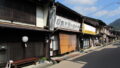
Mino City (Minokamo, Mino) — the old post town of Mino, in the mountains northwest of Nagoya, has maintained enough of its Edo-period townscape to provide a specific backdrop for cherry blossoms that the modern urban parks cannot match. Old wooden merchant houses with white plaster walls, the specific quality of a preserved historic streetscape, and cherry trees that have been growing alongside these buildings for generations — the combination produces hanami experiences that feel connected to the historical tradition in a way that park hanami, however pleasant, cannot quite replicate.
Seki City and the Nagara River — the Nagara River valley in Gifu Prefecture, famous for its ukai (cormorant fishing) tradition, also has extensive riverside cherry plantings that bloom in the specific week when the river’s spring flow is at its clearest. The combination of the river, the mountain backdrop, and the blossoms is exceptional, and the relative accessibility from Nagoya (approximately one hour by train) means it is achievable as a day trip.
Takayama — the mountain city of Takayama, in northern Gifu, has both a beautifully preserved historic district and cherry blossoms that bloom significantly later than the Nagoya area — sometimes as late as mid-April. The combination of the specific old-town atmosphere of Takayama’s Sanmachi Suji (the preserved merchant district) with late-blooming cherry trees in the surrounding hills produces a hanami experience that is more remote, more quiet, and more specifically connected to the mountain landscape than anything available in the lowland cities.
Shirakawa-go — the UNESCO World Heritage site famous for its gassho-zukuri (steep-roofed thatched houses) in the mountains of Gifu sometimes has cherry blossoms coinciding with the last snow of the season — the specific visual combination of white blossoms and white snow on dark wooden roofs against mountain landscape. This overlap requires precise timing — a matter of days in any given year — and is somewhat unpredictable. But when it occurs, it is one of the most extraordinary seasonal photographs available in Japan, and the experience of standing in the village when it is happening is one I have been fortunate to have twice.
Nagano Prefecture: The Alps Bloom
Nagano Prefecture — the landlocked mountain prefecture north of Aichi and Gifu — has cherry blossoms that bloom later than anywhere else in the region (sometimes as late as late April to early May at the highest locations) and that are often spectacular because of the mountain backdrop they occur against.
Takato Castle Park (Takatōjōshi Kōen, Nagano) — considered by many Japanese people to be one of the three most beautiful cherry blossom sites in Japan, alongside Hirosaki Castle in Aomori and Yoshino in Nara. The park has approximately 1,500 trees of the specific Takato-kohigan variety — a local cherry subspecies that produces smaller, pinker flowers than the standard somei yoshino — planted within the earthwork fortifications of the former Takato Castle. The specific colour of the Takato cherry — deeper pink, more intense than the usual pale pink of Japanese cherry blossoms — combined with the historic earthworks and the mountain backdrop, creates an atmosphere that is genuinely extraordinary.
Getting to Takato requires effort — a train to Iida, then a bus — and the peak bloom typically lasts only a few days. But the effort is proportional to the experience. I make this trip in most years where my schedule allows, and I have never arrived at peak bloom and found it not worth the journey.
Matsumoto Castle (Matsumoto-jo, Nagano) — the only surviving original black castle keep in the Japanese Alps (most Japanese castles are reconstructions; Matsumoto is a genuine original), surrounded by cherry trees that bloom in late April and that are reflected in the castle moat. The combination of the black castle, the pink blossoms, and the distant snow-capped Alps is a specific and memorable composition. The contrast between the dark castle architecture and the pale blossoms is the visual opposite of the standard cherry blossom photograph and is all the more striking for the difference.
The Mountain Villages: Where the Season Ends
My most private hanami tradition is this: in the last week of April or the first week of May, when the blossoms have finished everywhere in the lowlands and the tourist crowds have dispersed, I drive into the mountains of the border area between Gifu and Nagano to find the places where the cherry blossoms are still blooming — the high-altitude village with one old cherry tree in front of a farmhouse, visible from the mountain road; the small shrine at the end of a narrow valley with cherry trees that have not been photographed by anyone with international audience in mind.
These late-mountain blossoms are, in some ways, my favourite hanami. Not because they are more beautiful than the famous spots — they are not, always. But because of the specific quality of quiet they have. No crowds. No yatai stalls. No carefully arranged picnic groups. Just the blossoms and the mountain air and the specific quality of a season ending — the last cherry blossoms of the year in this region, the first warmth of the spring having finally reached altitude.
Mono no aware, in its literal form: the bittersweet awareness that this is the last of them, that they are beautiful now and will be gone soon, and that the ending is part of the beauty rather than a negation of it.
Practical Notes for Visiting Central Japan for Hanami
Timing: the Nagoya area is typically at peak bloom in late March to early April. Allow plus or minus one week depending on the specific year’s temperature patterns — the cherry blossom forecast (sakura yohou) from the Japan Meteorological Corporation is updated daily and is the most reliable timing guide.
Getting to Nagoya: Nagoya is on the Tokaido Shinkansen between Tokyo and Osaka. Travel time from Tokyo is approximately one hour forty minutes; from Osaka approximately fifty minutes. It is an excellent base for exploring central Japan’s cherry blossoms while also visiting the region’s other attractions.
Avoiding crowds: weekday visits to the major parks (Tsuruma, Nagoya Castle) are significantly less crowded than weekend visits. Early morning — before 9am — provides the best light and the most peaceful experience at any time.
Combining with food: the Nagoya area’s specific food culture — miso katsu, hitsumabushi, tebasaki, Nagoya’s specific breakfast culture of morning soy sauce toast with red bean paste at a kissa (coffee shop) — is worth building into any central Japan spring trip alongside the hanami. Yoshiさん’s article on the best food of central Japan covers this in full.
The mountain destinations: Takato, Matsumoto, and the Shirakawa-go area all require planning but are achievable as day trips from Nagoya with an early start. The Takato cherry blossoms in particular are worth a dedicated trip.
What I Think About, Beneath the Trees Here
I wrote in my earlier hanami article about what I think about beneath the cherry blossoms — the specific quality of attention that mono no aware requires, the practice of being present to something beautiful and temporary without trying to hold it.
In my local spots — Tsuruma Park, the Arako River path, the mountain villages of northern Gifu — the thinking is more specific. I am not thinking about impermanence in the abstract. I am thinking about these specific blossoms in this specific year, in this specific place that I have returned to many times, against the accumulating memory of all the previous times.
The Arako River path looks like it did last year and the year before and the year before that. But the light is slightly different, because the specific morning in this specific year has its own specific quality. The company is different, or the same people are different because they have changed. I am different, because forty-something has become slightly-more-than-forty-something.
The blossoms are the same blossoms. They are not the same blossoms.
This is the specific pleasure of returning to the same place annually: not the pleasure of novelty but the pleasure of change-within-continuity, of noticing what is the same and what is different, of being in a relationship with a place across time rather than simply visiting it once.
Come to central Japan in cherry blossom season. Find a local spot — not the famous one, or not only the famous one. Come back to it next year. And the year after.
The relationship takes time to develop.
The blossoms will be there when you return.
— Yoshi 🌸 Central Japan, 2026
Enjoyed this? You might also like: “Hanami: Why Cherry Blossom Viewing Is About More Than Just Flowers” and “The Best Food in Central Japan That Nobody Outside Central Japan Knows About” — both available on Japan Unveiled.