By Yoshi | Japan Unveiled
At some point this morning, before I sat down to write this article, I drank three cups of tea.
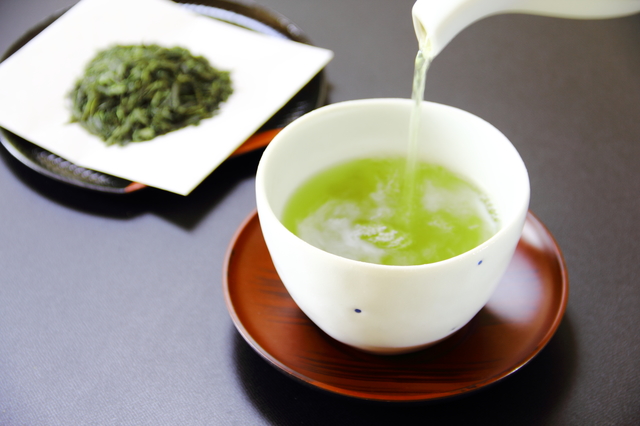
The first was sencha — the specific green tea I make every morning, steeped at the specific temperature that the specific quality of leaf requires, in the specific small teapot that has been on my kitchen counter for several years. The second was hojicha — roasted green tea, which has a specific toasty warmth that I find particularly appropriate for the specific quality of mid-morning attention that this article requires. The third was a bottle of cold unsweetened green tea that I bought from a vending machine during a brief errand — a purchase that took approximately twelve seconds and that I did not think about at all.
These three experiences of tea — the deliberate first cup, the thoughtful second cup, the entirely automatic third — represent the full range of Japanese tea culture. At one end, tea as a practice: something prepared with specific attention, at specific temperature, in specific vessels, for specific reasons. At the other end, tea as infrastructure: the ambient, constant, available-everywhere presence of unsweetened green tea that is as normal a feature of daily Japanese life as tap water.
Between these two ends lies one of the richest and most specifically developed tea cultures in the world — a culture that has produced the chado (茶道 — the way of tea) that is one of Japan’s most internationally recognised artistic traditions, and that has also produced the world’s most sophisticated market for canned and bottled unsweetened tea, with approximately 100 billion yen in annual sales of a product that is, at its core, tea leaves steeped in water with nothing added.
Both extremes are Japanese. Both make sense in the specific Japanese relationship with this specific drink.
The History: How Tea Arrived and What Japan Did With It
Tea arrived in Japan from China in the ninth century CE, brought by Buddhist monks who had studied in China and who brought both the tea plant and the specific Chinese practice of drinking it as a stimulant for meditation. The earliest tea in Japan was consumed primarily in the specific monastic context — by monks, in monasteries, for the specific purpose of maintaining alertness during long meditation sessions.
The specific transformation of tea from monastic practice to cultural institution occurred across the Kamakura and Muromachi periods (roughly the twelfth through sixteenth centuries), driven by several specific factors. The spread of Zen Buddhism brought tea culture from the monasteries to the samurai class. The specific intellectual and aesthetic culture of the Muromachi period — which produced noh theatre, ink painting, and the specific aesthetic concepts of wabi and sabi that continue to define Japanese aesthetic philosophy — engaged with tea as an aesthetic and philosophical practice rather than simply as a beverage.
The specific moment that crystallised Japanese tea culture into the form it has maintained for five hundred years: the sixteenth-century tea master Sen no Rikyū (千利休), whose specific articulation of the tea ceremony philosophy — expressed in the four principles of wa, kei, sei, jaku (和敬清寂 — harmony, respect, purity, tranquility) — established the aesthetic and ethical framework within which Japanese tea culture has operated ever since.
Rikyū’s specific contribution: he stripped away the elaborate, ostentatious display that tea gatherings had accumulated under the patronage of wealthy daimyo and merchants, and replaced it with a specific radical aesthetic of simplicity. The tea room should be small and plain. The utensils should be simple and imperfect. The host’s attention should be entirely on the guest. The tea itself — the preparation and service of a bowl of matcha — should be performed with complete sincerity and complete skill simultaneously. This philosophy, which Rikyū articulated and embodied, became the foundation of all subsequent Japanese tea tradition.
The Varieties: Japan’s Tea Landscape
The specific diversity of Japanese tea — the range of preparations available from the same basic plant (Camellia sinensis) through specific cultivation techniques, specific processing methods, and specific preparation approaches — is one of the most distinctive features of the Japanese tea world.
Sencha (煎茶). The most widely consumed Japanese tea, produced from tea leaves that are steamed immediately after picking to arrest oxidation (preventing the enzymatic processes that would convert the green tea to oolong or black tea), then rolled and dried. The steaming process produces the specific vegetal quality — the specific fresh, slightly marine, grassy flavour — that distinguishes Japanese green tea from Chinese green tea (which is typically pan-fired rather than steamed, producing a different flavour profile). Sencha is produced across many regions of Japan, with Shizuoka Prefecture producing the largest volume and specific regions including Uji (Kyoto Prefecture), Yame (Fukuoka Prefecture), and Kagoshima Prefecture producing the most celebrated high-quality examples.
Matcha (抹茶). The powdered green tea that is the specific tea of the tea ceremony, and that has become the most internationally recognised of all Japanese tea forms through its adoption as a flavouring in confectionery, ice cream, and various other food products. Matcha is produced from tencha — tea leaves that have been shaded for approximately three to four weeks before harvest (the shading increases chlorophyll and L-theanine content, producing the specific deep green colour and the specific umami depth that makes matcha distinctive), then steamed, dried without rolling, and ground into fine powder using granite stone mills.
The specific grinding: matcha is ground to the specific fineness of approximately 40 microns — so fine that it can be suspended in water rather than dissolving in it, producing the specific frothy, opaque green beverage that the tea whisk (chasen) produces when it agitates the powder-and-water mixture. This suspension quality is the specific physical basis of the tea ceremony preparation.
Hojicha (ほうじ茶). Roasted green tea — produced by roasting sencha or bancha over high heat, which transforms the flavour from the fresh, vegetal sencha character to a specific toasted, caramel-adjacent warmth. Hojicha has significantly lower caffeine content than other Japanese green teas (the roasting partially converts caffeine), making it the specific tea recommended for children, for the elderly, and for evening consumption when caffeine avoidance is desired.
Genmaicha (玄米茶). Green tea blended with roasted brown rice — the specific tea that combines the vegetal depth of the green tea with the specific toasty, slightly nutty quality of the roasted rice. Genmaicha was originally a lower-grade tea that used rice to extend the more expensive tea leaves, but has developed its own specific following for its specific flavour character and its specific warmth.
Gyokuro (玉露). The most refined of all Japanese loose-leaf green teas — shaded for longer than matcha-grade tencha (approximately six weeks), producing an extraordinary concentration of amino acids (particularly L-theanine) and chlorophyll that gives gyokuro its specific deep umami flavour, its specific sweet-marine quality, and its specific dark green colour. Gyokuro is steeped at significantly lower temperatures than sencha (approximately 50-60 degrees Celsius) to prevent the extraction of bitterness that the high amino acid content makes possible, and produces a thick, sweet, intensely flavoured infusion that rewards the specific attention it requires.
Bancha (番茶). The everyday, affordable, lower-grade green tea that is the specific tea of daily domestic consumption — coarser leaves, stems, and twigs that are harvested later in the season than the premium first and second flushes. Bancha has a simpler, more astringent flavour than sencha and a significantly lower price. It is the tea that many Japanese households brew in large quantities for daily consumption, and the one that appears in restaurants as the free hot tea served to all customers.
The Tea Ceremony: What Chado Actually Is
The chado (茶道 — the way of tea) or chanoyu (茶の湯 — hot water for tea) is the formalised practice of preparing and serving matcha in a specific ritual context, and is one of the most thoroughly developed aesthetic and philosophical practices in Japanese culture.
The specific elements of the tea ceremony that are most important to understand for someone encountering it for the first time:
The tea room (chashitsu). The physical space of the tea ceremony is designed with specific attention to every element: the specific small entrance (nijiriguchi — crawl-through entrance, through which all guests must bow to enter, regardless of social status, because the door is too small for anyone to enter upright) that equalises the status of all who pass through it; the specific tokonoma (alcove) in which a hanging scroll and a single seasonal flower arrangement express the specific character of the occasion; the specific tatami layout; the specific natural light from a specific window.
The utensils. The specific objects of the tea ceremony — the tea bowl (chawan), the tea whisk (chasen), the tea scoop (chashaku), the tea caddy (natsume or chaire), the water ladle (hishaku), the water jar (mizusashi), the iron kettle (kama) — are objects of specific aesthetic attention. The tea bowl in particular is evaluated with the specific critical attention of an art object: its weight in the hand, the specific texture of its exterior, the specific colour and surface quality of its interior where the tea will be made, the specific lip quality.
The sequence. The tea ceremony follows a specific sequence of movements — the preparation of the tea room, the entry of the guests, the serving of the wagashi sweet (which must be eaten before the tea is drunk), the preparation of the tea, the drinking of the tea, the appreciation of the utensils, the exit — that is performed with specific timing, specific movements, and specific words at specific moments. The specific choreography of the tea ceremony is not arbitrary formalism; each movement has been refined across centuries to be the most efficient, most respectful, and most aesthetically satisfying way of performing the specific action.
The Vending Machine Revolution: Tea as Infrastructure
The specific other end of Japanese tea culture — the 100 billion yen market for canned and bottled unsweetened green tea — represents one of the most remarkable developments in the history of any food or beverage product.
In 1985, Suntory launched Oolong Tea — a canned, ready-to-drink oolong tea — as the first commercially successful ready-to-drink tea product in Japan. The product succeeded by offering something that seemed paradoxical: the authentic taste of properly brewed tea in the specific convenience of a can that required no preparation. Japanese consumers, whose relationship with tea was sufficiently developed that they could taste the quality difference between good and poor tea, and whose specific lifestyle increasingly demanded convenience, responded with extraordinary enthusiasm.
The specific subsequent development: Ito En, the tea producer, launched Oi Ocha (おいお茶 — “hey, tea”) in 1989 — the first commercially successful bottled green tea. The success of Oi Ocha established the ready-to-drink green tea category and opened the market that now generates approximately 100 billion yen annually across hundreds of products from dozens of producers.
The specific thing about Japanese ready-to-drink tea: it is unsweetened. The global ready-to-drink tea market is dominated by sweetened products. The Japanese market is dominated by unsweetened products. This reflects the specific Japanese tea relationship — the understanding that tea is tea, that sugar changes what tea is fundamentally, and that the specific flavour of properly made tea is what the consumer is buying.
The vending machine that dispenses cold and hot unsweetened green tea, in multiple varieties at multiple price points, at every railway station, at every convenience store entrance, at every school and office building — this is the infrastructure expression of a tea culture that has been developing for a thousand years and that has reached the specific maturity at which it can coexist in its most refined ceremonial form and its most casual, automatic form simultaneously, without either form undermining the other.
— Yoshi 🍵 Central Japan, 2026
Enjoyed this? You might also like: “The Art of Dashi: Japan’s Invisible Flavor” and “Japanese Sweets and Wagashi: The Ancient Art of Seasonal Confection” — both available on Japan Unveiled.