- The Philosophy of Japanese Rice: Why One Grain Matters More Than You Think
- The History: How Rice Became Japan
- The Sacred Dimension: Rice and the Gods
- The Varieties: Understanding Japanese Rice
- The Growing Season: When Rice Is and Isn’t
- The Cooking: Why Japanese Rice Cooking Is a Specific Craft
- The Crisis: What Is Happening to Japanese Rice
- The Future: Premium Rice and the Quality Turn
The Philosophy of Japanese Rice: Why One Grain Matters More Than You Think
By Yoshi | Japan Unveiled
I want to begin with a question that seems absurd until you think about it seriously.
Can rice be beautiful?
Not the dish made from rice — not the elaborate chirashi-zushi arranged in a lacquered box, not the perfect sphere of an onigiri wrapped in nori, not the specific golden crust of the okoge that forms at the bottom of a clay pot. The rice itself. Plain cooked rice, in a bowl, before anything has been added to it.
In Japan, the answer is yes. Not as a poetic figure of speech, not as cultural hyperbole. As a genuine aesthetic assessment that Japanese rice culture has been developing for approximately two thousand years and that shapes — in ways that are specific, traceable, and deeply embedded in daily life — the entire Japanese culinary tradition.
I have eaten rice every day of my life. Not as a side dish in the Western sense — not as a background element supporting more interesting foods. As the shushoku (主食) — the principal food, the centre around which everything else is organised. The specific Japanese word for a meal — gohan (ご飯) — literally means cooked rice. When Japanese people say they have eaten gohan, they mean they have eaten a meal. When they say they have not eaten gohan, they mean they are hungry in a specific, fundamental way that a snack cannot address.
Rice is not an ingredient in Japanese food culture. It is the foundation upon which Japanese food culture is built. And understanding this — understanding what rice actually is in this specific cultural context — is understanding something essential about what Japanese food culture is.
The History: How Rice Became Japan
Rice arrived in Japan from the Asian continent — most probably from the Yangtze River delta region of what is now China — approximately two thousand to three thousand years ago, during the Yayoi period of Japanese prehistory. The specific spread of wet rice cultivation (suiden nōkō — paddy field agriculture) across the Japanese archipelago was one of the most significant transformations in Japanese history, more consequential in its long-term cultural effects than almost any subsequent historical event.
Before rice, the Japanese archipelago was inhabited by the Jōmon people — hunter-gatherers and coastal seafood harvesters who had developed a specific material culture over approximately thirteen thousand years that is now recognised as one of the world’s most sophisticated pre-agricultural traditions. The Jōmon did not farm rice. They foraged, hunted, and fished.
The introduction of rice paddies — with their specific hydraulic engineering requirements, their specific collective labour demands, their specific seasonal rhythms — transformed the social organisation of the people who adopted the practice. Paddy field agriculture requires sustained collective effort that foraging does not: the construction of irrigation systems, the collective management of water, the coordinated labour of planting, maintaining, and harvesting. The social institutions that paddy field agriculture requires — the village community, the collective labour organisation, the shared management of water rights — are the specific institutional predecessors of the social structures that characterise Japanese society today.
This is not a metaphorical claim. The specific Japanese social values that foreign observers consistently identify as distinctive — the emphasis on collective over individual, the importance of group harmony, the specific quality of Japanese community life — are, in the analysis of cultural anthropologists including the work of Emiko Ohnuki-Tierney, directly connected to the specific social organisation that wet rice agriculture requires and has maintained across two thousand years.
Rice is not just food in Japan. Rice is the specific material basis of Japanese social organisation. The culture that Japan built was built around rice paddies, in the most literal possible sense.
The Sacred Dimension: Rice and the Gods
The specific relationship between rice and the divine in Shinto tradition gives rice in Japan a sacred significance that no other food in any other culture I am aware of carries in quite the same way.
The most important deity in the Shinto pantheon — Amaterasu Ōmikami, the sun goddess from whom the Imperial family claims descent — is specifically a deity of agriculture, and the most sacred aspect of her agricultural significance is rice. The Daijōsai (大嘗祭) — the sacred meal that the new Emperor prepares and offers to Amaterasu at the beginning of each new reign — uses newly harvested rice from two specific paddies designated for this purpose, and the Emperor’s first act of each new reign is this specific rice offering.
The niiname-sai (新嘗祭) — the harvest festival in which the Emperor offers the first rice of the new harvest to the gods before the general population is permitted to eat the new rice — is one of the oldest and most consistently maintained rituals in Japanese religious life. The ritual expresses the understanding that rice comes from the gods and is returned to the gods in gratitude before human consumption.
Inari — the Shinto deity of rice, agriculture, foxes, and worldly success — is one of the most widely worshipped deities in Japan, with approximately thirty thousand shrines dedicated to Inari worship across the country. The fox (kitsune) that serves as Inari’s messenger is one of the most culturally significant animal symbols in Japanese folklore, and the specific association of the fox with rice — with agricultural abundance, with prosperity — reflects the specific centrality of rice to the Japanese understanding of wellbeing and fortune.
The kagami mochi (鏡餅) — the stacked rice cake offering placed in homes and businesses at New Year — is rice as sacred object: the compressed, purified form of rice offered to the household gods in gratitude for the year’s abundance and supplication for the year to come. The specific form of the kagami mochi — two stacked flat circles, sometimes with a daidai orange on top — is the specific visual form that Japanese decorative tradition has developed for the offering of rice as a sacred gift.
When Japanese people eat, the specific prayer said before eating — itadakimasu (いただきます) — means “I humbly receive.” The word is specifically the humble form of receiving a gift. The rice in the bowl is understood, even in its secularised contemporary form, as a gift whose receipt requires acknowledgment and gratitude.
The Varieties: Understanding Japanese Rice
The specific category of rice that Japan grows, eats, and has built its cuisine around is Japonica rice — the short-grain, starchy variety that becomes sticky when cooked, as opposed to the Indica rice of Southeast Asian cuisines that remains separate and fluffy when cooked.
This stickiness is not a defect. It is the specific quality that makes Japanese rice what it is — that allows it to be formed into onigiri, to be packed into sushi, to be eaten with chopsticks without the grains scattering. The specific chemistry of Japonica rice — its higher amylopectin content relative to the amylose content of Indica rice — produces the specific stickiness that Japanese food culture has built around.
Within the Japonica category, Japan has developed an extraordinary diversity of regional varieties — hinshu (品種) — each with specific flavour profiles, specific texture characteristics, and specific regional identities.
Koshihikari (コシヒカリ) — the most widely cultivated Japanese rice variety and the benchmark against which all others are measured. Developed in Fukui Prefecture in 1956 and subsequently spread across Japan, Koshihikari has a specific quality: it is perfectly balanced in its stickiness, its chewiness, its specific slightly sweet flavour, and its specific tsuyakke (艶やけ — glossiness) when properly cooked. The Koshihikari from Uonuma in Niigata Prefecture — Uonuma Koshihikari — is consistently ranked as the finest rice produced in Japan, distinguished by the specific mineral quality of the snowmelt water used in its irrigation, the specific temperature variation between hot summer days and cold summer nights, and the specific accumulated expertise of the regional rice-growing tradition.
Akitakomachi (あきたこまち) — the rice most associated with Akita Prefecture, slightly softer and slightly stickier than Koshihikari, with a specific gentle sweetness that makes it particularly well-suited to eating cold — in bento boxes and onigiri, where the rice’s qualities must survive without the warming that makes some varieties perform better than others.
Tsuyahime (つや姫) — developed in Yamagata Prefecture in 2010, one of the newer premium varieties whose specific tsuyahime (bride of lustre) name references the specific visual quality of the cooked grain — each grain catching light with a specific gleam that the variety’s specific starch composition produces.
Sasanishiki (ササニシキ) — the variety most beloved by sushi chefs for its specific quality when combined with vinegar: it absorbs the shari seasoning more evenly than Koshihikari and has a slightly firmer texture that holds its form through the sushi-making process. Sasanishiki production has declined significantly because it is more susceptible to cold weather damage than Koshihikari, but it remains the variety that many traditional sushi masters prefer.
Haenuki (はえぬき) — Yamagata Prefecture’s most widely produced variety, with a specific cold-water resilience that makes it reliable in the specific climate of northern Japan’s rice-growing regions.
The Growing Season: When Rice Is and Isn’t
The specific seasonality of Japanese rice — the specific temporal relationship between the rice calendar and the human calendar — is one of the most important dimensions of Japanese rice culture and one that contemporary supermarket abundance has partly obscured.
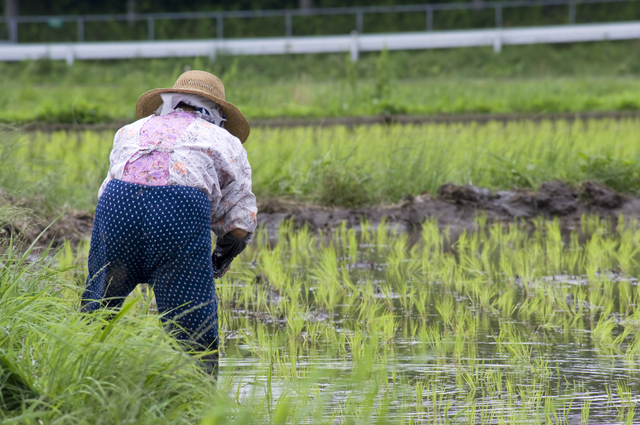
The rice cycle in central Japan: seedlings are raised in greenhouses in April and transplanted to paddies in May. The paddies are flooded, and the rice grows through the long hot summer. Harvest occurs in September and October — the specific window when the rice plants have reached maturity and when the weather conditions permit the cut, dry, and thresh sequence of the harvest process.
The shinmai (新米 — new rice) of autumn — the first rice of the new harvest — is one of the most eagerly anticipated seasonal food events in Japan. Japanese rice buyers specifically seek out shinmai labels in October, understanding that the rice harvested within the past few weeks has specific qualities that stored rice from previous harvests cannot match: higher moisture content, specific volatile aromatic compounds that have not yet dissipated, the specific fresh flavour that only new rice has.
The shinmai premium is real and measurable: top-grade Uonuma Koshihikari shinmai can sell for three to four times the price of the same variety’s stored rice from several months earlier. The economic logic reflects the specific flavour difference that experienced rice eaters can discern and are willing to pay for.
The Cooking: Why Japanese Rice Cooking Is a Specific Craft
The cooking of Japanese rice — a process that seems, from the outside, almost trivially simple (rice, water, heat) — is in Japan a specific craft with specific techniques, specific equipment traditions, and specific quality standards that reflect the centrality of rice to the culinary culture.
The washing ritual. Before cooking, Japanese rice is washed — togu (磨ぐ or 研ぐ) — a process of rinsing the rice in cold water while simultaneously polishing the grains against each other to remove the surface starch (nuka) that would make the cooked rice cloudy and slightly musty in flavour. The washing is performed three to four times, until the water runs relatively clear, and the washed rice is then soaked for thirty to sixty minutes before cooking.
The washing and soaking are not optional steps that time-pressed modern cooks can skip — they are functional components of the cooking process. The soaking allows water to penetrate the rice grain’s interior before cooking begins, producing more even cooking and a specific texture improvement in the finished rice. The washing removes the surface compounds that would compromise the flavour.
The water ratio. The specific ratio of water to rice is one of the most discussed and most personal elements of Japanese rice cooking. The general guideline — approximately 1.1 to 1.2 cups of water per cup of rice — is the starting point, but the specific adjustment for the specific variety, the specific season (new rice requires slightly less water than older rice because of its higher initial moisture content), and the specific cooking equipment is a matter of experience rather than formula.
The clay pot tradition. The donabe (土鍋) — the Japanese clay pot — was the traditional vessel for rice cooking before the electric rice cooker’s invention in 1956, and continues to be used by people who prefer its specific result. Donabe rice cooking is a specific craft: the heat must be managed across a sequence — high heat until boiling, reduced heat for the cooking period, a brief high-heat flash at the end to produce the specific okoge (底おこげ) of slightly caramelised crust at the bottom of the pot — that produces rice of specific quality.
The okoge — the golden, slightly crispy rice that forms at the bottom of a donabe — is itself considered a delicacy, and the donabe’s specific ability to produce it is one of the primary reasons that traditional rice cooking retains its enthusiasts despite the convenience of the electric rice cooker.
The electric rice cooker revolution. The suihanki (炊飯器) — the electric rice cooker — was introduced commercially in Japan in 1956 by Toshiba and transformed Japanese domestic cooking. The specific engineering achievement of the rice cooker: it maintains precise temperature control through the cooking sequence, switching automatically from cooking mode to keep-warm mode at the exact moment when the rice is done, based on the specific detection of steam production that indicates all free water has been absorbed.
Contemporary Japanese rice cookers — particularly the premium pressure IH models that can cost 50,000 to 100,000 yen — have developed extraordinary sophistication: multiple cooking programmes for different rice varieties, specific pressure cycles that mimic the specific heat sequence of traditional pot cooking, keep-warm modes that maintain rice quality for extended periods without drying. The engineering investment that Japanese appliance manufacturers have made in rice cooker technology is the most direct possible evidence of how seriously Japanese culture takes its rice.
The Crisis: What Is Happening to Japanese Rice
Japanese rice consumption has been declining consistently since the 1960s — from approximately 118 kilograms per person per year in 1962 to approximately 50 kilograms per person per year in the 2020s. The shift away from rice as the primary caloric source reflects the specific dietary diversification of Japanese life — the introduction of bread, pasta, and various other carbohydrate sources — that has occurred across the past sixty years.
The specific consequences: the total area of land under rice cultivation in Japan has declined by approximately forty percent since the 1960s. The number of rice farming households has declined dramatically. The government has maintained a system of rice production adjustment — paying farmers to leave land fallow or to switch to other crops — to prevent overproduction that would drive prices below economically viable levels.
The rice farming population is aging: the average age of Japanese rice farmers is now approximately sixty-seven years old. The specific knowledge required to grow rice well — the specific reading of water levels, the specific timing of the various seasonal operations, the specific management of the specific microclimate of a specific paddy — is embodied knowledge that ages with its holders and that is not being transmitted to a younger generation at sufficient scale.
What is happening to Japanese rice is, in miniature, what is happening to Japanese rural life more broadly: a sustained demographic and economic transition that is producing genuine loss of specific knowledge, specific landscape, and specific cultural practice alongside the specific freedoms and the specific opportunities that modernisation provides.
The Future: Premium Rice and the Quality Turn
Against the background of declining overall consumption, a specific counter-trend is developing: the premium rice market is growing, both domestically and internationally.
Japanese premium rice — Uonuma Koshihikari, various regional heritage varieties, the specific top grades of the annual rice evaluation — is increasingly exported to markets in Asia, North America, and Europe where there is a specific audience for authentic Japanese culinary experiences that extends beyond the restaurant context into home cooking.
The domestic premium market: as overall rice consumption declines, some proportion of the remaining rice consumers are choosing to spend more per kilogram on higher-quality rice. The specific logic — I am eating less rice than before, but the rice I eat should be the best I can afford — is producing growth in the premium tier even as the commodity tier declines.
The specific rice subscription services that have developed in Japan — monthly delivery of specific varieties from specific regions, often with accompanying documentation of the farm and the farmer — are the premium rice market’s most developed expression. The person who subscribes to a monthly delivery of specific Niigata Koshihikari from a specific farm whose growing practices and quality standards they have researched is participating in the specific Japanese tradition of producer-consumer relationship that characterises the premium food market in Japan more broadly.
The grain in the bowl has a specific origin. The origin matters. The farmer who grew it has a name and a specific piece of land with a specific history. The rice that arrives in a subscriber’s kitchen in October is the rice that was planted in that specific field in May and harvested in September.
This is what Japanese rice culture means at its deepest level: not just a food, but a specific connection to a specific place and a specific person whose care produced the specific grain you are eating.
Itadakimasu.
— Yoshi 🌾 Central Japan, 2026
Enjoyed this? You might also like: “The Japanese Diet: Why Japanese People Live So Long” and “Umami: The Fifth Taste That Japan Gave the World” — both available on Japan Unveiled.